Lynne Ramsay on Die My Love
Lynne Ramsay's back after eight years away with Die My Love, which takes her fans on another atmospheric trip into a disturbed psyche. The Scottish director discusses working with Jennifer Lawrence and lacing her intense movie with gallows humour
Few directors are better at placing you inside a character’s head than Lynne Ramsay. Her films are dreamy, dizzying, a bit delirious. Most of them are adaptations of celebrated novels (Morvern Callar, We Need to Talk About Kevin, You Were Never Really Here), but there’s very little that's literary about them: they’re deeply cinematic, and they immerse you in their characters’ worlds not through dialogue or theme or structure but via the alchemy of images, sound and performance.
Ramsay's latest film, Die My Love – only her fifth since she blew minds with her evocative debut, Ratcatcher, 26 years ago – is another heady concoction. It’s based on Ariana Harwicz’s 2012 novel and was suggested to Ramsay by Jennifer Lawrence, who’d been dying to make a film with her ever since she saw Ratcatcher. The 55-year-old Scottish director took some convincing, though.
“[Jennifer] sent me the book and she said, ‘This is really interesting.’” Ramsay explains over a video call. “I can’t remember the exact timing, but I didn’t get back to her right away. I had to see how I could find my way into the book, because it’s quite a challenging piece.” The plot centres on a young woman who’s moved with her husband to the countryside, and there she battles loneliness and postpartum depression. Part of Ramsay’s resistance was that she didn’t want to retread what she’d already explored in We Need to Talk About Kevin, which concerns a mother coming to terms with the damage wrought by her psychopathic son. “I just didn't want to make two films about motherhood, you know?”
After some reflection, though, and some persistence from Lawrence, she began to see Harwicz’s story in a different light. “I saw the book as not just being about the postpartum, you know?” explains Ramsay. “I felt like it was about someone being isolated, someone's marriage starting to disintegrate. It was about what happens when sex stops in a marriage when a baby's there.” Mainly, though, she began to warm to the protagonist, who goes unnamed in the book but is Grace in the film. “[She’s this] completely unapologetic character who was so honest. She says everything in a very matter-of-fact, truthful manner. She didn’t feel like a character trying to gain sympathy from us. In a way, she was the opposite.”
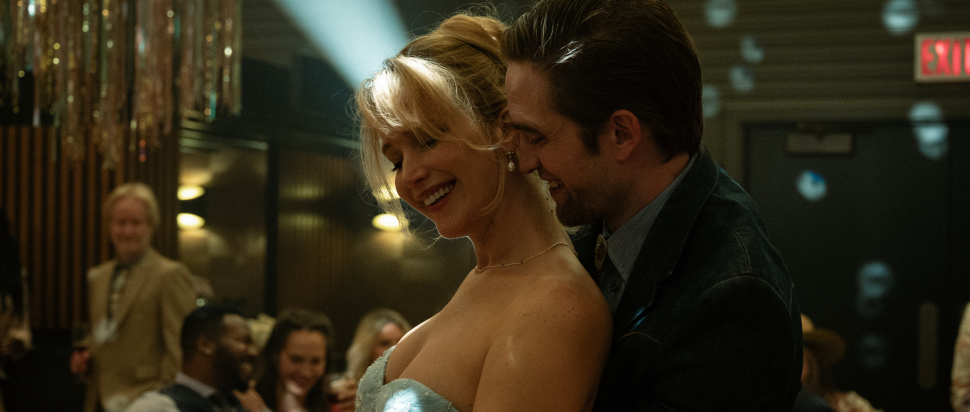
Joining Lawrence in the cast is Robert Pattinson as Grace’s husband Jackson. He’s the one who’s dragged her to the sticks after inheriting his uncle's rustic house in Montana. In the opening scene, the pair arrive at this fixer-upper with grand dreams of making it a home, but the abode only becomes more dilapidated across the film as Grace struggles to adjust to her new life, and Jackson, who often works on the road, might possibly be having an affair and has the worst taste in pets, only makes matters worse.
Sissy Spacek and Nick Nolte also feature, giving soulful, lived-in turns as Jackson’s parents. All three supporting actors are strong, but this is Lawrence's movie, and she joins the likes of Joan Crawford, Elizabeth Taylor, Gena Rowlands and Julianne Moore as actresses over the decades who’ve found their groove playing women on the edge of a nervous breakdown. “I felt like I hadn't seen such a powerful character [on screen] for a while,” says Ramsay. “[Grace] is feral, very animalistic; you’re either gonna love her or hate her.”
Like all of Ramsay’s films, Die My Love aligns itself deeply with its protagonist's turmoil. “I've always been so fascinated by characters and getting into the psyche,” Ramsay tells me. “I can't really tell you why, because I [make films] instinctively, where I'm going visually or with the sound and with the actors. But my films always tend to become very singular, very much about one character, and very much in their head; even if I don't think they are at the beginning, it goes that way. I think I just like to get as close to the human experience as possible.”
This type of subjective filmmaking relies on intimate collaboration with actors, most of whom seem to have adored their time on Ramsay’s sets. Morvern Callar's Samantha Morton called her “a mad composer defining and tuning the composition and my movement,” while Joaquin Phoenix, star of You Were Never Really Here, said, “there’s something about Lynne... It’s exciting and inspiring standing next to somebody who feels that strongly about things.”
It sounds like Lawrence was similarly enamoured. “I think Jennifer trusted me a lot, because we did some pretty wild stuff.” That "wild stuff" includes the actor prowling naked through tall grass like a lioness, barking like a dog, and wielding violent implements (carving knife, sledgehammer, shotgun) with abandon. The film opens with Ramsay equating Grace’s manic energy to one of the forest fires that rage near their Montana home: she’s a literal force of nature. Ramsay puts some of Lawrence’s extraordinary performance down to the fact she was pregnant during the shoot. “That made her almost more powerful, in a way.”
If this discussion hasn’t made it clear, Die My Love is an intense ride. We’re completely in the trenches with Grace as she dives deep into existential crises. But it’s also Ramsay’s funniest film by a long shot, with Grace and Jackson’s furious arguments descending into hilariously foul-mouthed and childish shouting matches. “That was something I really wanted right from the beginning: I thought, it has to have this kind of absurdity. I also love when they're arguing: those scenes are heightened, but funny in places, even though they shouldn't be. It’s a kind of gallows humour, I guess, which Glaswegians tend to have. Plus, Jennifer Lawrence, she's just got great comic timing, you know?”
Die My Love is released 7 Nov by MUBI