The fight to save Dundee's Cooper Gallery
As Dundee's Cooper Gallery faces the threat of closure, a campaign to defend its value as a boundary-pushing hub of critical inquiry gains momentum
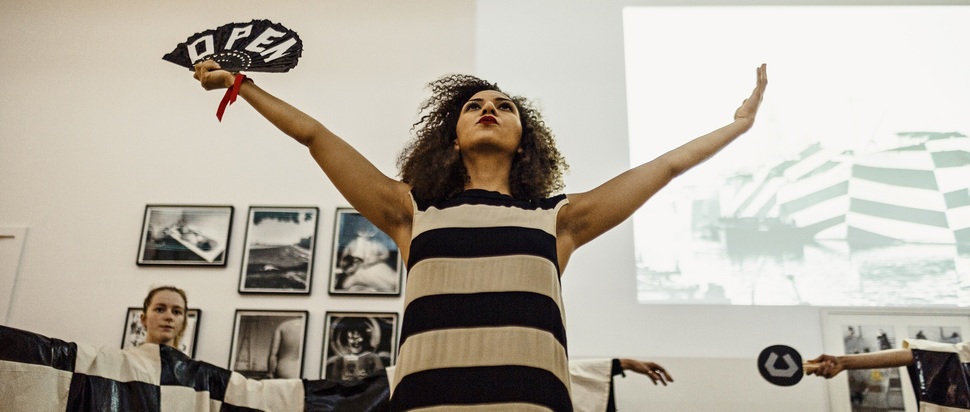
Dundee’s Cooper Gallery is internationally recognised as one of the UK’s most radical contemporary art spaces for critical and discursive practice. However, in June 2026, the University of Dundee revealed proposals which threaten to close Cooper Gallery by July 2027 as part of a major cost-cutting effort to reduce University spending by £20 million.
"This is nothing short of cultural vandalism," writes Dr James Bell, a Lecturer in Contemporary Art Theory at Edinburgh College of Art and former Duncan of Jordanstone College of Art & Design (DJCAD) student, in an open letter in support of the campaign.
Shortly following the University’s announcement, DJCAD students and members of Dundee’s wider arts community launched the Save Cooper Gallery campaign and an open letter in solidarity with the gallery. The open letter gathered over 1,400 signatures in just a few days and calls for "immediate action to secure its future as one of Scotland’s most vital spaces for contemporary art and critical discourse, directed by a woman of colour."
"This cannot be allowed to happen," Jenny Brownrigg, Exhibitions Director at The Glasgow School of Art, wrote in support of the campaign. "I fail to see how the university can meet with any public engagement expectations with funders such as the Scottish Funding Council, when Cooper Gallery and Botanic Gardens are on the list for closure. Cooper Gallery engages with a sphere that the university cannot do otherwise through quality and reputation."
'Essential for sustaining social engagement and cultural dialogue'
Opened in 1953 and designed by the architect James Wallace, Cooper Gallery is a research-intensive site for critical inquiry, the display of contemporary art and wide-reaching public engagement. It hosts a highly regarded programme of exhibitions which engage in critical politics across a multitude of media including video installation, photography, performance, archival material, and critical texts. Key exhibitions include Suzanne Lacey’s Between the Door and the Street (2025) which displayed material drawn from her performative public action project of the same name. In 2022 the gallery hosted Chimera (2022) a display of three collaborative films by the Turner Prize nominated artists Rosalind Nashashibi and Lucy Skaer who combine photographic images with musical compositions, drawing and painting, to offer moments of serene contemplation and transformation.
Director of Cooper Gallery, Sophia Yadong Hao has said that the programme is "not just a space for the display of artworks but is a site for discursive praxis." Hao cites the influence of intersectional feminist and decolonial methods of collectivity and alternative pedagogy on the programme’s ethos, exemplified by Sit-in #4 Outside the Circle, part of The Ignorant Art School: Five Sit-ins Towards Creative Emancipation initiated by Cooper Gallery. This series of exhibitions, performances, actions, workshops and gatherings facilitated by artists, designers, activists and cultural workers transformed Cooper Gallery into a cultural site of institutional critique from within, and the emancipation of art education.
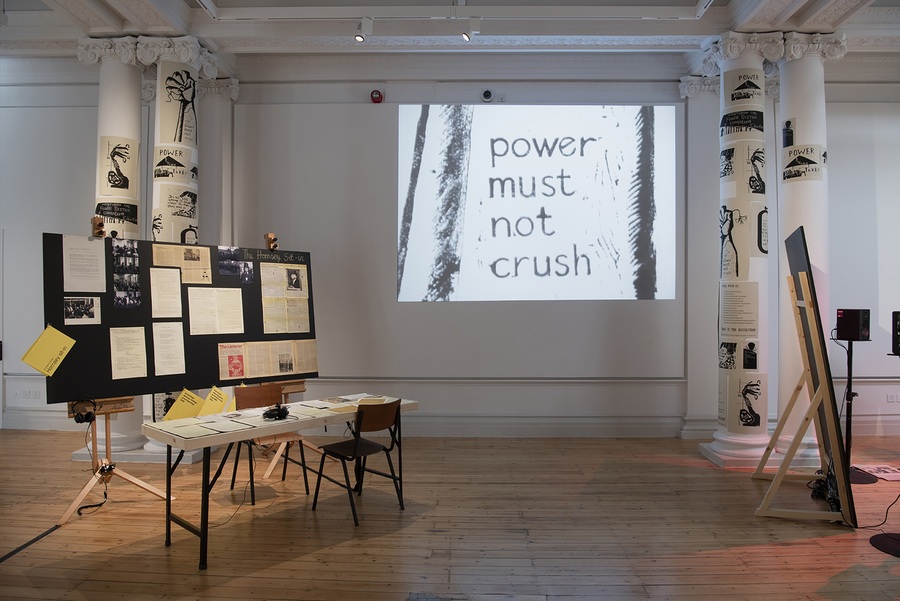
The Hornsey Sit-in, exhibition installation view, The Ignorant Art School Sit-in #2: To Be Potential, touring at the Hatton Gallery (2022)
As the Save Cooper Gallery open letter states, in the face of a political and social climate "marked by growing division, intolerance, and the rise of far-right ideologies across the UK and beyond" spaces like Cooper are essential for sustaining "critical inquiry, social engagement, and cultural dialogue."
The Save Cooper Gallery campaign
The Save Cooper Gallery campaign highlights the profound impact the proposed closure would have on Dundee residents, "stripping the community of its cultural heart and removing a crucial voice in international art." While the Cooper Gallery programme is internationally recognised for its quality, it is also an essential part of the infrastructure of DJCAD. The gallery’s closure would withdraw the invaluable opportunities it offers to DJCAD students to directly engage with contemporary artistic practice, curatorial work, research, and professional networks through its Student Curatorial Team.
"Cooper Gallery offers practical curatorial and professional training not otherwise present at undergraduate level," a member of the Save Cooper Gallery campaign explained. "This experience bridges the gap between academic study and real-world practice."
Professor Natalie Adamson from the School of Art History at the University of St Andrews has also voiced her support for the campaign with regards to Cooper’s educational impact: "The outstanding curatorial team led by Sophia Yadong Hao integrates contemporary art practice, archival material, social practices, pedagogical thinking and community building into its exhibition and event design in a way that is truly astonishing."
Cooper Gallery’s vital nature in Dundee’s locale and cultural ecosystem cannot be overstated. According to Hao, the Gallery’s programme supports up to 100 people every year who make an income through event facilitation, admin support, gallery invigilation and exhibition installation, paid through Creative Scotland and external funding. "Cooper Gallery provides young people in Dundee with the career development opportunities that help them to find their feet in the arts," Hao said. "Working at Cooper Gallery is often the first experience of working in the cultural industry for many young people in this city."
The University’s proposal, which targets the salaries of Cooper Gallery’s two staff members, is part of a broader cultural devaluation of contemporary arts practice within higher education. DJCAD has already faced major restructuring and foreclosure in the past year, as reported by the student newspaper Jute Journal in October 2025, when it was folded into the much larger Faculty of Arts and Social Sciences. The University has also announced plans to cease offering Philosophy as a named degree by 2027, and the closure of the Botanic Gardens.
Brownrigg has outlined in a blog post on her website that the University’s proposals define Cooper Gallery as a 'non-essential' service, a corporate definition which seeks to justify the closure of Cooper Gallery alongside the Dundee Botanic Gardens, the Chaplaincy, the University’s children’s nursery, and Students Services. The definition "is essentially a non sequitur," Brownrigg wrote. "The Cooper Gallery has a research remit. Student Services are essential to supporting access to education." The University’s definition of 'non-essential' instead represents the diminishing value that the Higher Education sector places on people, community and critical thinking.
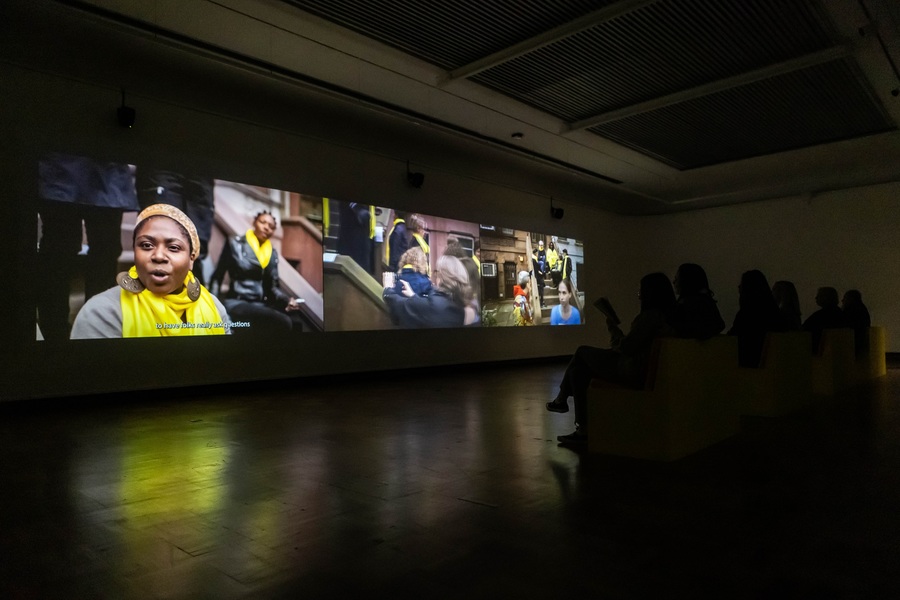
Suzanne Lacy, Between the Door and the Street, exhibition installation @ Cooper Gallery, 2025. Photo by Sally Jubb.
Cuts, closures and concerns
The University of Dundee’s proposal has come during a period of severe precarity in the Scottish arts scene. The CCA in Glasgow closed earlier this year and seven cultural organisations based at the Glasgow city centre arts hub Trongate 103 have been threatened with a rent increase four times its current level. Closer to home in Dundee, the V&A Dundee has been forced to reduce its programme to one major exhibition per year to cut costs, and Dundee Contemporary Arts (DCA) have had their annual budget from Dundee City Council tabled for cuts two years in a row in 2024’s and 2025’s council consultations.
The University’s proposals from June follow on from 675 cuts to jobs in 2025 and a £40 million injection of emergency funding provided by the Scottish Government. Members of the Dundee branch of the University and College Union (DUCU) have already staged 28 days of strike action in the last year, but the University’s new wave of redundancy proposals from June have pushed Union members to vote in favour of another five weeks of strike action when the new term begins in September this year.
In a member’s email update from July 2026, the DUCU have expressed concerns over the University’s approach to their Equality Impact Assessment, which forms part of the business case for the proposed cuts. The DUCU have identified that the assessment lacks a mitigation plan following from its findings, which raises concerns about who will be disproportionately impacted by the University’s proposals to cut costs. The DUCU have also said that the Equality Impact Assessment has not been submitted to the Director of Equality Diversity and Inclusion (EDI) for review, despite previous assurances that this had already happened.
The Save Cooper Gallery Campaign has reached out to Creative Scotland’s Senior Leadership team and Visual Arts team regarding the planned closure, urging Creative Scotland and the Scottish Government to take immediate action to prevent the closure. In June, the Scottish Cabinet Secretary for Education, Culture and Gaelic, Mairi McAllen, urged the Interim Principal and Vice-Chancellor Professor Nigel Seaton not to push ahead with the planned cuts, but her pleas were ignored.
When asked for comment in response to the Save Cooper Gallery campaign, a Dundee University spokesperson said: "There is a proposal to cease operating the Cooper Gallery from July 2027, on the current model, as part of widespread change across the University as we look to make the necessary savings to achieve a position of long-term sustainability. These are proposals at this stage, subject to a collective consultation process that is now underway. Alternative funding pathways and ways of working will be considered during this consultation."
Hao has written separately in a recent blog post about the assault on creative disciplines across UK Universities more generally: "When spaces for cultural and intellectual experimentation are diminished, society becomes less pluralistic, less democratic and less humane." The proposals for closure of Cooper Gallery represents a dangerous narrowing of cultural education and critical thought within higher education across the UK. The retreat from culture and community must be fought against. Save Cooper Gallery.