CCA Glasgow: What We've Lost
With the CCA in Glasgow now in liquidation, its staff left jobless, and its windows boarded up, we speak to some of the artists and programmers who use this space and ask what we've lost in the wreckage and what we can salvage if the CCA returns
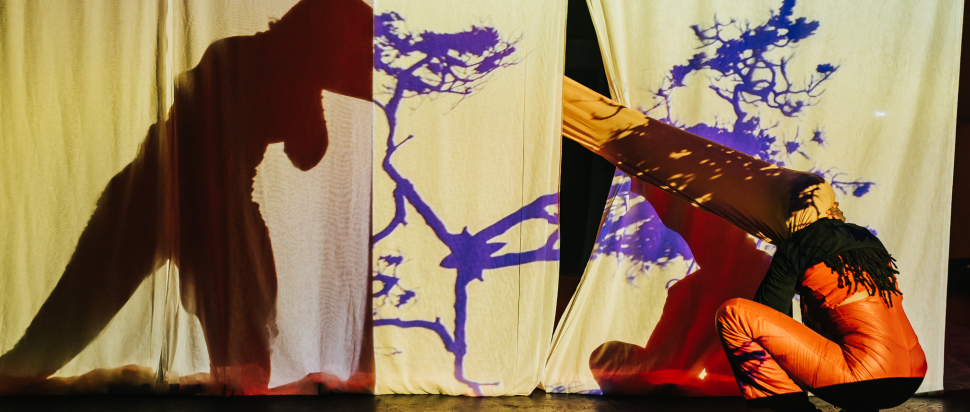
Scotland’s culture scene has taken a beating over the last few years, but few blows have hit harder than the closure of the Centre for Contemporary Arts (CCA). For 33 years, this multi-arts venue has been the beating heart of Glasgow’s arts community. It’s hosted world-class contemporary art exhibitions, championed experimental theatre, music and cinema, and pioneered an open source programming approach that helped CCA become a hub for all sorts of DIY and community events.
At the time of its collapse, the CCA estimated that it worked with over 200 partners, many of them putting on some of the most forward-thinking, boundary-pushing events in town. Sonica, Ceòl is Craic, SQIFF, Glasgow Short Film Festival, BUZZCUT and the Glasgow Improvisers Orchestra are just a handful of the much-loved festivals and events that called CCA home.
All those organisations are now in search of new abodes. The CCA closed suddenly on 30 January, with its Board announcing it would be entering liquidation. All future programming activities were cancelled, and all of its staff (close to 40) were made redundant. The CCA building, designed by Alexander ‘Greek’ Thomson, now sits boarded up along with the defunct nightclubs, bars and venues that sit derelict along that increasingly moribund end of Sauchiehall Street.
One of those organisations in search of alternative venues is Counterflows, the experimental music festival with a long association with CCA. Glasgow is not short of music venues, so the event, which returns in April, has comfortably found alternatives. Counterflows' co-director Fielding Hope notes, though, that they’ll be hard-pressed to find a similar lively atmosphere. “While I was setting up for gigs [at CCA], I always remember their vibrant film programme taking place downstairs, local artists experimenting in their Intermedia gallery, community group meetings taking place throughout the building, and a vibrant mixture of people hanging out, drinking and seeing the main exhibition in the ground floor foyer,” he recalls.
What went wrong at the CCA?
The sudden closure of CCA is heartbreaking, but it would be inaccurate to describe it as a shock. Since the COVID pandemic, the venue has suffered a revolving door of well-publicised financial and governance issues. Its cafe and bar, Saramago, was once a popular meeting place and late-night hangout, catering for a mix of arts workers and art school students, but in 2023, CCA parted ways with Saramago when they had a bitter dispute with three staff members over working conditions. Its closure surely contributed to CCA’s huge drop in footfall.
Since the loss of Saramago, the venue had to temporarily close twice in the space of six months. At the end of 2024, it shut its doors for four months when it ran out of cash. It reopened in spring 2025 but then shut again in the summer after its Board was roundly condemned for escalating tensions and abusing its power by calling in police to clear activists who had gathered at CCA to protest over the Board's decision not to endorse a cultural boycott of Israel over its military actions in Palestine. By the end of that summer, seven out of nine of those Board members had been removed.
The CCA faced further humiliation and farce when it appointed a new chair, a business consultant called Muse Greenwood, to steer the venue through this troubled period, but she quit after just 35 days in the job. Amid all this chaos, few members of the public seemed to know if the venue was open or closed. Financially, it was running at a loss, despite receiving substantial multi-year funding from Creative Scotland, and following its liquidation at the start of the year, the Scottish charity regulator is currently looking into claims of potential financial mismanagement. A complete shit show would be putting it mildly.
An exhibition disrupted and curtailed
Someone who knows firsthand about many of these issues is Shalmali Shetty, who was the curator and producer of CCA’s last major exhibition, Alia Syed’s The Ring in the Fish. The show was a perfect example of the type of multifaceted exhibition at which CCA once excelled. It spanned works of film shot on 16mm, photography and audio interviews, and drew inspiration from a series of interviews Syed conducted with first- and second-generation members of the South Asian community in Glasgow. The exhibition also included a wider public programme of talks and panel discussions to explore the themes of the exhibition. There was even a Kabaddi workshop planned.
“The CCA was a significant and meaningful space and context for Alia's exhibition,” Shetty told me by email, “particularly because of its history as a radical, shared, community-oriented space capable of bringing together a wide range of audiences (and Alia's relationship to the city of Glasgow), which also informed how the exhibition and its related events were conceived.”
The exhibition was originally scheduled to take place at the beginning of 2025, but CCA's unexpected winter hiatus from December 2024 to March 2025 put the show on hold. “That closure meant that a substantial number of staff roles had been made redundant,” Shetty explains. “This created uncertainty about whether the exhibition could proceed and affected the level of institutional support available, while also impacting practical implications for planning, timelines, and preparedness.”
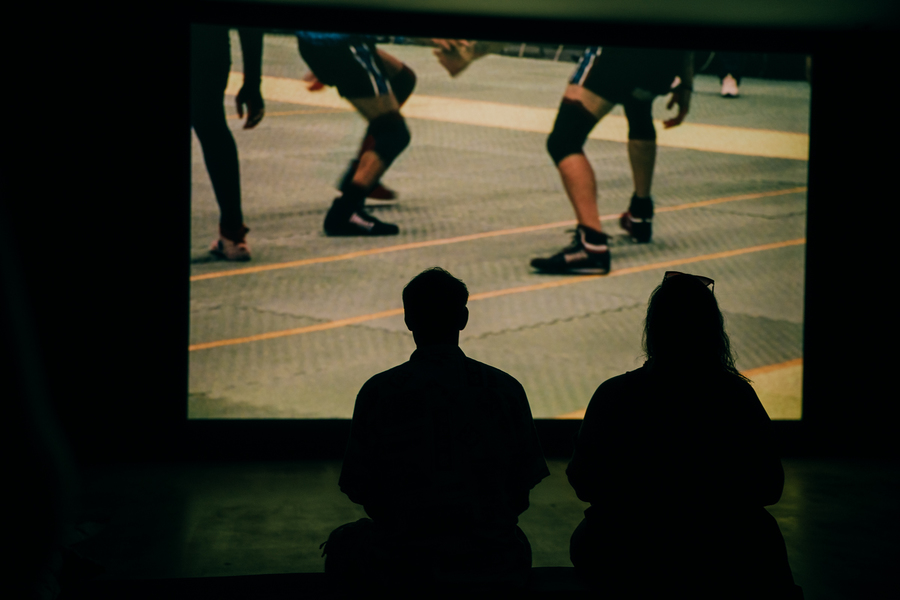
Installation view of The Ring in the Fish by Alia Syed. Photo by Diana Dumi
When CCA secured its multi-year funding, The Ring in the Fish became the centrepiece of CCA’s grand reopening. Things didn’t go to plan, though, partly because many of the staff who were let go during the hiatus weren’t rehired. “The reduced staffing capacity meant that the remaining team was managing significant workloads,” says Shetty, “which inevitably shaped the scale of what could be delivered and the extent of support available to the artist and the exhibition.”
CCA’s terrible handling of the Art Workers for Palestine Scotland protests then necessitated that second disastrous closing. “A number of public programmes had to be postponed or cancelled,” explains Shetty, “and the show lost a substantial portion of its scheduled duration (a little over a month). This had a knock-on effect on related activity, collaborator and audience engagement, and the artist and I were suddenly left in an uncertain space, having to figure a lot out by ourselves and being answerable to people when we had no answers for ourselves.”
Shetty is quick to point out, though, that the CCA’s beleaguered staff couldn’t be faulted. “They were attempting to sustain the project under extremely challenging circumstances, but the broader organisational situation limited communication and what could be addressed in real time. We could not make contact with the Board, nor was there any capacity from their side for grievance redressals. In this case, future exhibitions slated for the rest of the year had no chance to materialise without institutional support that such exhibitions require.”
A pioneering programming approach
As a business and as an exhibition space, CCA clearly wasn’t functioning as it should, but its open source programme continued to be incredibly important for Glasgow’s art scene, right up until CCA’s closure. “It offered a level of openness, accessibility and informality that is difficult to replicate within more conventional gallery structures in the city,” says Shetty of the open source approach. “It is a huge loss for a city like Glasgow with its grassroots experimental arts scene."
CCA's open source programming policy came about out of necessity. At the beginning of the millennium, the venue's exhibition and event spaces were expanded, but budgets didn’t substantially increase with capacity, so the CCA programmers were struggling to fill the building. Francis McKee, who became director at CCA in 2006, had a novel solution: invite Glasgow’s arts community to propose their own events and give them the space for free. “We realised people who wanted to use the building couldn’t afford to, so it was better to give it away,” McKee said in 2015. “They get to use this beautiful building and we get the fact they are using it, their programme happens here and their audience.”
A unique, flexible, professional space
One programmer who was taking advantage of CCA’s open source policy right up until CCA's collapse was filmmaker Rastko Novaković. Back in 2022, he proposed a season of the 1987 documentary The Journey, Peter Watkins’ epic, 19-chapter film looking into the nuclear arms race. “I thought to myself, ‘Well, what's the only place in Glasgow that you could put on a 14-hour global peace film with a few weeks' notice?’” says Novaković. “And that was certainly the CCA.”
The screenings happened across six distinct programmes, spread across ten days. Taking place in the CCA’s Club Room, which was given to Novaković in kind, the season was more than a simple airing of this rarely screened work. Watkins’ film had been designed to be shown in classrooms, and each chapter would end with a question mark, which Novaković turned into an invitation for a group conversation at the screenings. He reckons this sort of deep, long engagement with audiences, with art and with culture, is really only possible in a space like the CCA. “If you think about a conventional cinema space, you're often very clipped in terms of what you can do, in terms of discussion, in terms of engagement. You might have time for a panel discussion for a sort of top table, but not in the round, you know? So the CCA was a perfect space for that to happen.”
Those screenings of The Journey were the beginning of the INCLINATIONS Film Club, which became a regular fixture at CCA. Their programming was wide-ranging and eclectic. Many of the films they screened were, like Watkins’ documentary, antimilitarist in some fashion. DIY, experimental and queer cinema also featured heavily. “There was usually a hope that the film would be a Scottish or UK premiere," explains Novaković, "so these were films that we felt should be getting [distribution] over here, but don't. So in that sense, the screenings were quite special.”
Part of the reason filmmakers were comfortable trusting this volunteer-run film club with their Scottish and UK premieres is that they also knew they’d be screened to a high level at CCA. “The cinema, it's a technically well-kitted-out, nifty space,” says Novaković. “It's very flexible in terms of what you can do, and obviously, the digital projection is industry standard, which is important for filmmakers when they're considering whether to share their work with us. They’d say, ‘Ah, OK, well, we can send you a DCP.'” Since CCA’s closure, INCLINATIONS Film Club has found alternative venues for their screenings, like ARC and GMAC. These are great, affordable spaces for pop-up events, but they can’t hold a candle to the technical capabilities at CCA.
A place to take risks and experiment
The CCA was affordable and well-equipped – DIY, but you know, nice, with knowledgeable staff and luxuries like seating and running water. There are other venues in Glasgow that will give you a deal, of course, and performance artist and choreographer Craig Manson has come across many of these more ramshackle spaces. “A lot of the time, if you're booking out a space in kind, it’s usually some freezing cold warehouse that doesn't have a toilet,” he says. That’s another thing CCA had going for it: it was fully accessible to wheelchair users. “The staff were also trained in sighted guidance and stuff like that,” adds Manson, “so it did feel like there wasn't a barrier in terms of physical access, at least. Plus, as a resource, the CCA was in the centre of town, and that made it really accessible to get to. So yeah, it's just devastating that that's gone.”
Manson’s first performance at CCA was straight out of drama school, as part of the 2016 UNFIX, a festival of ecological performance, dance, music, film and discussion. The show was titled Selkie, with Manson playing the mythical seal in human form, and he still can’t believe CCA let him get away with it. “It was such a messy show," recalls Manson. "The risk assessment for it must have been an absolute nightmare, because I'm slamming myself against the floor, totally naked, with my legs tied up, and there's water everywhere. But [the team at CCA] were just so up for it. I think it's quite rare to get a venue that will go, ‘That sounds great. It's going to be a nightmare to try to make safe, but we're up for it. Let's do it.’”
Manson later worked at CCA as one of its duty managers, but continued to be a regular on its stage. His cabaret performance as Bunny, an aspiring theatre starlet who’s also a serial killer offing her competition, was particularly popular. “The first time that I ever did Bunny was at CCA for three nights. For contemporary performance, doing a three-night run is such a dream, but the CCA were real partners for Bunny. They were real champions of her, and really supportive of it.”
When CCA returns
It’s very likely the CCA will reopen. Creative Scotland owns the building, and have suggested it will remain as a cultural asset for the city. The question of when it will open, and what form it will take when it does, remains to be seen.
Manson does challenge the next incarnation, when it does come, to be bolder. “I did feel like the programme could have done with a bit more life in it, in recent years,” he says. “I think if it came back, or if something else replaced it, it would have to come back with a really big splash. Like jam-packed stuff. Daring. Wild.”
Hope has a line in the sand if the CCA returns: its community-led programming ethos must remain. “CCA's open source programming was quietly revolutionary while I was growing up,” he says. “In my teens, around the mid 00s, I started putting on DIY events in the city, and although I was extremely inexperienced and frankly a bit chaotic, CCA still encouraged me to programme events there. Frances [McKee] and the team were always open-minded and supportive, and they always wanted a wide array of voices in the programme. Without bells and whistles, they were enacting the ideals of Raymond Williams' cultural democracy; art and culture produced and shared by the artists and community who make it.”
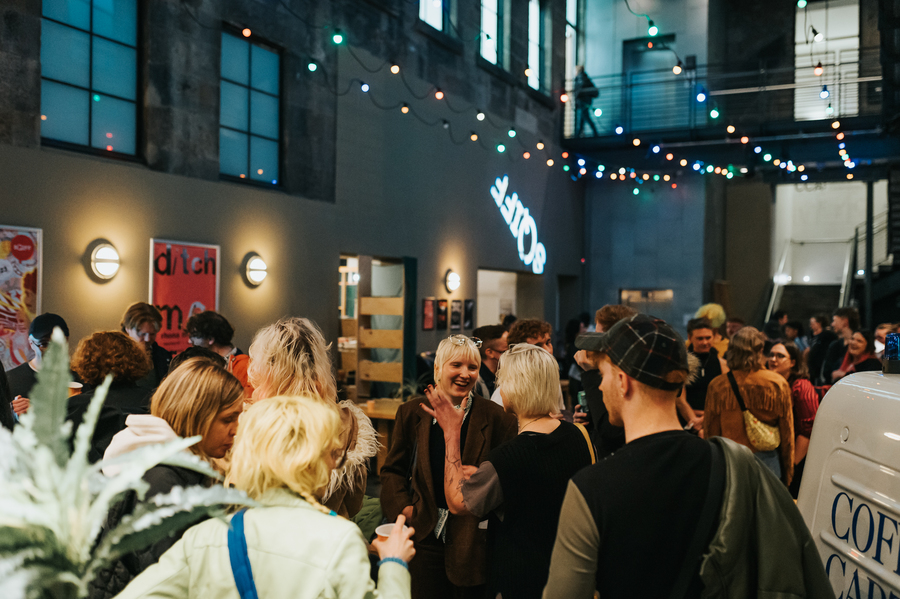
Crowds at a Scottish Queer International Film Festival (SQIFF) event at CCA. Photo: Tiu Makkonen
Shetty agrees that CCA’s central concept doesn’t require improvement; it’s the underlying structures – the governance, funding and operational frameworks – that need some work. “Given the scale of its public role, the organisation would need to address its internal challenges before it can effectively extend support outward," she says. "There is a clear need in Glasgow for a radical, shared cultural space that reflects the city’s long history of working-class organising, activism, and solidarity. With strengthened internal foundations, the CCA, or a comparable model, would be able to once again provide that kind of open and collectively oriented environment in the near future.”
Novaković, meanwhile, is of the mind that it’s simply a case of stimulating the value and the history that’s already there, and dusting it off. “I feel like CCA just needs to go back to doing the things that it does well. And there's so much that it's done well. So in some ways, it doesn't need a lot.” One thing we have to remember, though, is that the CCA is not a monolith. “As we've discovered, the CCA is not just one thing," says Novaković. "It's many, many different things, and different things to different people. Yet there is one thing we can all agree on: the CCA is of huge value. If we put a bunch of love back into it, then I'm sure it will thrive for many years.”
counterflows.com
shalmalishetty.wordpress.com
instagram.com/inclinations_film_club
craigmanson.info
Lead image: Project X performing Ghost Dimensions as part of BUZZCUT Festival at CCA in 2019. Photo by Tiu Makkonen