City Links: Helen Nisbet on Glasgow International 2026
Scotland’s biennial of contemporary art is back under the community-driven vision of its new director, Helen Nisbet. We highlight the must-sees of this expansive programme, featuring the likes of Aqsa Arif, Cathy Wilkes and Michelle Williams Gamaker
In January, the Centre for Contemporary Arts locked its doors for the final time in a dramatic denouement to a familiar tragedy: Glasgow’s great fall from a ‘City of Culture’ to a ‘City of Closure’. In April, Streetlevel Photoworks, Glasgow Print Studio, Transmission Gallery, Project Ability and Glasgow Independent Studio almost met the same fate before a breakthrough in negotiations barely saved Trongate 103 from their private landlord-cum-council quango, City Property. Helen Nisbet, Glasgow International’s latest director, has been organising Scotland’s biennial of contemporary art amid it all.
"Alarming is the word I would use," Nisbet tells me when I ask her what it felt like to plan GI while its host city was clamming up around her. It has been "alarming to witness [arts spaces] boarded up, closing, in peril around us and so many of those organisations are or were central to our programme." Yet, she is also acutely aware of the political decisions that cause these closures: "We’re coming from a prolonged period of austerity, precarity and global chaos, so it’s inevitable, sadly, that arts and culture fall into this black hole."
When talking about the political backdrop that informs a city’s culture, she references Keira McLean’s Fire Stories, one of the central works in the programme. The multimedia project is presented by Platform, in collaboration with the filmmaker Caireen Stuart and animator Akvile Dirmauskaite, alongside residents of Easterhouse. It draws on the community’s archives, histories of grassroots organising and the lives of local campaigners like Cathy McCormack who fought against urban poverty while living through it. Two cabaret performances, held over the final weekend, will conclude the project with a prevailing theme of hope in solidarity.
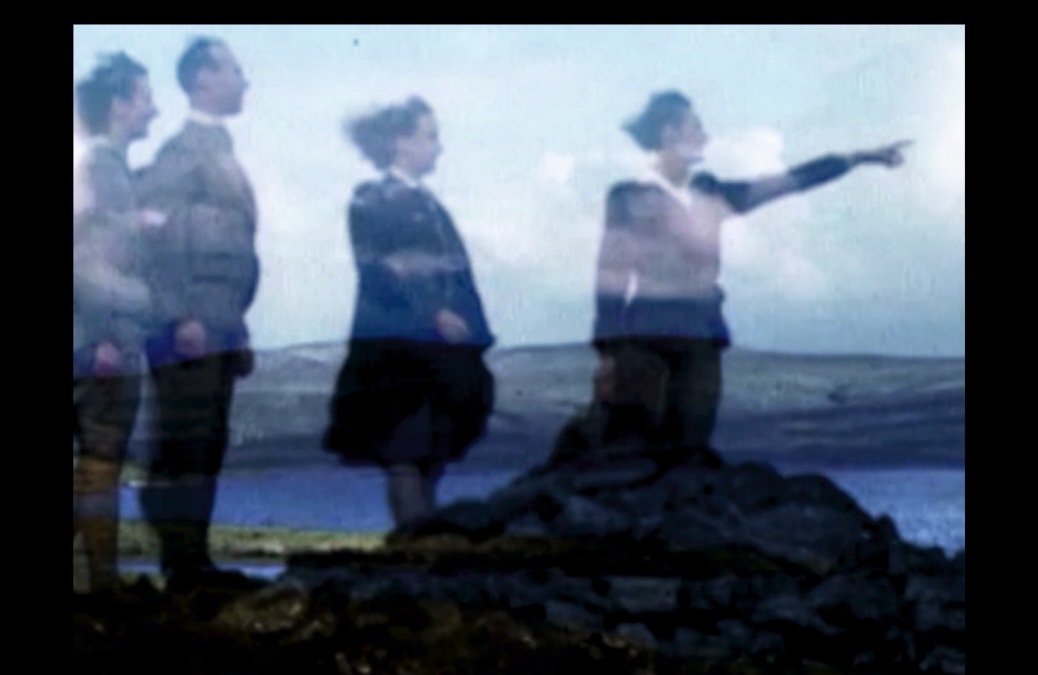
A still from The Fire That Never Went Out (2026) by Keira McLean, courtesy of the artist
Fire Stories forms part of GI’s ‘Special Projects’ programme, which also includes a series of public events presented by Rumpus Room from 12 until 14 June at The Bowling Green in Pollokshields. Self-consciously aware of the art-world tendency towards extractive curation that is ‘community engaged’ only insofar as it ticks a box on a funding application, these Special Projects spotlight cultural groups working to strengthen communities year-round and across Glasgow’s peripheries.
Nisbet seems to take an approach to festival programming that is hyper-aware of its own blindness. She tells me: "It’s really brilliant to be working with organisations in Glasgow who are already doing really excellent work, rather than trying to replicate that ourselves."
With such considerations of voice and visibility in uneven power relations at its helm, against a backdrop of infrastructural flux, it is unsurprising that this year’s programme is threaded with deeply introspective works and artists who linger in uncertainties. These works are all variously ambiguous, fluid, abject or satirical.
Cathy Wilkes, an artist known for installations that straddle conceptualism and realism in their near depictions of almost recognisable domestic scenes, presents an exhibition at The Modern Institute, Aird’s Lane. Her sculptural scenes are often populated by blank-eyed mannequins with the same uncanny haze as the smudged faces of Joan Eardley’s tenement children. Yet their arbitrary assemblage makes the ambiguity of Wilkes’ work more explicit – the settings of an artist keen to displace histories rather than set them to rest in paint.
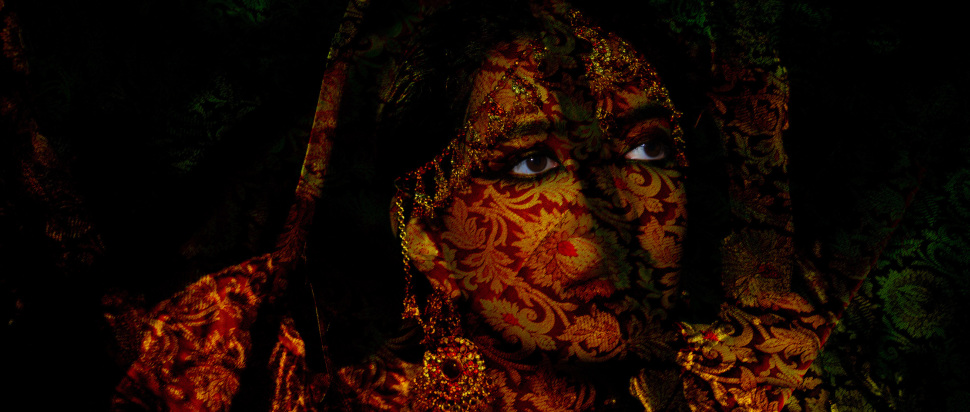
Similarly, Aqsa Arif’s multidisciplinary exhibition at Street Level Photoworks traces the shoots of identity back through both ancestral and assimilated histories. Drawing on her dual Scottish-Pakistani heritage, Beneath the Ivory is Molten Brown highlights the complexities of our relationship to the place and places we're from. The exhibition spans film, installation, textile and photography, with thematic reference to Greco-Roman and South Asian mythology. The political relevance of Arif’s work is revealed in the resonances between these two distinct cultures, resisting illusions of ancestral purity.
Wilkes’ and Arif’s works find alignment in The Subtle Body, which unifies the work of Katy Dove and Lygia Clark in their mutual preoccupation with the body and the unconscious. Both artists’ practices centre collaborative movement and performance underpinned by psychoanalytic theory. Presented together, their archival materials investigate how meaning is understood in more ambiguous ways, while evincing the creative potential of an open and unfixed archive. The exhibition is presented by the Katy Dove Archive, an organisation that Nisbet said was "absolutely overdue in Glasgow" given the volume of work Dove produced here.
Balancing the more personal works in the programme are those explicitly tied to Glasgow. Milngavie Columbo, an experimental installation in Govan Project Space, makes a sardonic critique of the ‘City of Culture’ moniker by way of its petty bourgeoise forebears. Imagining a not-too-distant world wherein Britain’s first Guggenheim Museum is built in Milngavie, the exhibition satirises the lengths Glasgow’s art world archvillains would go to for the top job. There is a murder and a clock-faced detective brought in to solve the case, revealing, as he does, all the undercurrents of neoliberal cultural policy.
That exhibition might be interestingly viewed alongside Disrupting Space: Sharing Practice, a discussion event by three artists occupying Outer Spaces studios across Glasgow. One consequence of arts cuts is the lack of affordable studio space in the city, birthing initiatives like Outer Spaces which allow artists to temporarily occupy buildings. On 19 June, the artists, Gianni Esporas, Olivia Priya Foster and Amy Louise Lawrence will discuss what it means to occupy these spaces in a transient, “meanwhile” capacity.
Moving beyond the city, Michelle Williams Gamaker presents an experimental film about 1930s actor Merle Oberon, who hid her mixed Sri Lankan, Indian and British heritage for the sake of her career. Using tropes from various genres including body horror and film noir, Williams Gamaker’s Strange Evidence is a tentatively psychoanalytic study of Oberon’s self-censorship that touches on continued prejudices and labour restrictions in the modern film industry.
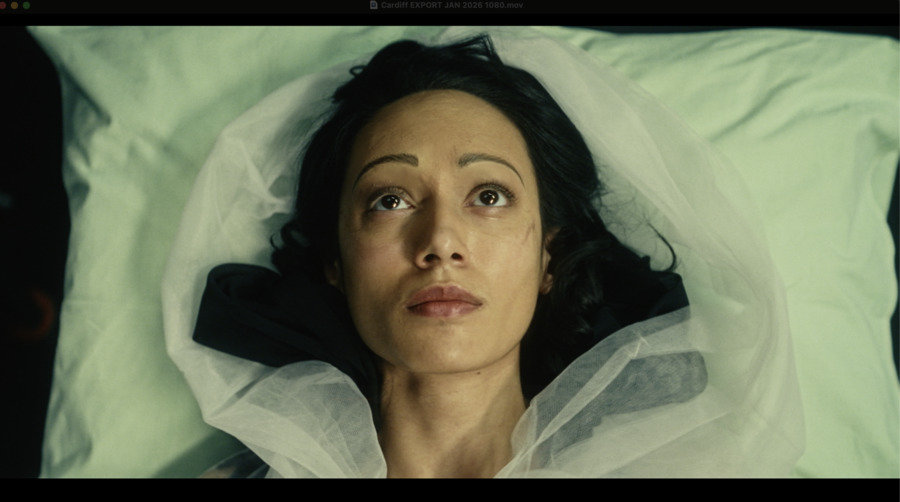
A still from Strange Evidence (2026) by Michelle Williams Gamaker, courtesy of the artist
Moving also beyond this year’s programme, Nisbet is keen to highlight the exhibitions and events happening alongside GI. She is "really grateful" for initiatives like the Glasgow Art Map, who have compiled an alternative programme of non-GI events. The fact that the city has enough art to fill two programmes across just three weeks is a testament to the long-mythologised community and DIY strength of Glasgow’s art scene.
However, while the grassroots might be buoyed by the spirit of perseverance, the grass is too tall to see very much of it. What GI can do, rather than import culture to the city, is "shine a light" on what is already here. Given the last five months have exposed the frailties of cultural institutions forced to rely on government underfunding and the ulterior generosity of private landlords, Nisbet feels that "now is a vital time to throw support behind structures and people that keep artists in a city supported and safe.
Those structures extend beyond folk-happy notions of community to "the basic facts of what artists need – genuinely affordable studio space, paid opportunities and brilliant organisations to support them across all stages of their careers." Providing those resources, without impinging on the freedom to make experimental and exciting work, is one of the biggest challenges facing art scenes globally. “This feels like a very different time to 15 or 20 years ago when people could travel internationally with a bit more lightness and freedom," says Nisbet, "but I find that wherever I go in the world people are really inspired by what’s happening in Glasgow and know about the artists who are based here and the art scene here. So I think that knowledge is already there... it’s really about making sure there’s visibility and interest, because international working and international solidarity is more important than ever.”
Glasgow International takes place at venues across Glasgow, 5-21 Jun
glasgowinternational.org