Constant Community: 20 years of Scottish Mental Health Arts Festival
We speak to Andrew Eaton-Lewis at the Scottish Mental Health Arts Festival about 20 years of platforming lived experience-led art
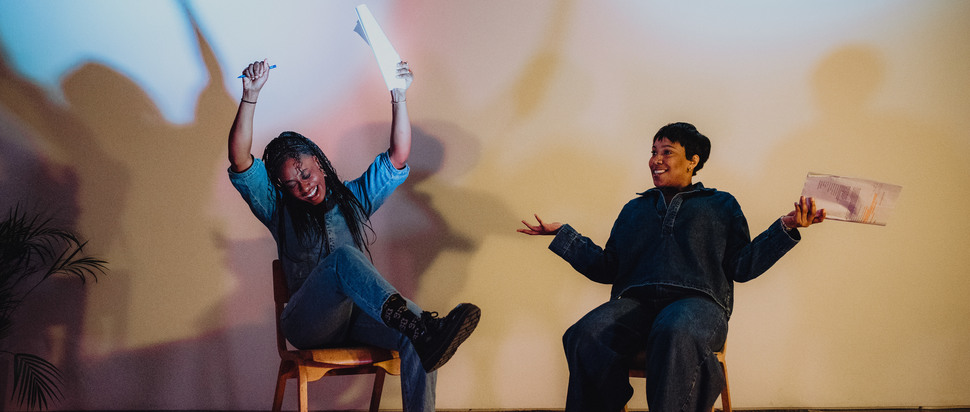
Times have certainly changed since the Scottish Mental Health Arts Festival (SMHAF) first celebrated the intersection of creativity and mental health.
In 2007, discussions around mental health centred largely around awareness; now, for anyone with a working phone, it’s hard to escape a constant 'awareness' of mental health – our own or others’. The veil between the unaware and the aware has slipped – and in its place, a wider breadth of experience emerges for feeling, relating and expressing.
Within this monumental shift, SMHAF, run by the Mental Health Foundation, adapts with ease. Celebrating its 20th festival across Scotland with the theme Reflections, SMHAF’s focus is as relevant as ever: enabling anyone with experience of mental health issues to express themselves through the arts.
Andrew Eaton-Lewis, arts programme officer at SMHAF for ten years, tells us that his work at the Festival in recent years is more focused on keeping those who share their creative work safe.
“People who were making shows about anxiety, depression or eating disorders a decade ago – they were kind of doing it by trial and error,” he says. “They weren't necessarily able to look after themselves while making that kind of work… the support wasn't really there.”
Autobiographical work about mental health – or really any topic that involves societal pain or harm – until recent times has been regarded positively for the assumed fact that it reduces stigma. Now, Eaton-Lewis says, the risks of being creatively vulnerable are clear. There is a demand and need for more support and wellbeing measures around self-expression – but this shift comes at a precarious time for the creative sector.
“We’re at a kind of crisis point in the arts where there’s often not enough money to provide that kind of support,” he says. “A lot of our focus at SMHAF now is trying to make sure artists and audiences are well supported, and providing the best environment possible to make this work, while also wrestling with the fact that these are very precarious times to be living in – and it’s harder and harder to be an artist of any kind, let alone somebody who is making work about trauma.”
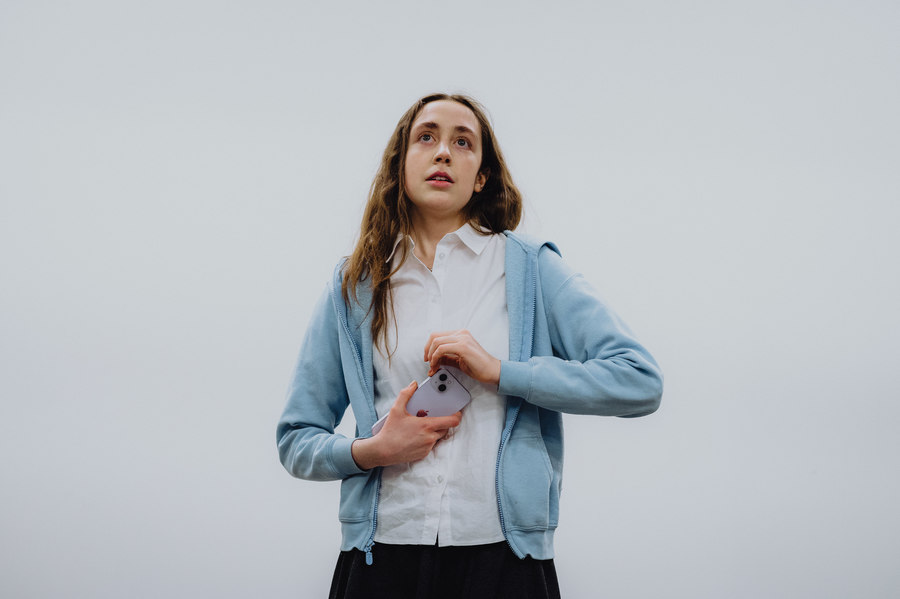
Milly Sweeney, whose show Almond plays at Summerhall, Edinburgh on 30 Oct. Photo: Ingrid Mur
Eaton-Lewis, also a long-time arts journalist, says he noticed an “explosion” of work about mental health at the Edinburgh Festivals around 2015. More people than ever are making art about the impossible terrain of traumatic experience and mental unwellness, and there is a critical dearth in funding to support wellbeing in tandem. But there are some solutions to be found in the model of SMHAF itself.
Eaton-Lewis says that the programme is designed collaboratively and democratically, with himself, Gail Aldam and Rob Dickie at the Mental Health Foundation coordinating and promoting the Festival, while the vast majority of programming decisions lie with communities and partners all over Scotland.
It’s not just in planning that SMHAF ensures community voice and agency. Eaton-Lewis says the team decides on artist commissions by the strength of the proposed idea, not by status as an artist. There are headliners, but these well-known names are treated with the same weight and prominence as, say, a community open mic. It is this community – interacting with the Festival’s offerings from their own lived experiences – that makes SMHAF enduring and unique.
“There's a shared understanding between the artist and its audience that this is a kind of document of what it's like to be struggling with some kind of mental health issue,” Eaton-Lewis says. “This is what a life lived with that looks like. The thing about presenting something like that at a festival that is about mental health is there's a feeling that you are in an audience of your peers… It's a very different experience from showing it somewhere else.”
SMHAF has risen to changing narratives about mental health by keeping its community at the centre, and as a result, ensuring a sense of care that moves horizontally. This shared care is resilient to a lack of top-down resources, or shifting public attitudes towards mental health. And yet, another ten years – even another ten months – seems to promise jarring reconceptions of what it is to be human.
Eaton-Lewis’s hopes for the Festival at 30 years ring simply in the polycrisis: “I hope that if [the Festival] still exists in ten years, it will be a place of comfort and connection.”
And, he promises in a final bid, “a mental health festival can also be a good night out.”
The Scottish Mental Health Arts Festival runs at various venues across Scotland until 8 Nov