Atzi Muramatsu on Sonic Bothy
We catch up with Atzi Muramatsu, creative director of Sonic Bothy, a Glasgow-based charity with the goal of making music more inclusive

Sonic Bothy isn’t your typical classical music collective. Based in Glasgow, the organisation’s ensemble brings together Disabled and non-disabled musicians to explore sound on equal terms, breaking down the hierarchies that define much of the arts world, proving that accessibility can drive creativity, not limit it.
“Our main purpose is to challenge the social structure that places Disabled artists outside of the mainstream,” says Atzi Muramatsu, the charity’s creative director. “We’re not anti-classical or anti- any kind of music, but we’re anti-ableism, and anti-not listening to people.”
Sonic Bothy runs over 120 inclusive workshops a year, and has engaged and supported over 500 participants with underlying health conditions and learning disabilities. It also has a professional music ensemble that has performed at contemporary music festivals, including Counterflows and Sound Festival. The group’s focus is less on technical perfection and more on listening, collaboration and the appreciation of sound.
“The traditional definition of art and music is based on excellence, as an ability,” Muramatsu explains. “But music is a social and physical phenomenon that is much more open than how tight and clean you can play the music. What we’re saying is that if you want to express yourself in any way through this tiny glockenspiel, that is music.”
This belief comes alive in Sonic Bothy’s inventive projects. Their award-winning piece Verbaaaaatim turned accessibility captions for Deaf and hard-of-hearing participants into a part of the art itself. Captioners creatively described sound and music rather than just dialogue, and the musicians improvised in response to their words. The result was a creative feedback loop, introducing a new narrative of the accessibility tool as an artistic tool and a form of inspiration. The work has since garnered interest from ensembles across the UK. “We do feel that it is really creating a ripple,” Muramatsu muses.
The ripple is certainly spreading. Sonic Bothy is now one of several inclusive music organisations supported through Creative Scotland’s Multi-Year Funding Programme, and is part of a growing movement to make the arts sector more representative. Partnerships with festivals such as Counterflows have also helped bring their work to larger audiences. As some of Sonic Bothy’s members are wheelchair users, accessibility is always a big consideration. Muramatsu notes the importance of the work of partners in making a difference: “Everybody’s working really hard to make this work, and there have been improvements.”
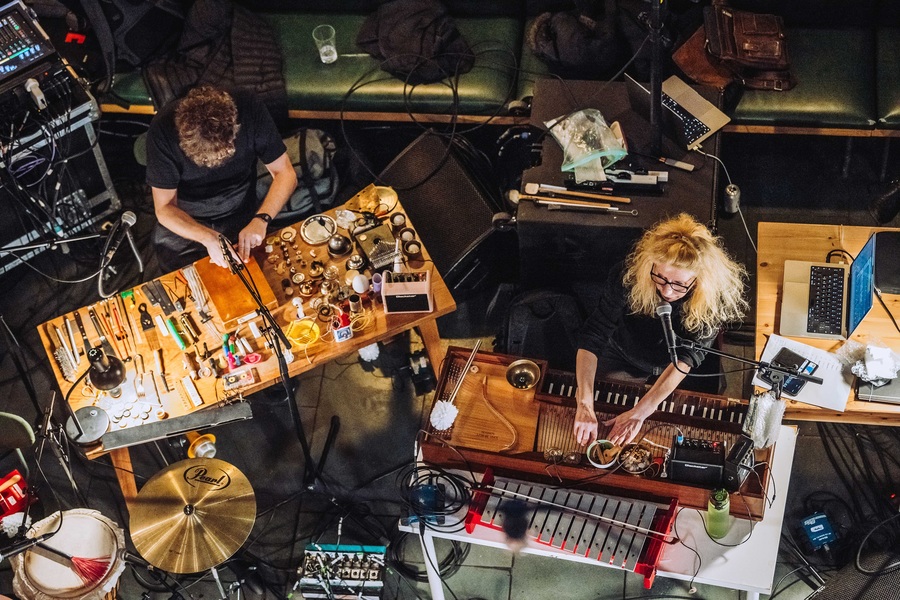
Photo: Brian Hartley.
Still, structural inequality exists. Around one in four people in the UK are disabled, yet only a small portion of public arts funding goes to inclusive organisations. That imbalance isn’t just anecdotal; Arts Council England’s equality analysis of the 2023-2026 Investment programme states that their “investment in Disability-led organisations in the 2018-22 NPO (National Portfolio Organisations) is less than 1% and for self-definition is 1.7% of overall funding.”
Furthermore, Muramatsu points out the importance of advocating for Disabled artists to be able to do their job. “Let’s talk about access. Access support is an area we feel that is not discussed widely enough,” he says. Slow and complicated processes often make it harder for Disabled artists to sustain work, with access-to-work support taking months (or sometimes even a year) to come through.
Despite structural hurdles, Sonic Bothy continues to expand what inclusion in music can look like. Their next project draws inspiration from British Sign Language and uses gesture and haptic technology to explore sound through movement and touch. A collaborative effort with Deaf or hard-of-hearing participants in an inclusive workshop, they are looking to experiment with and challenge conventional concepts of the arts and inclusivity.
What's next for Sonic Bothy and the inclusive arts sector in Scotland? “The hope is that our work is getting seen,” Muramatsu replies. After a turbulent period of delayed funding decisions, Scotland’s inclusive arts sector is beginning to regain momentum, and the sector is more visible than ever. Through Sonic Bothy’s work, people are also realising that inclusion goes beyond fairness, but is also expanding what art can be.
He credits that progress to listening and collaboration. “The best way to advocate is through conversation. We’re a friendly bunch who want to talk.” When asked about what inclusive music-making means to him personally, Muramatsu emphasises the importance of a safe space. “Ultimately, it is a space that you feel comfortable, safe, and relaxed within a group of people where everybody’s voices are heard, respected, listened to and shared.”
That openness, rooted in respect and listening, is what makes Sonic Bothy’s work so powerful. By turning accessibility into art, the collective isn’t just making music more inclusive. Rather, they are redefining what art means in the first place.