Reclaiming Space: 30 Years of Kinning Park Complex
This spring, Kinning Park Complex marks 30 years on from the occupation that saved it, with a 55-day programme of events. We speak to Events and Volunteer Coordinator Ren Clark about community organising, and reimagining the future of third spaces
“Having a community space that has been successfully community-led for 30 years is really special and quite rare, especially in the current moment where services are being cut.” That’s Ren Clark, the Events and Volunteer Coordinator at Kinning Park Complex (KPC). They’ve been heavily involved in shaping KPC's latest programme: 30 years of Kinning Park Complex, running from 3 May to 27 June.
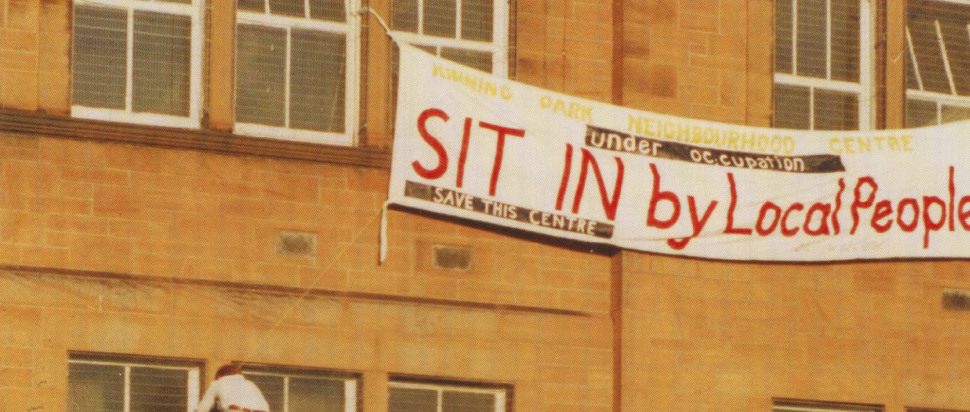
Clark shares how each day of the 55-day programme honours the 55 days the building was occupied by local mothers and campaigners to prevent its closure, when it was deemed 'surplus to requirements': “In 1996, the building was a community centre run by the council, and they decided to scrap all the funding and close the doors with not much notice. At the time, the centre provided key childcare provisions, after-school activities, and wellbeing activities for the local community.”
After 55 days of collective action, the building was saved and transferred into community control for a peppercorn rent of £1 a year. In 2019, the local community officially purchased the building through the Community Empowerment Act – a powerful example of what community organising can achieve.
Those who occupied the space, which was then called Kinning Park Neighbourhood Centre, weren’t just fighting to save a building; they were redefining who gets to own and shape public space. 30 years later, that act of collective resistance lives on in KPC.
I ask Clark what people can expect from the 55 days. “Part of this programme is about throwing the doors open to people and making it really clear that it’s a space for the community, for anyone who needs to use it and anyone who can find a home here,” Clark explains. “There’s a lot of art, music, history, and stuff around activism and activist education that honours that part of KPC’s history.”
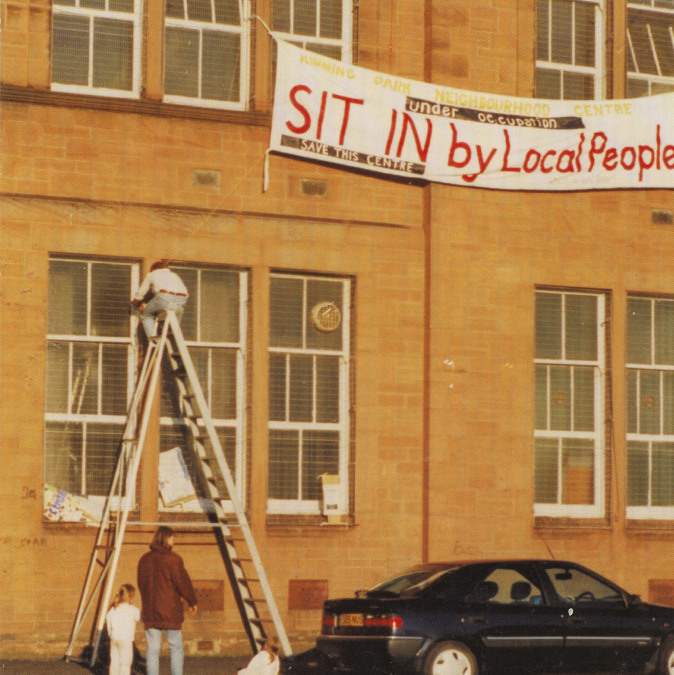
Archive photo from the original Kinning Park sit-in in 1996. Photo provided by Kinning Park Complext
Clark hopes that those who walk through the door “can shape the complex and be part of KPC, making it whatever it is that they need, whether that’s wellbeing, for the community or for their kids.” Just as important, the collaborative programme invites new people in, particularly those who may not yet feel connected to the space. It’s about “helping people become aware of KPC and how it might fit into their lives,” Clark adds.
The events speak to both the past and future. Some support the community with tools to advocate for themselves and their neighbours – for instance, a talk by the tenant union, Living Rent, and a community consultation of the local parks. Others bring people together through community meals. Meanwhile, a roller skating disco nods to a fundraiser held during the sit-in and weekly oral history drop-ins invite people to share and preserve their memories of the buildings, as part of a growing community archive.
The events throughout the 55 days have a common thread of community organising. I ask why organising on a grassroots level feels important. “Getting involved in community activities is also activism, meeting your neighbours is also activism, if you want to think about it that way. Part of the programme is about widening those ideas of what community organising is, and giving people an opportunity to learn about what's happening in the local area, and ways that they can get involved should they want to.”
This multilevel type of community organising feels critical. “Kinning Park and Greater Govan have been really underserved and under-resourced neighbourhoods,” Clark says. “Greater Govan is such an amazing place because there's so much community grassroots stuff happening because they've had no choice but to kind of galvanise and push forward for services themselves.”
Speaking with Clark is a reminder that KPC’s story is not an isolated one. The attempted closure of the Neighbourhood Centre was part of a wider pattern of closures of public buildings at the time. Nearby, Govanhill Baths faced a similar fate, prompting its own occupation and ongoing campaign. This history makes spaces like KPC and others even more vital. Across Glasgow, community spaces continue to face closure or organisations are forced out because of high rents. Arts venues like The Space and organisations like Listen Gallery come to mind. Meanwhile, the fate of the CCA raises wider questions about mismanagement, accountability, and what genuine solidarity looks like, particularly when it comes to Palestine. The CCA's governance currently being investigated by the charity regulator, OSCR. Now, Trongate 103 is the latest space under threat.
Amid these closures, the Kinning Park Complex programme invites us to reimagine what third spaces could be. “Glasgow feels like it’s [at] a very tense point, and I think being able to learn from the spaces that are successful, in a different way, is so key. This helps us and allows us to learn how to avoid these things happening in the future or to resist these things when they happen,” Clark shares.
Community ownership is an option for securing sustainable third spaces. It’s a longer process, though, and until communities are able to do that, it’s clear that it’s important these spaces exist in some capacity. “It’s so crucial to have a place where people can come together, relax, and access free activities," says Clark, "where they can meet, be creative, eat together – especially in neighbourhoods that don’t always get those opportunities.”
Kinning Park Complex: 30 Years of Community takes place from 3 May to 27 Jun
kinningparkcomplex.org/anniversary