Spirited Away: How a Japanese-Scots couple introduced whisky to Japan
Some of the world's best whisky is made in Japan – Rachel Ashenden tells a story of its inception and popularity, via judo classes, love affairs and lockdowns
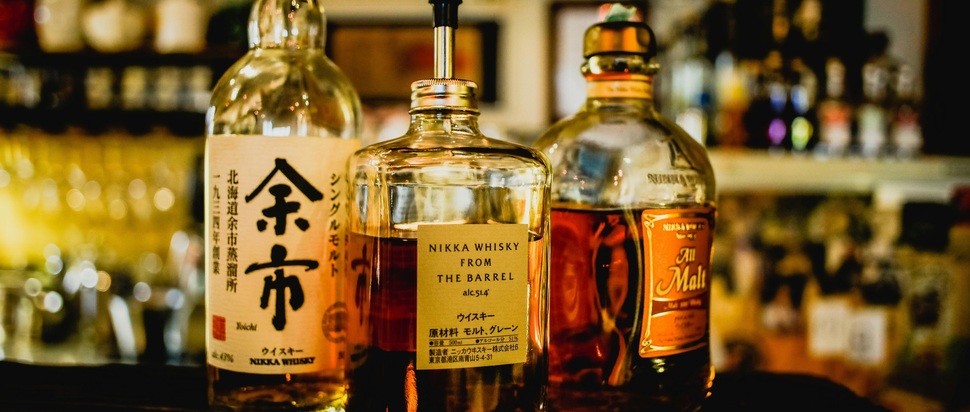
In the depths of lockdown, when we swapped sweaty bars for Zoom quizzes, I treated myself to a bottle of Nikka Whisky. It stood proudly on a shelf in my Edinburgh press; I marked the passing of days through the incremental decline of that warming brown stuff, and decanted it into tiny bottles as a pick-me-up for my neighbours. Though locally distilled whisky was readily available, I found hope in that bottle of Nikka – a reminder that one day we would not be confined to these four walls and would be free to travel again.
It wasn't until five years later, while visiting the sleepy temple town of Takehara, on the coast of the Hiroshima prefecture in southern Japan, that I realised that my bottle of Nikka played a very small part in the UK’s Japanese whisky boom, and a tiny role in a history of shared information and inspiration. In Takehara, a bronze sculpture of Masataka Taketsuru and Rita Cowan nods to the story of the Japanese-Scots couple who introduced whisky production to Japan.
Taking Notes
Despite the mutual fondness of each other’s spirits, it remains relatively unknown that Scotland’s and Japan’s cultural exchange of whisky began in 1918, when the Japanese chemist Masataka Taketsuru ventured to Glasgow on a mission to learn the alchemy of whisky production. Taketsuru gained in-depth knowledge of distilling processes while studying Organic Chemistry at the University of Glasgow under Thomas Stewart Patterson. At the same time, Taketsuru gained experience in whisky production as an apprentice at Hazelburn Distillery in Campbeltown, recording his findings in ‘Taketsuru Notes’; only recently translated into English, they have been described as a Japanese manual for Scotch whisky production.
During the course of Taketsuru’s overseas research, he fell in love with a Scot. In 1919, a fellow university student invited him to teach her younger brother judo. There, he met the family's eldest sibling Rita Cowan, and the rest is history. Both sets of parents disapproved of the union, but they married in secret anyway, later relocating to Japan to introduce whisky production to the economy.
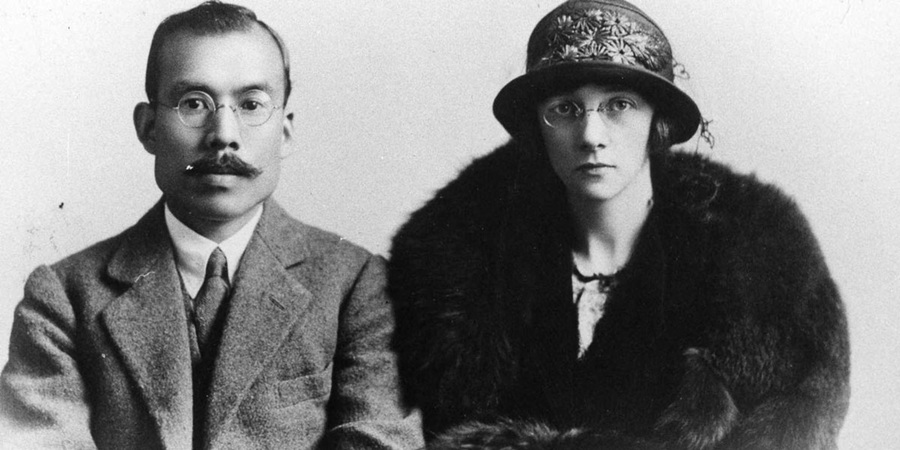
Masataka and Rita Taketsuru. Image: Wikimedia Commons (CC BY-SA X.X)
After managing the Yamazaki distillery near Osaka – which produced Japan’s first whisky, Suntory Shirofuda – Taketsuru searched for the climate and peat that resembled Scotland, in order to start his own business. The small rural community of Yoichi in Hokkaido, the northernmost of Japan’s main islands, offered similar conditions to Campbeltown. It was here, in 1934, that Masataka Taketsuru founded Nikka Whisky, replicating the techniques and production processes of Scottish distilleries. He remained passionate about managing the production until his death in 1979.
Boom Times
Demand for Japanese whisky in the UK has grown exponentially in recent years. In 2015, Jim Murray’s Whisky Bible named the Yamazaki Single Malt Sherry Cask 2013 as the world’s best whisky. In the aftermath, the bottle’s retail price skyrocketed from £100 to £3000, and kept going. The numbers reveal all: spirits merchant BI reported a 232% surge in sales of Japanese whisky in 2017.
When the pandemic hit, many of us sought comfort in the small investment of a premium spirit, numbing the memory of a few pints of Tennent's at our local, thereby amplifying the Japanese whisky boom in the UK. Mirroring that incline, Scotch whisky exports to Japan have steadily grown since 2010; Japan is the fourth largest importer of the Scottish stuff in the world.
Masataka Taketsuru’s legacy is in that long-gone bottle of Nikka Whisky that saw my neighbours and me through the early days of the pandemic, and it is in the soaring 21st-century demand for a Japanese spirit, even in a country renowned for its own. Japanese whisky represents the passion and innovation forged through a cross-cultural exchange.
Rachel Ashenden is The Skinny's art editor, and a freelance arts writer, curator and researcher