Dalia al-Dujaili on her memoir Babylon, Albion
We chat with author Dalia al-Dujaili about her migration memoir Babylon, Albion ahead of her appearance at Edinburgh's Radical Book Fair
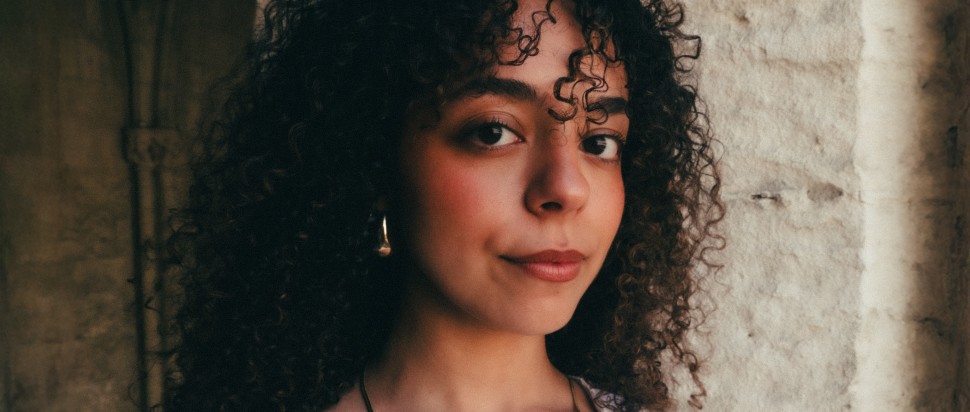
“Nothing happens without movement, nothing survives without migration,” says Dalia al-Dujaili, author of Babylon, Albion: A Personal History of Myth and Migration. “You kill something when you keep it stuck or in stasis, whether that’s a culture, an idea, a story, a plant or an animal, a person or a river.” Humankind, the author explains, is no different. Following this ancient history of human migration, al-Dujaili’s own family migrated from Iraq to the UK before she was born; her debut book is a generous and gorgeously poetic investigation of this family history, told in an incisive conversation with the natural world and intertwined with the myths and folktales which bloom from it.
“Public imagination and our media has done a very good job at making us believe migration is the anomaly and that the migrant is the odd one out, when in fact it’s the opposite way around. If there is no movement in your heritage, you’re one of very few populations in human history that hasn’t moved from one place to another,” al-Dujaili says. It is an idea that is challenged in Babylon, Albion which, between the date palm and the oak tree, covers plenty of (literal) ground. From the soils of Ancient Mesopotamia to the Christian pastoral, the book pulls up the roots of oral histories passed down through generations. It traverses landscapes such as Iraq’s depleting marshlands and England’s disappearing ancient forests. Environments, people and stories are each prised open and held up to the light. Al-Dujaili’s writing, while personal and specific, also feels universal in its meditations on the natural world and on what it means to belong.
The earliest iterations of this book began with al-Dujaili making notes and curating stories from her family as a way to document and archive their journey from Iraq: “A way for me to connect to my homeland without going there,” she explains. After a family visit in 2023, she began to feel a deeper urge to write about Iraq from the perspective of someone who had grown up far away. Yet al-Dujaili also feels a fierce connection to “the British countryside and British landscapes” of the country in which she was born and raised. This, and a spiritual experience the author had while camping out in nature in the UK, helped inform the direction of this book.
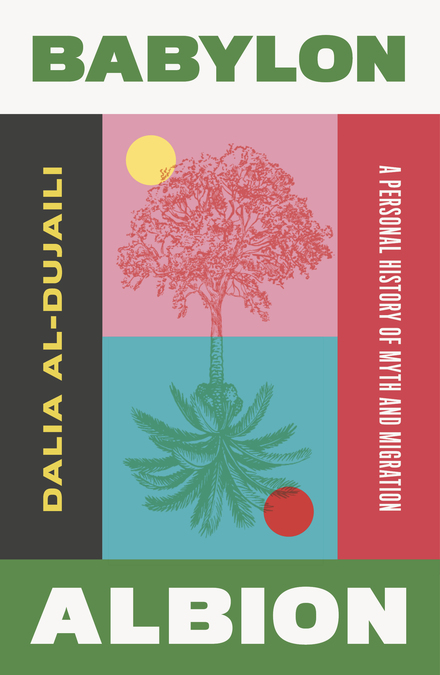
The UK’s countryside radiates through her telling just as brightly as descriptions of Iraq. “I wanted to find a way to talk about being in a place and feeling like you belong there despite lacking heritage or [a] connection beyond just being born [or] living there,” she says. In this way, Babylon, Albion poses inheritance as something which is also interwoven with feelings of kinship towards our local, nonhuman environments.
“I really love Romantic literature that talks a lot about the natural landscape, that imbues the natural world in Britain with this magic, with this folklore, lyricism and beauty and poetry and very importantly, spirituality,” al-Dujaili explains. Exploring this was essential for the author since, due to violent colonial histories, diasporic people in the UK often have a traumatic and ruptured relationship with the land. In light of this, she was compelled to ask: “How does someone without roots here feel spiritually connected to a place and feel drawn to protect it? Drawn to write about it and imbue it with magic?”
The question of what might drive us to protect our planet hovered over al-Dujaili during the entire writing process. And the author hopes that by turning to the stories, myths and folklore which are so often inspired by our landscapes (examples of which al-Dujaili draws out in her book), we might find new ways to tackle the climate crisis. “If we all take a little bit of time to ask our elders questions about where they're from and how they connected to the land where they are from, we will learn so much about how to guard ourselves for quite a difficult future in terms of the climate crisis,” she says. “And I think we will come away from those conversations with a lot more reverence for the natural world, which in turn asks us to be responsible for it.”
If readers take away one thing from this book, al-Dujaili would like it to be this: “I really hope that people leave the book with a deeper curiosity about where they come from,” she says. And rather than seeing conversations on the climate as solely the realm of scientists, al-Dujaili hopes we will all increasingly come to view climate as essential to our storytelling in its many forms. “Our culture is inspired by the natural world,” she says. “When you save the planet, you’re saving yourself. When you save species and environments, you’re saving a whole culture.”
Babylon, Albion is out now with Saqi Books
Dalia al-Dujaili appears at Places that Built Us: Belonging and Environmental Justice Across Borders, Assembly Roxy, Edinburgh, 9 Nov, 2.30pm, part of Edinburgh’s Radical Book Fair