Colin Bramwell on his debut poetry collection Fetch
We speak with Highland-born poet Colin Bramwell about his debut collection Fetch and the unexpected influence of folklore in his work
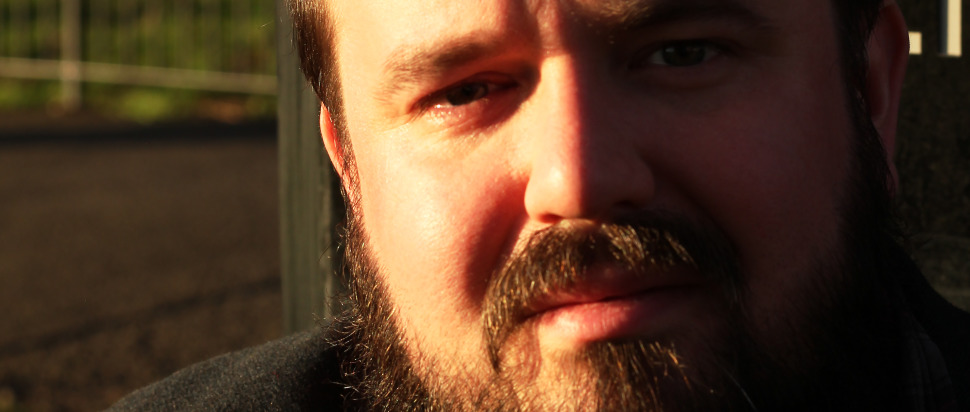
In Celtic folklore, the fetch is a dreaded omen. An individual’s ghostly body-double, it apparates on Earth to literally fetch that person to the afterlife. Colin Bramwell’s debut poetry collection Fetch, however, guides the reader into each poem to reflect on themselves, their surroundings and where they’ve come from. In Bramwell’s interpretation, the fetch acts as a through line, a metaphorical usher into introspection. “You can find [the fetch] throughout loads of cultures all over the world,” Bramwell begins. “You try and get to the world by being in your own bit first.
“The title Fetch came relatively late in the process,” he adds. “I would say Fetch is almost more of a title than a theme.” As a ten year work in progress, the poems are wide-reaching and considered, each distinct in subject rather than being overtly conceptual. “The idea was just to try and get a book of poems together... so it’s kind of like an apprentice book in a way. I know others would go kind of full concept for their first book and I think that's fair enough, but Pink Floyd didn't write Dark Side of the Moon first, did they?” he laughs. “So maybe this is more of my Piper at the Gates of Dawn.”
Despite the book's namesake, Bramwell didn’t initially intend for the book to have mythological underpinnings. However, having been brought up in Fortrose on the Black Isle, he talks about folklore as almost integral to the structure of Highland culture, and therefore inescapable in the collection. “When you’re writing a first book of poems, you’re always attending to where you’ve been. Some of the poems are tributes to Highland writers like Aonghas MacNeacail and Sorley Maclean. So there’s kind of a gentle situation of the book in the Highlands,” he says. “I didn’t want it to be like, here are my folklore poems. Whatever was good enough to be in the book was going to be in it. But I think I see [folklore] as part of my intellectual or cultural history that I like to riff on.”
Bramwell is not only a talented poet but a translator as well, holding a doctorate in creative writing from the University of St Andrews, and it is through this that much of his approach to language is influenced. “I came to poetry thinking, ‘OK, I really don't know what I want to say’” he says. “And what's really good is that translation will enable you to go through the motions of writing a poem. You can learn some of the basics of craft.” He details how translation has helped him develop Fetch as a collection: “translation is sort of like a rehearsal for writing a poem,” he explains candidly. “With poetry particularly, there's an idea that it's untranslatable. But the thing is, if you're reading a poem and reading it properly, then it's almost impossible not to translate it in some way.”
Expertly blending Scots and English, Bramwell’s approach to language is characteristically funny and lively, a nod to the ceilidh culture that he grew up with. “Scots is very good for entertainment, it’s kind of bouncy and onomatopoeic,” he says, qualities that are reflected in the readability and effervescence of Fetch as a whole. “There’s a perception with Scots that it’s harder to read, but I think as long as the poem’s good, then the pleasure of having encountered a good poem will carry the language in some way.”
Witty, forceful and strangely comforting, this is a collection of poems that reimagines how we engage with language. For each Scots poem, Bramwell has included a glossary of Scots words, a thoughtful touch to increasing accessibility. He explains that he recently began studying Old English: “I find that a lot of those Old English words are surviving in modern Scots as well. So there's a thing about Scots that it gets you to the root of English,” he reflects. “I think it's really important not to be too anachronistic with our Scots. Although, that said, I think it's also important not to put any rules on how other people want to use it.” Bramwell emphasises the fluidity of language and its ability to morph, becoming something that moves with us as we encounter modernity. Fetch uses Scots in a poetic form that feels distinctly contemporary, language that feels like home.
“It’s very cool to be able to start writing a poem in English and say, well that’s not working, and then you put it into Scots and it starts to work or vice versa,” Bramwell says, reflecting on his writing process as a whole. “So it’s maybe that sort of fetch thing of encountering yourself but in a different form.”
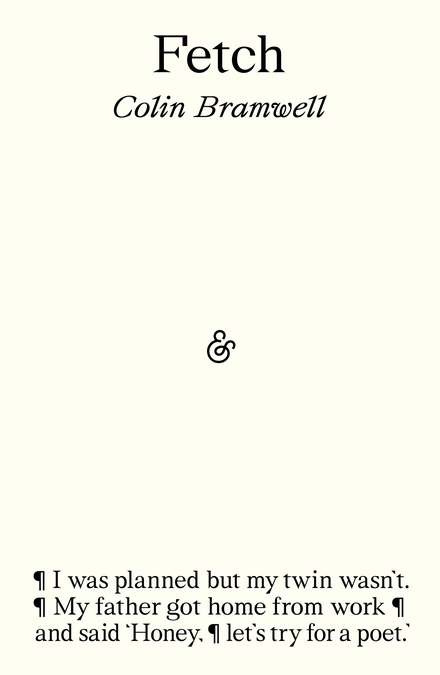
Fetch is out with And Other Stories on 8 Sep