The Skinny's Guide to Edinburgh's Attractions and Green Spaces
We've put together the capital’s most eye-catching sights, its most memorable museums and its most bewitching ruins

This article has been updated with copy from the 2026 edition of The Skinny Guide to Edinburgh – a 116-page selection of some of our favourite things to do and places to go across the city. Pick up a copy at venues across Edinburgh this summer, or read it online via Issuu.
Outdoors and Uphill
Edinburgh Castle, situated on the summit of an extinct volcano, has been an iconic part of the city’s skyline and Scotland’s national identity for hundreds of years. Today, the castle is open to the public, offering historical tours and sweeping overlooks. If you’d rather admire it from below in Princes Street Gardens, brace yourself for the daily firing of the One O’Clock Gun from the castle battlements. The gardens, just across the road from the shopping promenade of Princes Street, are also home to the turquoise Ross Fountain, the ancient St Cuthbert’s Kirkyard, and the statue of ursine war veteran Wojtek – the wild bear was conscripted into WWII, before retiring to Edinburgh Zoo. Though there are no retired army animals there anymore, the Zoo has recently celebrated the birth of baby Capybara Bru.
If there’s an overlook you want to reach more easily, you can access the top of Calton Hill via the stairs on Regent Road. Up there, you’ll find other architectural poster boys of the city such as The Dugald Stewart Monument and the National Monument of Scotland, an unfinished replica of the Parthenon that has been affectionately nicknamed 'Edinburgh’s Folly' and 'Edinburgh's Disgrace'. If you’re up for a heftier hike, head to Holyrood Park and up Arthur’s Seat. The peak is one of the most popular photo ops in the city, and the beginner’s route from Queen’s Drive is beloved by locals and tourists alike. If you want a view from the very centre of it all, climb the viewing platforms on the Scott Monument, the imposing gothic spire on Princes Street, and for those who really want to test your stamina, travel by foot or by bike via the 12-mile Water of Leith walkway, which takes you to such scenic spots as Dean Village, the Colinton Tunnel, and areas like Craiglockhart Hill and Saughton Gardens.
But there’s no need to go so far afield; if you prefer to stop and smell the flowers, the Royal Botanic Garden (Inverleith Row) has acres of plantlife available to the public, and a historic herbarium that contains over three million flora samples, and The Meadows, the unofficial commons of the nearby University of Edinburgh George Square campus, is worth a trip for its cherry blossom-covered walks.
Indoors and Underground
The National Museum of Scotland, which is accessible via Chambers St, houses hundreds of antiquities from around the world and contains a multi-storey wing detailing the history of Scotland. Its most notable attractions include the taxidermied remains of Dolly the Sheep, the first ever cloned animal, and the gargoyle-covered Millenium Clock which comes alive in a macabre dance several times a day.
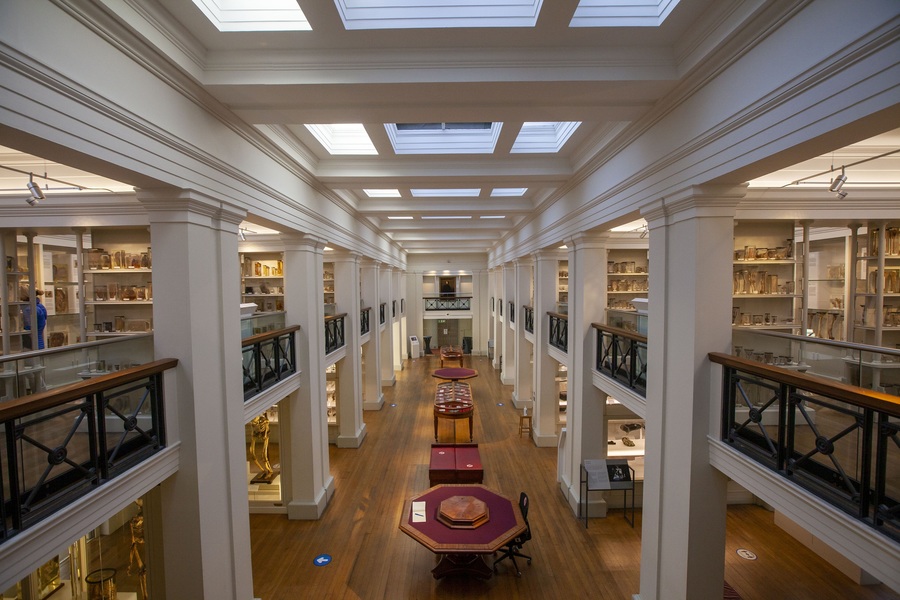
Surgeon's Hall Museum.
Edinburgh is a centuries-old city, and buried beneath the Old Town are some bone-chilling histories; the excavated alleyway of Mary King’s Close (2 Warriston’s Cl) is often distinguished as Britain’s most haunted location. Whether or not you’re a believer in the supernatural, there’s a ton of history hidden in Edinburgh’s underground vaults, and Auld Reekie Tours (45 Niddry St) and Mercat Tours (28 Blair St) offer experiences that take you down below.
The gates of the Gothic Greyfriars Kirkyard (Greyfriars Pl) are guarded by the statue of Greyfriars Bobby, a terrier who spent 14 years loyally defending his late master’s grave. The memorial to the dog has become a celebrity in its own right, and every day crowds of tourists flock to the statue to rub his bronze nose in exchange for luck. If you have a taste for something much more morbid, Surgeon’s Hall (Nicholson St) is a medical museum stocked with body parts and animal specimens preserved in formaldehyde jars, which also tells the story of Edinburgh’s status as an Enlightenment city – and the grisly amount of graverobbing and dissection that our historical figures owe their scientific advancements to.
Not all of our attractions are buried underground or floating in jars. Something that is appreciated by all ages is a trip to Dynamic Earth (Holyrood Rd), an interactive science centre laid out with immersive, environmental displays. There, you can experience the simulated conditions of an earthquake, or behold the complete night sky in their planetarium. There’s even a real-life glacier, which you’re encouraged to touch and feel the ice crystalise around your handprint. Camera Obscura & World of Illusions (549 Castlehill) is a museum dedicated to visual effects, such as mirror mazes and tunnels of light.
Outwith Edinburgh
If you’ve got more time to kill and want to get some fresh Scottish air, jump on a bus to the Pentland Hills, a hikeable wildland just an hour north of Edinburgh, where you can see some Highland cows up close in the fur. The open-air art park Jupiter Artland, known for its surrealist landscaping and otherworldly sculpture, is a similar distance from the city, and on Scotland’s sunniest days – it’s been known to happen – Portobello Beach is the best place to be.