Staging Solidarity: The Lee Jeans Sit-In of 1981
Playwright Frances Poet, director Jemima Levick and Margaret 'Maggie' Wallace, an original striker, discuss Stand and Deliver: The Lee Jeans Sit-In – the story of a Greenock uprising fit for the stage
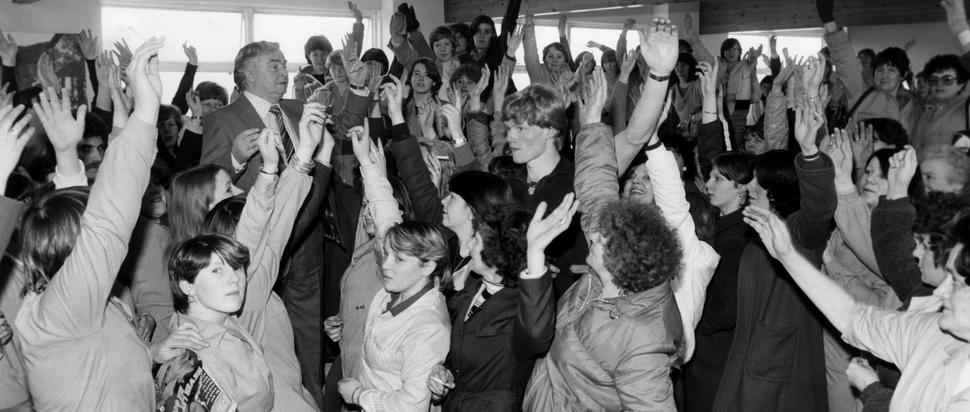
Recently, Margaret 'Maggie' Wallace, a former machinist at the Lee Jeans plant in Greenock, was asked by a woman in the Greenock Co-op if she was “one of them” – meaning, one of the women the upcoming production Stand and Deliver: The Lee Jeans Sit-In is about. Wallace said she was, to which the woman replied: “I’m so proud of you.”
Forty-five years on from the events of 1981, a fleeting moment of connection and recognition like this exhibits three things. The tumultuous long-term effects of the Lee Jeans sit-in on the western central Lowlands; the strength of a community that Wallace adamantly stresses is “worth fighting for”; and the undeniable importance of a story like hers – and all the women involved – for people today.
Resonance is the word. It keeps coming up in The Skinny’s interviews with playwright Frances Poet, director Jemima Levick, and Wallace – then a 20-something year-old worker, one of a 240-strong, largely female workforce, who advised throughout the process of the National Theatre of Scotland and Tron Theatre Company's brand-new co-production. True enough, Stand and Deliver's concern with a historical event where an affluent multinational – the American VF Corporation – threatened the livelihoods of thousands and shook the foundations of a local community both epitomises Thatcherite hardship and will strike a chord with today’s audiences. It is a 'resonant' story, as Poet laments, since the conditions which allowed these events to occur still exist in the world – and UK society – today; perhaps even more so. But crucially, this protest, unlike so many that define our view of industrial relations under Thatcher, was successful.
The skinny is this. Greenock was plagued by a disproportionately high unemployment rate, even for the early 1980s, and the factory’s threat of closure – for the falsified reason of 'unproductivity' – triggered a seven-month long ‘sit-in’ led by shop steward Helen Monaghan to prevent the local unemployment rate for women rising above 50 percent. The rest is history, and one which, in Wallace’s own words, “should never be forgotten.”

Helen Monaghan, convener of the strike with Maggie Wallace. Photo: James Chapelard.
It was after their collaboration on the play Fibres – a drama about the preventable dangers of asbestos in the Glasgow shipyards – that conversations between Poet and Levick, then artistic director of Stellar Quines Theatre Company, and now the Tron’s artistic director, began. Poet recalls feeling the resonance of the story back then in contemporary disputes, like Amazon workers rightfully unionising or frontline workers bearing the brunt of the COVID-19 pandemic. Also, Levick tells us, Stand and Deliver really offers “the women’s story version” of the workers’ rights narrative they successfully explored in Fibres, one which has not been told in a long-form or narrative dramatic way. This is partially the aim of Stand and Deliver: to document what happened over the seven months, from the carnage of the occupation’s first days to moments of flaky union support. Not to mention, of course, the human minutiae – like the fish and chips the women, namely Wallace, had to sneak out to collect.
Poet, straight off the back of her Blackburn-shortlisted Small Acts of Love, which reopened the Citizens Theatre last September, is no stranger to research. This, Wallace can also attest to. The process by which Stand and Deliver came into existence began in 2020 – Poet came across an article about the strike by journalist Paul English, who would subsequently arrange meetings with some of the leading voices from the protest. These led to several developments at the National Theatre of Scotland starting in early 2022, which were instrumental in making Stand and Deliver “as authentic as possible,” says Poet. It was also crucial for “people to feel celebrated,” most of all, the women involved in the successful protest who will be able to finally see their story represented.
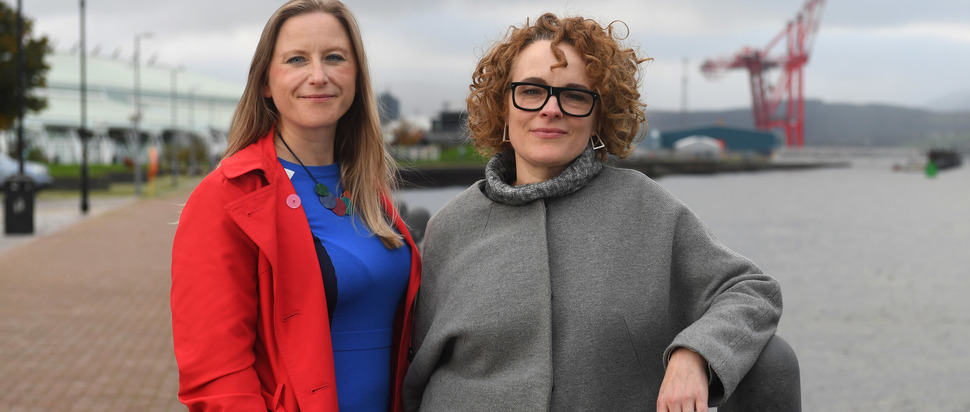
Frances Poet and Jemima Levick. Photo: James Chapelard.
However, on speaking with Levick – who was preparing to enter the rehearsal process – it seems we can expect a rich combination of documentarian fidelity to the facts and a “brilliant banging night” full to the brim with a feel-good entertainment factor too. It is, after all, a story of industrial protest which proved generous in the extremely ungenerous 1980s. Alongside its historical detail and positive messaging about the right to protest, the inclusion of live music from the 1980s promises to bring an electricity to the themes of Stand and Deliver both nostalgic and progressive. The way music of the period – romantic yet politicised – plays, one can expect from this production and its ensemble of actor-musicians a sizzling, dynamic rendition of both the time period and events of the sit-in. This unique style rejects certain expectations and tropes of typical social dramas about industrial disputes.
When we asked Poet, Levick and Wallace what they most wanted audiences to take away from Stand and Deliver, there were myriad wishes – including Wallace’s own emphasis that this version of the Lee Jeans story is the best yet, so should be seen on that merit. But the one which topped their lists was shared: The show will be a great night out with a memorable cast of characters and story, with undeniably huge heart and resonance for today’s audiences.
Stand and Deliver: The Lee Jeans Sit-In is touring nationally 24 Apr-10 Jun
Touring to Glasgow, Aberdeen, Kirkcaldy, Edinburgh, St Andrews, Peebles, Mull, Inverness, Cumbernauld and Greenock