Power Play: Finn den Hertog on a new Lear
Director Finn den Hertog discusses a new King Lear at Pitlochry Festival Theatre which places dementia, family and feminine leadership at the heart of Shakespeare's great tragedy
We can assume that the palace of the ageing King has been filled with speculation, private hopes and expectations. It is plain that his time is almost up, as it will be for several nobles of his generation, and that the established balance of power will soon shift. Still, the court is shocked to see the King volunteering to give away his lands and power prematurely, exchanging portions of his kingdom for acclamations of love and loyalty from his three daughters. It is an act of vainglorious folly, a repulsive charade of fawning and flattery that sets the sharks circling, and the one daughter with the integrity to abstain from it is banished from this kingdom of fools, just as it begins to tear itself apart.
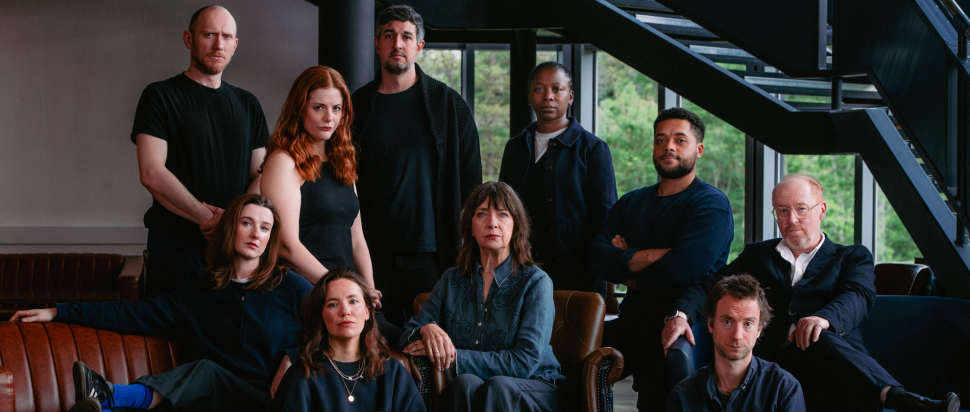
Thus begins King Lear, one of Shakespeare’s great tragedies, which comes to the Pitlochry Festival Theatre for the first time in its 75 year history from 4 July-1 August. This production stars stage icon Maureen Beattie in the title role – just Lear – while Forbes Masson heads up a stellar supporting cast of Scottish acting talent. The return to Shakespeare is a key focus of Alan Cumming’s inaugural season as Artistic Director of Pitlochry Festival Theatre, with both lead actor and director Finn den Hertog signing up immediately for a Scottish and female vision of this timeless tale.
Director den Hertog likens the opening scene and the central premise of Lear to “the making of a will prior to death,” with the horrified testator finding themselves in the awkward situation of witnessing acrimonious repercussions as they unfold; watching on as self-interest turns children against their parents and sets brother against brother.
Yet, there is a great necessity to the making of this living will. Our Lear is an ageing woman experiencing the onset of dementia. Immediately this shift recalibrates her desire to hold onto the trappings of power while relinquishing the responsibility of rule from a decision rooted in a rapacious ego, and more like a confused admission of a growing vulnerability. Her belief that she will be permitted to both have her cake and eat it is pure delusion, and her struggle stems from the fact that her kingdom does not share it. As den Hertog says: “She believes that she will be seen and treated like a queen, because she remains a queen in her own eyes. She cannot see that she has made herself the queen’s mother.”

Maureen Beattie and the cast of Lear. Image: Chris Keatch.
Power, rank, and even names are all stripped away and reconfigured throughout this play. In the opening scene, the regal Lear is venerated, protected onstage by an invisible forcefield of respect. Within just a few scenes, that protection is annihilated; her former subjects dare to stand closer, to touch her, mock her and revile her to her face. This trauma combines with her cognitive decline, causing a profound spiral in which the sand of established certainties shifts all around her and identities begin to mutate. This reframing of Lear as a person experiencing a cognitive decline is a clever decision – one that will fundamentally change how we hear lines such as “Who is it that can tell me who I am?” Presented less as a puffed-up rhetorical from a wounded blowhard and more as a sincere reflection, the question will almost certainly feel more poignant.
This empathetic reading of characters extends to the villains of the tale. Shakespeare tends to muddy the moral waters of his writing, and Edmund, the primary antagonist of King Lear, is a great example. Edmund is the bastard son of the Duke of Gloucester; his introduction to the story is replete with insults and humiliations from a noble father who mocks him to his face. The soliloquy that follows considers the unfairness of those slighted by society and urges the marginalised to challenge their status. Yet, den Hertog is especially keen for the audience to understand the injustice of his station and treatment. Likewise, he also wants his audience to feel the frustrations of Lear’s duplicitous daughters Goneril and Regan, who find that they cannot tolerate their mother’s excesses or her intention to hold onto the glory of her title and divest herself of the work.
Mistreatment and bad parenting appear to be a feature of both noble families, insinuated strongly on Lear’s behalf and shown obliquely through Gloucester. The three ungrateful and violent children are not psychopaths looking to hurt their supposed loved ones to make cruel sport. Instead, they represent the subtle tragedies of self-interest, entitlement and generational trauma. After all, human monsters are thankfully rare, but each day we will meet flawed, ambitious and desperate people who can be compelled towards evildoing, and in the wrong circumstances, these more banal evils can be just as dangerous.
With its raging thunderstorms, mutilations and civil strife, the story of King Lear is simultaneously personal and epic. It is a narrative in which history and mythic comingle. However, by focusing on its intimate aspects and the familial relationships that form its core, den Hertog’s Lear promises a very humanistic interpretation, veined with the eternal anxieties of status, decline and the fragility of order.
Lear, Pitlochry Festival Theatre, 4 Jul-1 Aug