Stepping Up: Bringing Chicago footwork to Scotland's clubs
With battling workshops and frenetic club nights, Chicago footwork has found a foothold in Scotland’s party culture. We speak to Jana Rush, Big Dope P and Chicago Footwork Scotland about the genre’s transatlantic journey
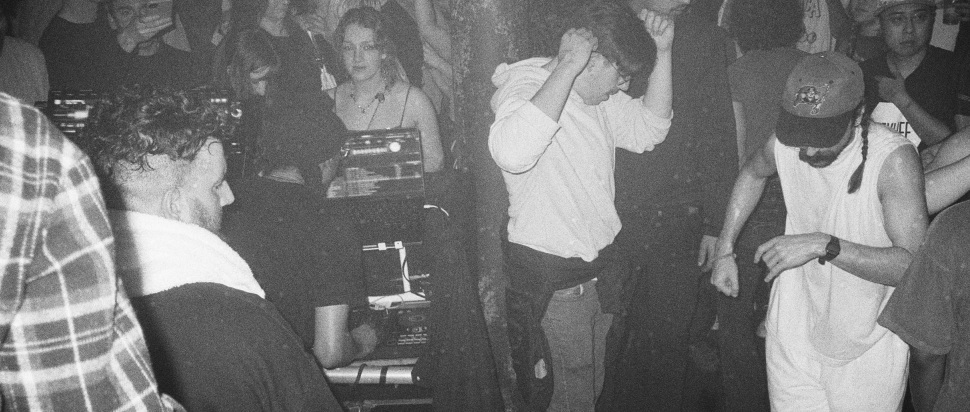
Northern Soul and Motown, voguing and house, jumpen and jumpstyle – dance styles and music genres have a symbiotic relationship. Dancers respond to the experimentation of producers; producers create music for dancers to interpret through movement. At the close of the 1990s in the South and West Sides of Chicago, ghetto house was being incrementally sped up to make way for dance crews to trial new routines. What ensued was a genre characterised by a torrent of chopped-up vocals, syncopated drum patterns and a blistering 160 BPM, known as Chicago footwork.
Jana Rush, a Chicago native and host of Rush Hour on NTS Radio, witnessed the dance style’s emergence firsthand: “Footwork started out as the type of moves dancers would employ when bangin’ ass beats were played at parties [and] parades. If you played the right techno, ghetto house, or gutta track, peeps would form a circle and start battling.” Competition pushed the dance style further, with rival groups embellishing with split-second creativity and technical skill in the centre of the ring. Rush, who began DJing as a ten-year-old, remembers these developments predating the music: “This was well before footwork tracks were being made, back then the tracks were very experimental and gritty.” The sound would soon catch up, evolving into an underground club staple. “Footwork is what the industry needed,” Rush says about the scene, “we keep it fresh and creative.”
From London label Planet Mu circulating compilations in the 2010s to footworkers in Tokyo battling to the splinter genre Japan juke, Chicago footwork has found pockets of adopters around the world. Transported from one windy city to another, Edinburgh resident Jez Dunn first encountered Chicago footwork in 2011: “Machinedrum released his album, Room(s), which [was] his first footwork-influenced music, and I heard a Mary Anne Hobbs’ Breezeblock mix which had a couple of Chicago footwork tracks in there. That was the sort of thing that totally blew my mind.” Today, Dunn runs Chicago Footwork Scotland, an Instagram page dedicated to promoting footwork events, organising dance workshops and amplifying the genre’s engagement across Scotland.
It was in October 2025, in the midst of Storm Amy, that Dunn’s vision was crystallised. Braving the weather warnings, Dunn headed to Edinburgh’s The Bongo Club to see Taso, a footwork DJ and member of Teklife, the legendary crew formed by the late DJ Rashad. “I only found out about it a couple of days before it was on,” says Dunn, “it felt like with a bit more promotion, it might have been a busier night.” In its formative state, Dunn described the page as “a focal point for people to come together… so that if you type in Chicago footwork and Scotland into Google, you have somewhere to find out what’s happening.” Since then, Chicago Footwork Scotland has worked alongside Glasgow club Stereo to hold professionally-led dance workshops. “They were organising Teklife’s fifteen-year anniversary, so it was great timing,” Dunn says about reaching out to Stereo just prior to the event, “I messaged footwork teachers in the UK and one of them was free to come up… We had 30 spaces and they all got taken.”
Amongst those playing for the Teklife anniversary was Big Dope P. Like Jana Rush, the London-based, Parisian native found footwork in his youth: “I grew up making rap instrumentals as a kid, [but] waiting on rappers to record on those beats could take time,” he says, “I was intrigued by house music and enjoyed the fact you could do whole tracks without waiting after anyone. I started making club tracks way faster [and] incorporating my funk and rap influences.” By 16, Big Dope P had established Moveltraxx with friends, a label releasing footwork from Waxmaster, Traxman and DJ Rashad, alongside his own. “People got into it via different doors at different times,” he says about the spates of interest the genre has seen, “Planet Mu and Hyperdub got dubstep fans into it. We got the rap and club music people into it… It’s waves of generations now uniting.” He reflects on his interactions with the Scottish scene: “The LuckyMe crew were early on this music [and] educated the audience through their radio shows and DJ sets, people were ready for it when I came,” he says, “Scotland has always been ahead musically anyway.”
While footwork has been circulated by DJs in Scottish clubs for over a decade, Dunn hopes to see a similar uptake on the dancefloor. “We're trying to reconnect the dance with the music,” he explains, “the dance style never really took off [in the UK] until the last couple of years, and really only in London where they actively reconnect the music and dance through specific nights.” One such night, 160 Unity, heads to Stereo at the end of the month – DJ Spinn, Jana Rush and Big Dope P are all joining the party, alongside a workshop from Chicago Footwork Scotland.
Dunn is hoping this swell of activity establishes a longer connection between Scotland and Chicago footwork: “I would love to see a dedicated group of footworkers who are coming together, training together, creating their own battles and club nights.” While Scotland’s clubland is yet to see battle circles and localised crews, with the likes of Chicago Footwork Scotland and Stereo championing the Chicago sound, Scottish footwork is finding its feet.
Headset: DJ Spinn, Sneaky Pete’s, Edinburgh, 17 Jul
160 Unity, Stereo, Glasgow, 31 Jul