Counterflows 2026: The Report
Across its four days, Counterflows unites a community of like-minded people, leaving us excited for the infinite possibilities of music and sound in all of its forms
It’s Thursday night, and I’m in a near-pitch black room. Guitarists on the front stage are playing a disorientating sound. Twanging, the sound reverberates and moves, cutting off just at the point where it may take form into melody. At an opposing stage, suddenly a performer bursts into frenetic speech. Fragmented phrases give way as she grips the microphone and starts to scream: “TACO BELL, GO TO HELL” over and over, crashing down repeatedly on a cymbal next to her.
It may feel utterly surreal, but this isn’t a fever dream, nor a nightmare. We’re in Glasgow, and it’s the opening night of Scotland’s longest-running festival of experimental and marginal music, Counterflows. Returning this April for its 13th outing, over the next four days the schedule is packed with sound, performance and events from artists hailing from Scotland and around the world: a geographical spread stretching from Skye to Gdańsk; Bizkaia to Taipei, and many more besides.
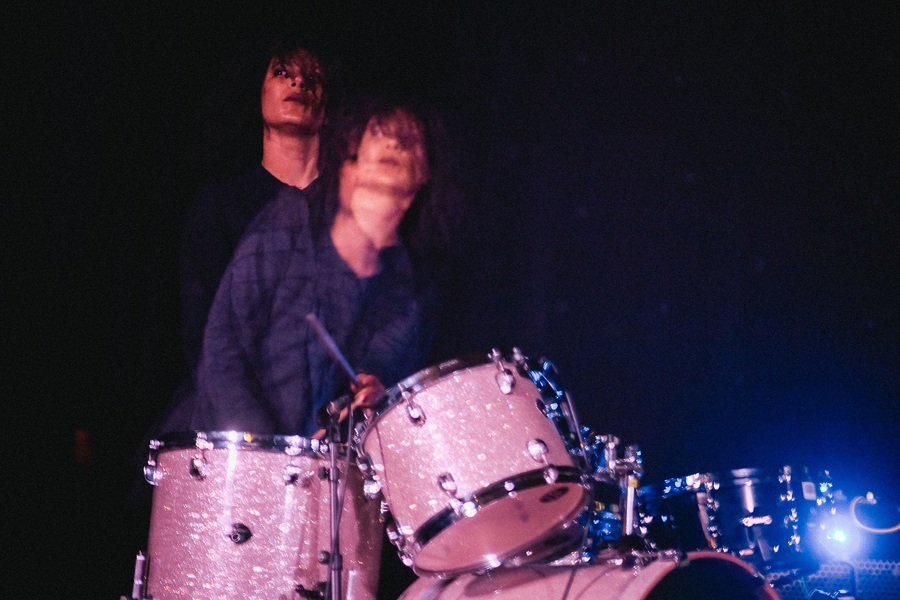
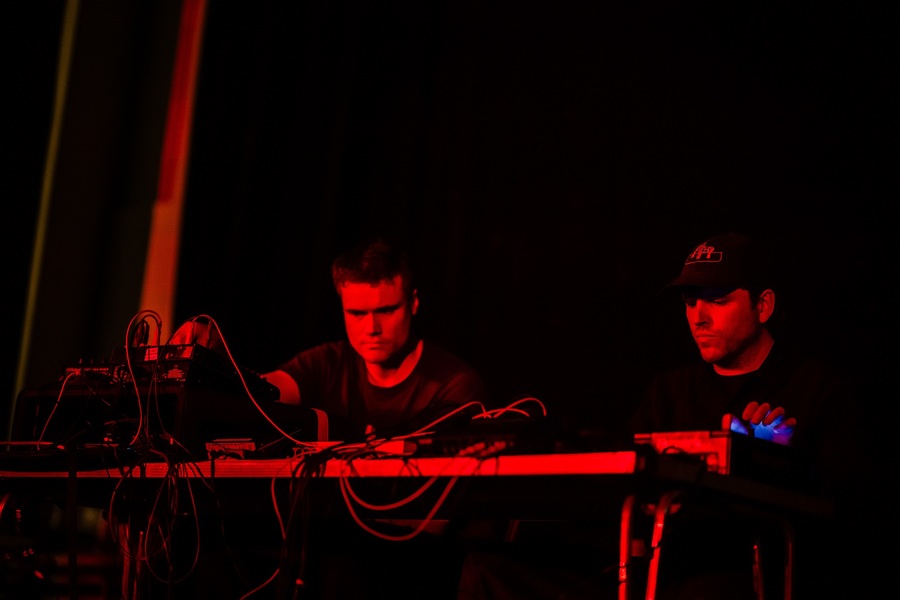
Thursday’s late-night performance at The Art School comes courtesy of Glasgow duo Hexakaidecagon, who are joined by Dublin-born experimental vocalist Cliona Cassidy. The feeling of disorientation comes from the offset, the multiple stages around the room making it unclear where to put our bodies in relation to the space as we enter. As synthesisers immerse us in textural sounds, this performance is an intriguing exploration of the surreal space in between material and emotional worlds, and one I sense we have unwittingly become part of. 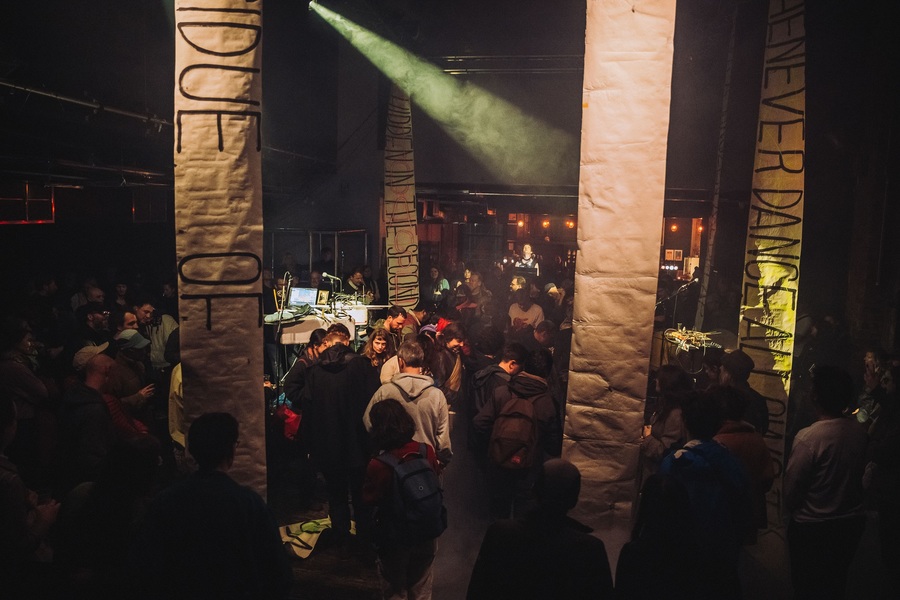
Image: Hexakaidecagon @ Counterflows by Brian Hartley
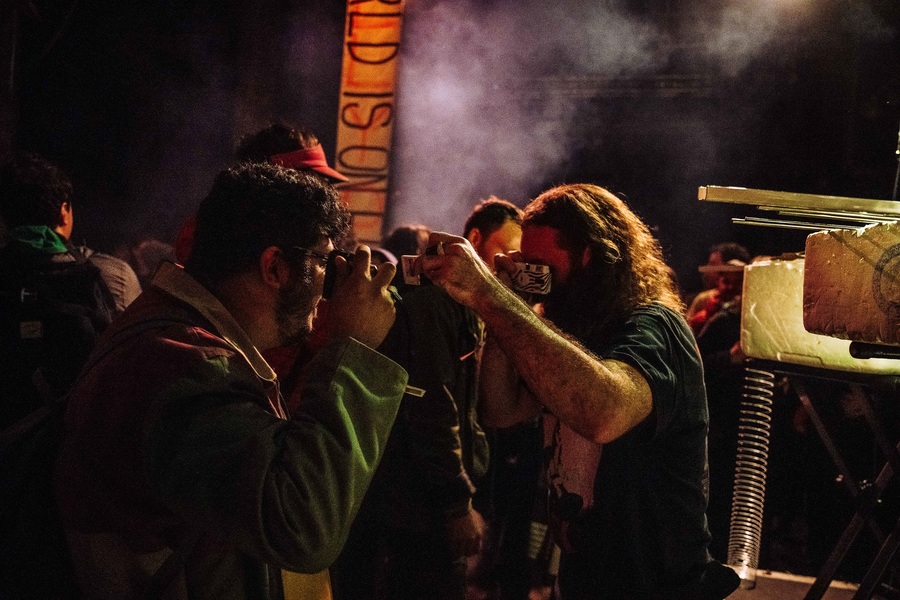
You can pore through the programme at Counterflows in advance, but there’s really never a way to prepare yourself for what each night has in store for you, and that’s the magic of it. Earlier tonight, we gathered in Woodside Hall, a warm community space hosting the weekend’s main events and in many ways the perfect setting. Over the years, Counterflows has gained a cult following among those in the know, and the diverse crowds gathered each night reflect this – artsy millennials, families with young kids, and older generations brought together through a shared love of sound and community.
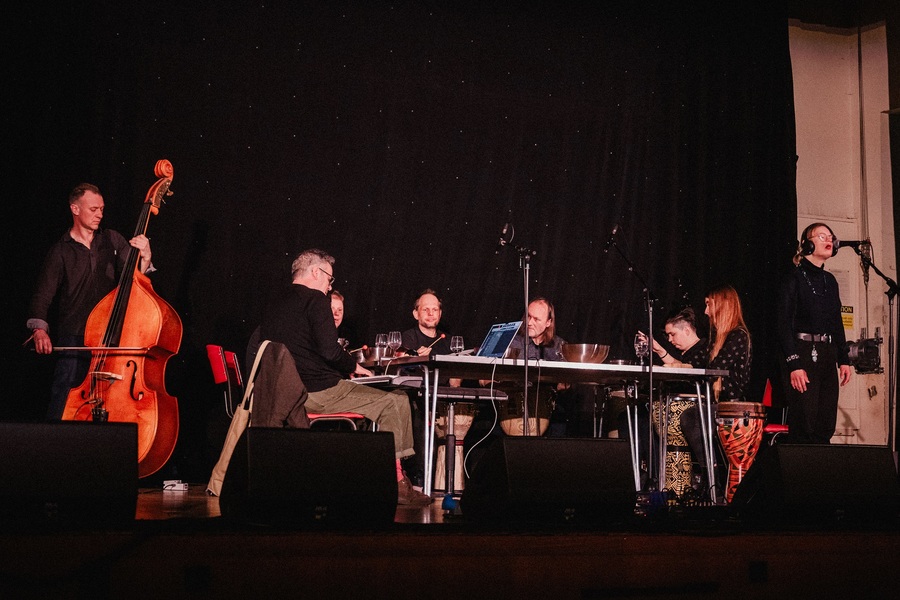
This is captured in the weekend’s opening performance by Spanish multi-media artist Agnès Pe. Pe gathers together an orchestra of kazoo players of all ages and walks of life, with no prior knowledge of musical notation. There’s a levity and subtle humour in the use of the plastic neon instruments here used to evoke haunting, often eerie melodies: the sound of multiple kazoos cackling in synchronicity is one hard to forget. There’s a sharp left turn with the next performance, by duo Rhodri Davies and Áine O’Dwyer. Sitting across from each other with two harps, they pluck and respond to one another as if in conversation, silences punctuating the room in equal measure. The stand-out performance of the night, however – and one of the weekend’s – belongs to Polish percussion group Remont Pomp. Sitting around an improvised dining table, they use everyday objects: bottles to wine glasses; vocal and African percussive instruments in a gorgeous performance that radiates a genuine joy, warmth and collective spirit; it’s genuinely hard not to sing along.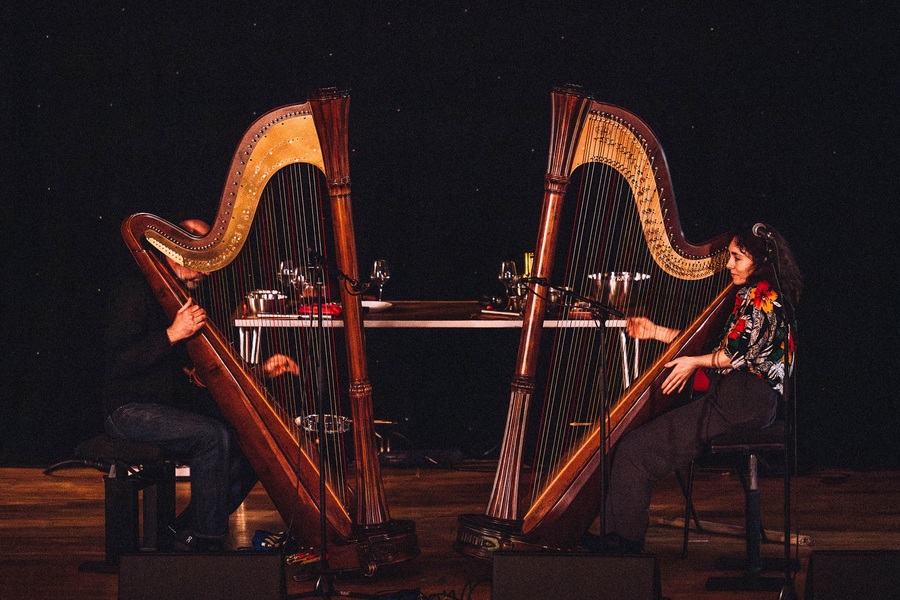
Image: Rhodri Davies and Áine O’Dwyer @ Counterflows by Brian Hartley
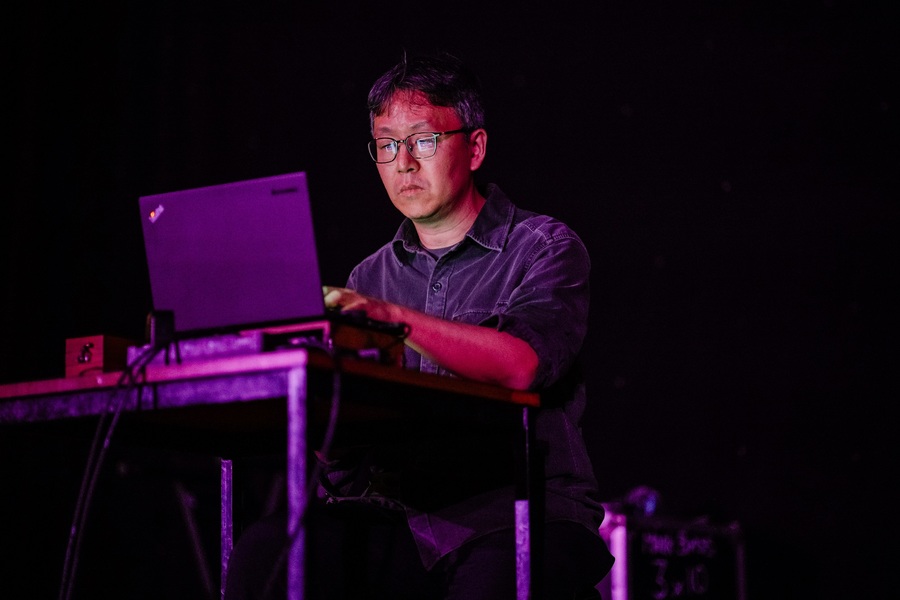
By Saturday, the festival is in full swing, and I’m back in the buzzing crowds at Woodside Halls, ready, excited and unsure of what the night holds. Proceeding with experimental duo Soldier, who hail from Chengdu, the pair respond to each other in unexpected ways through sound and movement: the sound of sellotape being pulled is translated into jerking movement and cries, imbuing the ordinary with intensity and intrigue. Next up is another duo, Glasgow’s Inweys. Bassy techno meets percussive possibilities in a set that marries together the joyful elements from opposing worlds. It’s exciting, grounding and euphoric in turn, diving into the depths of a sound felt before it’s heard. Next up, Seoul-based computer musician Ryu Hankil veers us more heavily into the realm of the electronic. Their oppressively – and, as promised, uncompromisingly – loud wall of sound may have proved too much for a few audience members who I spy heading to the refuge of the bar mid-way through the set. Understandably so. Drawing the night to a close is London’s @xcrswx. Saxophone and drums play off each other chaotically and in purposeful disharmony in a rambunctious set – but it’s fun, and it works.
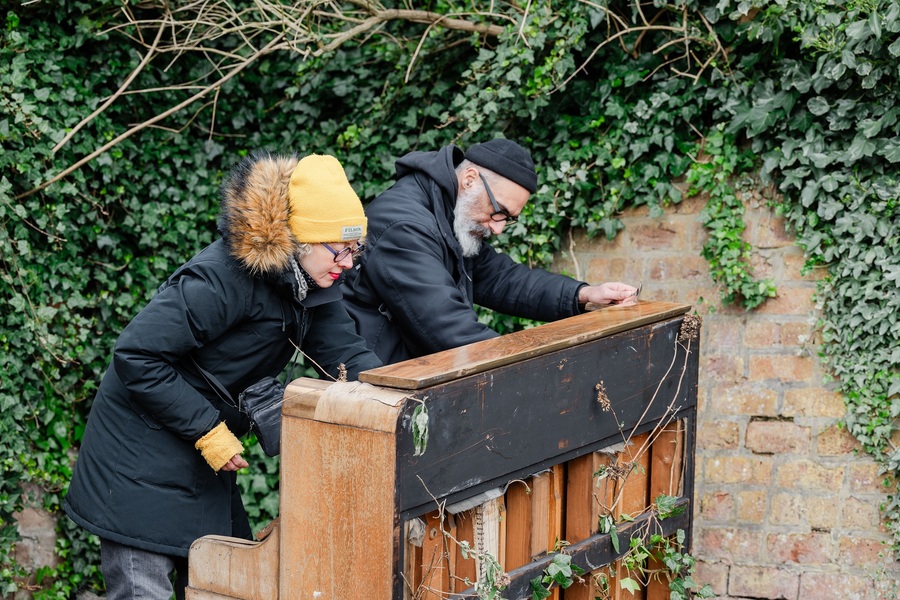
Alongside the main stage musical performances, there’s a variety of events taking place across the four days, from a public piano garden to ‘boundary-liquefying’ club nights. I kick off Sunday by heading to the small publisher fair at Civic House, a returning staple of Counterflows. There’s a laid-back buzz, with DJs spinning and space for conversation and catch-ups. Heading next to Mono, I grab some food and check out the festival’s collaborative exhibition with artists from Project Ability. Running to the end of the month, it’s definitely one to catch: beautiful renditions of the weekend’s performers are captured fittingly in experimental artistic forms.
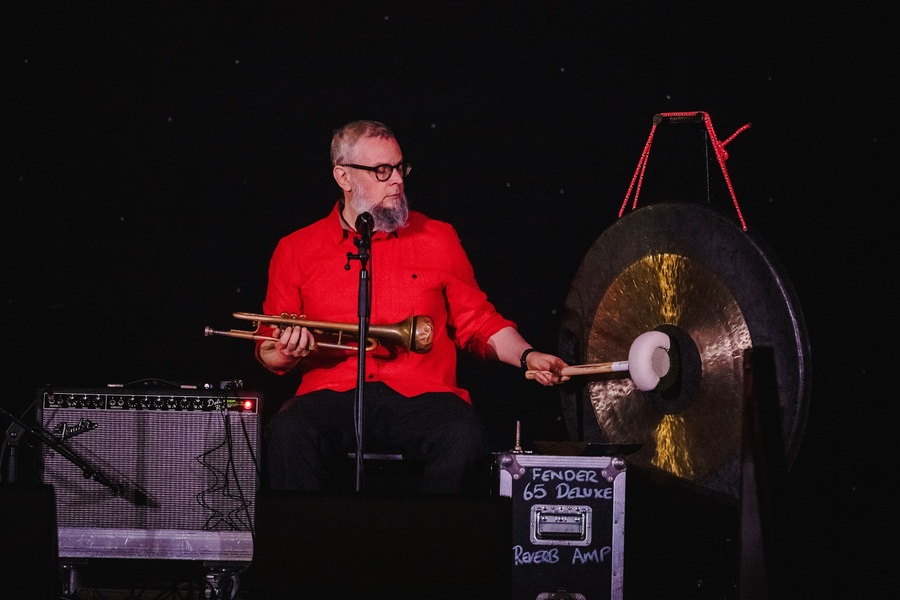
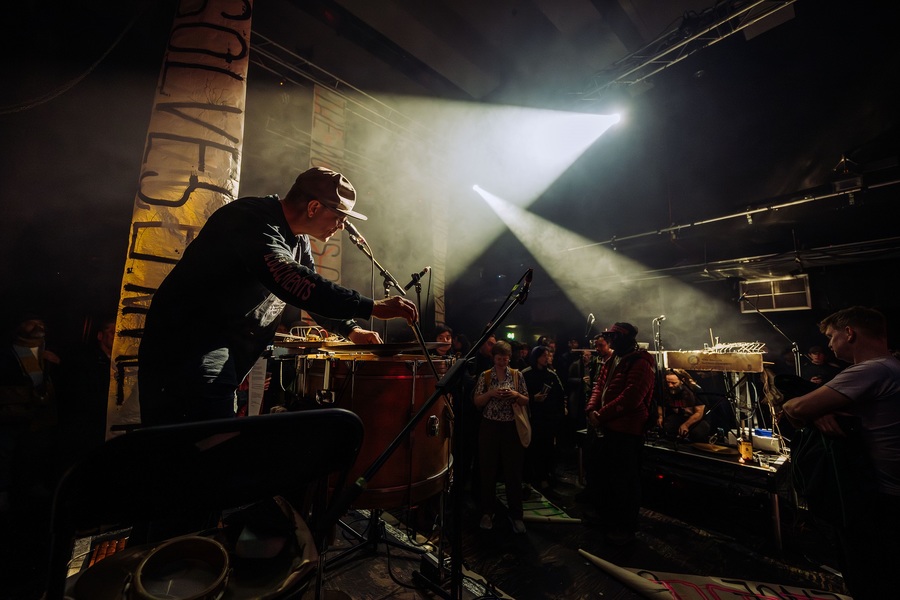
Image: Nate Wooley x Annea Lockwood @ Counterflows by Brian Hartley
The weekend’s final performances kick off with Skye-based Rufus Isabel Elliot, presenting their piece performed by Kings Park Youth Brass. Brassy loudness is contrasted with quiet silences in stops and starts to a powerful and fun effect, expertly played by the young band. They file off stage and are replaced with a lone figure in Basque Country’s Garazi Navas. Over the next half hour we're taken on a beautiful journey, the subtleties, shocks and nuances of the accordion’s sound, with Navas exercising a spellbinding mastery easy to lose yourself in. Following this is Taipei's Lin Chi-Wei and Glasgow’s Uzganc Choir. Focusing on the powers of the human voice, this is a choir rendition like no other, with popping, shimmering textures and organic sounds bursting into glimmering, hopeful life. (As a fan of Björk’s Medúlla, I’m ecstatic). Finally, Oregon’s Nate Wooley takes to the stage, performing a piece by Annea Lockwood. It’s a gorgeous end to the festival: sonic ambience building in layers, the reverberating sound of a gong played against the brassy undertones of trumpet. It’s a living, breathing testament to the healing frequencies of sound.
Overall, the performances I caught over the weekend at Counterflows elicit a varied range of reactions. Many had me awed, a few left me feeling disorientated, one made me feel viscerally uncomfortable. But all evoked in me a real feeling of excitement for the infinite possibilities of music and sound. Ultimately, it’s a real pleasure that Counterflows exists – long may it continue to bring a home for a community of people united by a love for experimental sound in all of its forms.
Counterflows took place across various venues in Glasgow, 9-12 Apr