Spotlight On... Sulka
Ahead of releasing his latest album, Bute, we catch up with Glasgow-based songwriter and multi-instrumentalist Sulka
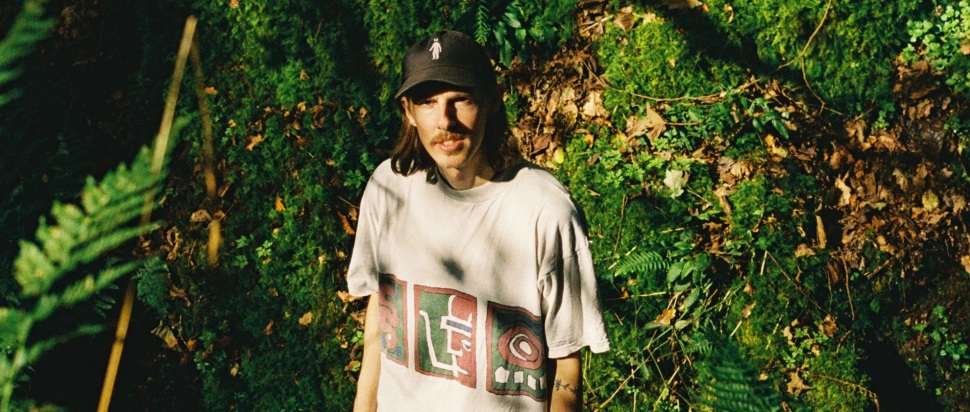
Glasgow-based songwriter and multi-instrumentalist Lukas Clasen has been writing, recording and releasing music as Sulka since 2017. On Friday 17 July, he releases his third album, Bute, largely written on the Scottish island of the same name, but finessed back home in Glasgow over the following 18 months. Drawing inspiration from his time on the island, the album focuses on love, ageing and community. There's an undeniable warmth that emanates from its laid-back and lo-fi yet melodic sensibilities, owing in large part to its layered instrumentation, gorgeous vocal interplay, vivid imagery and addition of samples and field recordings. Ahead of its release, we catch up with Clasen to find out more.
You’ve been writing and recording as Sulka since 2017, so I’d love to know who/what inspired you to start making music under that moniker?
I started Sulka out of a desire to explore the softer, more introspective side of my songwriting that I hadn't fully realised in previous heavier bands. At the time there was an upsurge of bedroom pop artists getting big off homemade Bandcamp releases (Alex G, Snail Mail, Car Seat Headrest) which I found inspiring. I made an album entirely by myself in the flat using the two mics I owned and felt pretty proud of the result. I caught the bug for DIY recording after this and haven’t really looked back since. I chose the moniker of Sulka as it's an anagram of my name (Lukas) which reflects the personal nature of the project.
You say in recent years that your perspective towards life and music has shifted a lot. Would you say your inspirations, compared to when you started out almost a decade ago, have also changed and if so, how?
Many of the musical inspirations I’ve had since the start have persisted throughout the years. I've always cited Elliott Smith, Sparklehorse and Alex G as my main influences and that remains true. The recent shift has been towards taking a more poetic or narrative-based approach to songwriting rather than a confessional one like I used to. When I was in my 20s, all of those personal anxieties and struggles felt important to express, like I was the main character in this world. But now, being more comfortable in myself, I feel like I’m more interested in creating fictions, which might reflect my life in some ways, but aren’t quite so heart-on-sleeve. Some artists I’ve drawn inspiration from recently that do this well are Andy Shauf, Aldous Harding and Adrianne Lenker.
I feel like we’re seeing a rise at the moment of writing retreats, musicians and artists escaping to Scottish Highlands and Islands to focus on their craft. What was it that drew you to Bute?
I was drawn to Bute as I wanted to escape to somewhere quiet for a few days to focus on finishing my lyrics. It was close enough to Glasgow to access via train and ferry, but suitably remote-feeling. I stayed in a wee fishing town overlooking the sea for four days, getting up early and going for walks before spending the rest of the day writing and occasionally going to the pub in the evening. I found my time there very therapeutic and tried to let my surroundings influence me as much as possible. With it being winter, it felt like it was constantly twilight, which made for a slightly eerie feeling, combined with the haunted old Victorian buildings and ruins of churches scattered around. I think this had an effect on some of the darker elements of my songs.
I’m fascinated by your encounter with an older couple in the pub that had retired to Bute from Glasgow, and how their story found its way into a couple of songs on the record – what was it about this couple that captured your attention and how did you build these songs around their stories?
The older couple I met were sitting next to me in a pub in Rothesay, where I’d ended up after a long walk that day. They were some of the few people I actually spoke to all weekend so it felt significant to me. It became clear that the wife was suffering a little with dementia as she would repeat a lot of her questions. We chatted about places in Glasgow, what had changed, what was still the same. It made me wonder if I was glimpsing a future version of myself. It didn’t strike me at the time, but there were themes that resonated with the songs I was writing and I think they worked their way in.
In This House deals with the experience of your hometown gradually changing and becoming unrecognisable to you, while Carrot is about fragments of memory coming and going from your mind and an existential angst around where you’re headed in life.
Were there any other inhabitants of the island, or elements of the island itself (beyond its name) that found their way into the record? If yes, why were these important aspects for you?
There were definitely features of the environment that inspired lines in the songs. For example ‘streak of marble in a granite ocean’ was written while watching the wake of the ferry on the way over and ‘climbing up to marshland dead and pale’ described a walk I’d done that day. There was also a ‘tunnel’ of trees that inspired a line in In This House and an abandoned church which brought about the song Steeple. As well as these particular images, there was a pervasive feeling of age and decay about the island – of nature long outlasting human existence. I tried to capture this atmosphere in the songwriting and the sonic textures that I later incorporated.
With the album largely written on Bute, I’d love to know more about what the process was like bringing the bones of these song ideas back to Glasgow and developing and recording them in your own home studio with contributions from friends?
I recorded the main elements of the songs at a shared rehearsal studio in the centre of Glasgow. As often happens, I set out to make demos and then the demos became the final songs as I began to build them up. I added MIDI keyboard parts at home, which I then re-recorded on an analogue synth with the help of my friend Callum. Later I got my bandmate Katie to do backing vocals across the album. Finally I added field recordings and samples to create texture and flow throughout the track list. I found an old voice note from my phone of me and my friend Innes jamming which became the instrumental song Flowers. The whole process took about a year-and-a-half to complete, with many iterations of mixes and deliberation about the track order. I think it needed this time for it to grow organically into the textured and layered album that it is now.
Your previous album was recorded with a full live band, so I’d love to know why you’ve reverted back to this more DIY way of home recording with Bute?
My previous album Distractions was an experiment in collaboration for me. I wanted to see what the result would be like if I worked on an album together with my live band and worked with a producer. As much as I enjoyed the process and the end result, I knew that the next project had to be a return to DIY. I hadn’t recorded anything in a couple of years by that point and I was missing it. It felt like an essential element of Sulka that I’d strayed away from and needed to reclaim.
With the album out at the end of this week, what does the rest of the year look like for Sulka?
We have a few gigs in the calendar for the coming months. Hoping to play as much as we can and share the album with people!
Bute is released on 17 Jul via Lost Map Records
Sulka plays Good Vibes, Edinburgh, 18 Jul; The Old Hairdresser's, Glasgow, 19 Jul (3pm matinee); Birnam Arts, Dunkeld w/ Pictish Trail, 2 Aug; Leith Cricket Club, Edinburgh w/ Suckle, 12 Aug; The Old Library, London, 3 Oct
Follow Sulka on Instagram @_sulka