Spotlight On... SHHE
Following the release of her latest album THALASSA, and ahead of two quadraphonic shows celebrating its release, we catch up with sound artist and producer SHHE
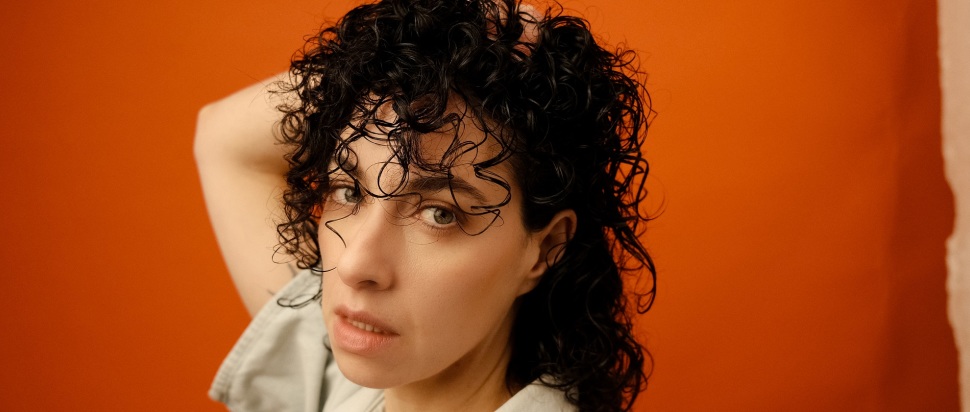
Dundee-based Scottish-Portuguese sound artist and producer Su Shaw, aka SHHE, released her latest album THALASSA last week. Coming via One Little Independent, THALASSA is a six-part ambient work that draws inspiration from the Mediterranean Sea in Alexandria, Egypt, at a moment of ecological, political and existential crisis. A work of unequivocal yet devastating beauty, at times it can feel as unpredictable as the sea itself, ebbing and flowing from unsettling calm to dramatic urgency in the blink of an eye.
Ahead of two quadraphonic shows in Dundee and Edinburgh next week in celebration of its release, we catch up with Shaw to find out more.
It’s not the first time water has been at the heart of your work. What is it that you find so fascinating and inspiring about water, and the sea in particular?
I have lived on either side of the River Tay my whole life. When I’m in Dundee, visiting the river is part of my morning routine. I always need to be in proximity to water; wherever I go, I always seek it out. But I’m also fearful of it. I’m fascinated by our relationships to water – especially the tensions between our dependency on it, disregard for it, and the sense of being drawn to it; especially at a time of ecological and political crisis.
Your latest body of work attempts to give a voice to the Mediterranean Sea in Alexandria, Egypt, so I’d love to know why you wanted to explore that through your music, and how is it relevant to you as a musician in Dundee?
I’ve never had any problems recording the Tay; I almost take for granted how easy it is to drop a microphone in the river and listen whenever I like. The project started with a remote residency with B’sarya for Arts, a contemporary arts space and studio in Alexandria – I developed early ideas for the work in Dundee, exploring the perception of place and proximity, and interconnectedness with this stretch of the Mediterranean from afar. Then I had the opportunity to visit Egypt later that year, as part of a commission with British Council – and that perspective was challenged by the political and environmental realities of standing along the corniche.
Not only could I not hear the Mediterranean below the surface (underwater recording was prohibited), I also couldn’t hear the water above, as Alexandria is a cacophony of car horns, traffic, construction sounds and other human activity. In a way, THALASSA is my attempt to make the inaudible audible. Large areas of Alexandria are predicted to be underwater in our lifetime – some areas along Dundee’s waterfront have a similar fate. I was curious to explore how our relationship to these water bodies might transition during this time; how do we balance introspection with urgency?
I love the way you use your voice on THALASSA to capture the unpredictability of the sea, from its unsettling calm to its dramatic urgency, and believe some of that came from breathing techniques you learned when freediving. It really does feel full of emotion, so I’m keen to learn more about the process and how you went about giving a voice to the Mediterranean?
When I was in Alexandria, I had the chance to visit CMAUCH (Centre for Maritime Archaeology and Underwater Cultural Heritage), an institution/diving centre which is dedicated to preserving and documenting Egypt’s underwater artifacts. I contacted them looking for sonic documentation of their dives, as I was interested to hear what the Mediterranean sounded like. They didn’t have any, but it opened up conversations about the sonics they encounter when doing their research – both passive sounds and profoundly important ones for ensuing their breathing apparatus is working properly. I wasn’t able to dive myself, but I spent a lot of time researching freediving and breathing techniques as a means of physical boundary pushing – bringing this into the studio.
Of course, THALASSA isn't solely made up of your voice; you designed a custom-built modular synthesiser, developed alongside Ben Chatwin. What was it about your design that made it different from a pre-existing modular synthesiser?
I had no experience of working with modular synthesisers, so it was important for me to learn from the beginning. Soon after Ben and I began to develop ideas together, one of the decisions I made was to work with analogue modules as much as possible, which welcomed in a level of uncertainty and unpredictability into the work. Another decision was to remove the safety net, and to perform live using only the modular and my voice. As the analogue modules naturally respond to their environment, this means that every performance is different.
There’s also a very strong visual identity to the album’s singles via collaborations with two Egyptian artists, Nurah Farahat and Aya Tarek. How did these collaborations come about and can we expect more?
The album is reflective of my experience in Alexandria, but I also wanted to welcome other voices and perspectives into the project. I was introduced to some incredible artists while I was in Egypt, including Alexandrian painter/muralist Aya Tarek, who designed the album artwork for THALASSA. Aya shared her experience of growing up (and still being based) in a sinking city. In Aya’s words, "The design channels the mind of the sea... It is not an imitation of water, but the act of remembering it."
When I was looking for an artist to collaborate with on visuals for THALASSA, both a friend from Egypt and a friend in Dundee recommended that I reach out to Nurah (Farahat). Nurah is an insanely talented audiovisual artist and games developer, born in Cairo and now based in Germany. She has created an immersive world which so beautifully encapsulates the record. We would love to do some live AV shows together – and also to find a way to take the project back to Egypt.
The immersive nature of this record continues with two quadraphonic shows in Dundee and Edinburgh at the end of the month. What can people expect from these?
I’m very lucky to be working with brilliant collaborators for shows in Dundee and Edinburgh, including light designer Sam Jones. We have been working to create an immersive listening environment, which challenges the ideals of a traditional live performance set up. I’ve been building a spatial sound module with Edinburgh-based module designer Expert Sleepers, which I will be presenting for the first time as part of THALASSA album launches in Dundee (28 May) and Edinburgh (30 May). These are my largest shows to date, and my most ambitious performances so far. I’m looking forward to sharing what’s been in development.
Finally, what does the rest of the year look like for SHHE?
Alongside album launches at the end of May, THALASSA will be presented at IKLECTIK in London, alongside a performance at Glasgow’s Sonica festival later in the year. It’s been an honour to work alongside Cryptic to programme part of Sonica this year, and a dream to invite artists who I believe are making some of the most exciting and crucial work today. I’m also thrilled to be working with Hospitalfield, to curate Ecologies of Listening, a study day on sound, this July. The programme will bring together artists from diverse genres and geographies, exploring deeper modes of listening, and broader forms of sonic inquiry across performances, discussions and workshops.
THALASSA is out now via One Little Independent; SHHE plays Bonar Hall, Dundee, 28 May; The Queen's Hall, Edinburgh, 30 May
Ecologies of Listening will take place at Hospitalfield, 25 Jul, with the full programme announced soon; Sonica Festival takes place at venues across Glasgow, 24 Sep-4 Oct
Follow SHHE on Instagram @shhemusic