Spotlight On... Hanna Tuulikki and Tommy Perman
Hanna Tuulikki and Tommy Perman are two extraordinary artists on the Scottish music scene – we shine our spotlight on them ahead of the release of their bat-based electronic album, Echo in the Dark
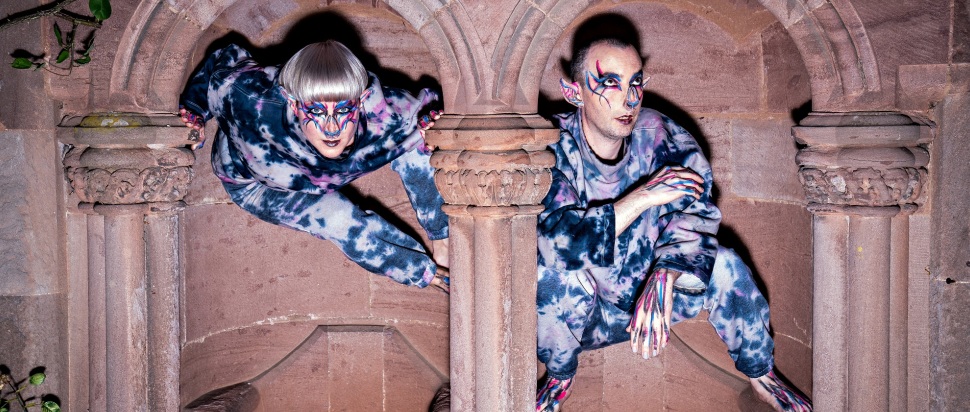
There's nothing more intriguing than when two stalwarts of the Scottish music scene come together in collaboration. Hanna Tuulikki is a Glasgow-based multidisciplinary artist, whose performance pieces have always interfaced with the natural (or “more-than-human”) world. We most recently interviewed Tuulikki about the inspiration of the migratory marsh warbler on her work at last year’s Folkestone Triennial. The use of sampling, ambience and animal mimicry in her projects often turns the dancefloor into a setting for communion with nature, and Echo in the Dark is no different.
Tommy Perman is a BAFTA-award winning visual artist and experimental musician, whose partnership with instrumentalist Andrew Wasylyk has produced some of our local scene’s most innovative releases. Tuulikki and Perman’s Echo in the Dark is an electronic dance album built from a bank of recordings of bats indigenous to the British Isles – in fact, each track is dedicated to a particular subspecies of native bat. The sounds made by the flying mammals to echolocate are usually inaudible to human ears, but have been converted into legible chirps and cries by a type of equipment called a heterodyne bat detector. As we’ve been eagerly anticipating the release of Echo in the Dark since its conception as a rave in Hospitalfield in 2022, we catch up with Tuulikki and Perman to learn more.
How did you meet? Did the collaboration come about naturally or were you surprised by any parts of each other's process?
Tommy Perman: I’ve known Hanna for a long time but can’t remember exactly when and where we met. We have loads of mutual friends in art and music circles, so it was inevitable we’d meet. We’d collaborated before on a couple of smaller art and music projects but Echo in the Dark is the first time we’d really worked together. I remember getting an amazing email from Hanna in 2021 along the lines of “Hey Tommy, do you want to make some joyful acid house inspired rave music together from bat echolocation calls?” – to which the only possible reply is “Yes!”
Hanna Tuulikki: I can’t remember how we met either! But I’d wanted to collaborate with Tommy on some music for years, so I was so happy when he said yes – I couldn’t imagine anyone else I’d rather make bat-beats with. The project initially came about when Hospitalfield in Arbroath approached me about making a project around bats. It felt like a moment of synchronicity because I’d already been thinking about working with bat echolocation. At the time, bats were getting a lot of negative attention because of their association with coronavirus. But I saw the pandemic as part of a much bigger story about our relationship with the more-than-human world – habitat destruction, intensive farming – the conditions that allow zoonotic diseases to emerge. I wanted to turn that into something positive, and had this idea of making dance music using bat calls.
When I approached Tommy, it turned out he’d also been recording bats, so we knew pretty quickly that the collaboration would work. And it really did. I think we were both surprised at how well it worked! It just seemed to flow…
Perman: I think maybe the thing that surprised us most was how many similarities there are in our practices. We both make art that incorporates music, sound, drawing, installation, moving image and performance. And we realised we both have a tendency to go very deep into the details. Maybe sometimes a little too deep?
In Echo in the Dark, you use bat noises as samples in dance tracks. Is there anything else about bats that inspired this work, other than their calls?
Tuulikki: Bat echolocation is such a complex navigation system – bats emit ultrasonic pulses to build up a picture of their environment – and as a process, it’s just so powerful to think-with. It brought up lots of questions that guided the work: How might we begin to think-with-bat, or feel-with-bat, to help navigate these difficult times? What might it feel like to dance to music created by bat-call rhythms? Can this offer a space to come together and harness radical hope for the future?
Perman: Individual bat species were also very inspiring – each with their own characteristics. We really tried to tune into these, to guide the direction of each track, and themes of the lyrics.
Heterodyne bat detectors were used to pick up the usually inaudible bat noises – were there any challenges to using unconventional technology like this in recording?
Perman: Although I recorded a little myself, we were so lucky in that we crowd-sourced most of the recordings of bat echolocation. So, I suppose you could say we outsourced any potential problems to other people! Early in the project Hanna and Hospitalfield put out a UK-wide open-call to gather recordings of bat echolocation calls. There was such a great response and we were able to collect recordings of 13 of the 18 bat species that are native to the British Isles.
Tuulikki: The response was amazing. Alongside the heterodyne recordings, we also received some ‘time-expansion’ recordings from legendary field recordist Chris Watson. He captured the echolocation sounds with an ultrasonic microphone and slowed them down around ten times, giving us a sense of what they might sound like from a bat’s perspective. But what I love about heterodyne bat detectors is that they’re essentially mini synths! Unlike time-expansion, they convert ultrasonic sound into a synthetic version in real time. About ten years ago, I was listening to pipistrelles through a heterodyne detector and was struck by how much their calls reminded me of the squelchy sounds of a Roland TB-303 – the iconic acid house and techno sound. That’s what first sparked the idea for the project.
Echo in the Dark was first conceived as a rave in 2022 – how did that go? Was the audience response what you had hoped for? Do you have plans with the finished album now, to tour it or play it live?
Tuulikki: Honestly, it still feels like a dream. The audience arrived at dusk and were served bat-inspired mezcal cocktails before picking up studio-quality headphones tuning into the bat world as they walked to the meadow. Tommy and I DJed our bat-rave beats as the sun went down, while soprano pipistrelles swooped overhead and people danced among the trees. Such good memories.
Perman: The raves were magical. I can’t quite believe they happened. We were so lucky to have been able to put on a string of outdoor shows in the grounds of such an extraordinary arts venue like Hospitalfield. We had so many brilliant, creative people helping us including a choreographer, four dancers, a lighting engineer and a laser lighting designer.
Tuulikki: And the audience response was wonderful – so joyful, with some incredible shapes being cut on the dancefloor!
Perman: We would love to do some more bat raves! As you can imagine they take a lot of planning and resources, so if anyone reading this wants to help fund another rave please get in touch! We would definitely like to do some live shows in the future. We have a launch party planned in Glasgow on 4 October (location TBA).
According to your press release, this draws on 'fifty years of electronic music history'. Have there been any particular electronic music pioneers that have been in mind while working on this?
Perman: So many. One of the most enjoyable things about this collaboration with Hanna was our late night listening sessions in the old library at the top of Hospitalfield House. Although we’d met years before this project, we’d not spent much time together. So it was really fun to play our favourite music to each other. I felt like a teenager again. There is so much joy in sharing music you love. Essentially we were back-to-back DJing late at night in a library at the top of a Victorian mansion (there may have been some alcohol involved).
Tuulikki: At various points of the music-making process we were drawing on artists like Arthur Russell, Marshall Jefferson, Theo Parrish, Bronski Beat, Delia Derbyshire, The Source/Candi Staton, Soul II Soul, Inner City, D’Angelo, Alice Coltrane, Sun Ra, Idris Muhammad, Mr Fingers, Donna Summer, Xpansions, Giorgio Moroder, Chemical Brothers, Plaid, Autechre, Fatima Yamaha, Jessy Lanza, Laurel Halo, Burial, Matthew Herbert, Hudson Mohawke, Erykah Badu, Ann Steel/Roberto Cacciapaglia, Kate Bush, Solange Knowles…
Perman: We also chatted a lot about house music's origins in Chicago as a safe space for queer Black and Latino communities and how it’s important to remember this. The dancefloor has historically been a place where people who faced discrimination and marginalisation in their everyday lives could come together, express themselves freely and find community.
Tuulikki: That spirit of radical inclusion and collective joy is woven into the DNA of dance music – and it's something we feel deeply connected to with Echo in the Dark. We want the album to acknowledge and honour that heritage, and to extend it – asking whether the dancefloor might also become a space where we can collectively reimagine our relationship with the nonhuman world. A place to gather together in the dark and find hope.
Do either of you have any upcoming projects or events you'd like to tell us about?
Perman: Yes, thanks for asking! Hanna has a really amazing performance piece called Deer Dancer coming up at the Tramway in Glasgow on 28 November. Everyone should get their tickets now!
Tuulikki: Thanks Tommy! Yes, I have a performance coming up at Tramway at the end of November called Deer Dancer, which explores our complicated relationship with deer – from dance and the imitation of animal behaviour to hunting myths and ideas of masculinity and wilderness. It’s performed by a group of womxn who play five different hybrid deer-men characters, and together they ultimately self-destruct. Really, it’s about the connections between the ecological crisis and toxic masculinity, and I’m excited to bring this strange mix of animal drag and wildlife-crisis ritual to the stage. And Tommy has some more wonderful music coming out too…
Perman: Yes, in addition to Echo in the Dark, I'm releasing another album this autumn with my longterm collaborator Andrew Wasylyk. It's a soundtrack album called House With A Curse – a condensed version of the 90-minute live score we created for the classic 1925 silent horror film The Phantom of the Opera. We were commissioned by DCA's Dundead Film Festival last year, and we're kicking off a tour of Scotland, England and Ireland at DCA on 9 October. Full tour dates here.
Echo in the Dark is released on 28 Aug via KIN-TU
Follow Hanna Tuulikki on Instagram @hanna_tuulikki and Tommy Perman @surfacepressure