Spotlight On... Drexler
Ahead of releasing his latest body of work, Olympia-5, we catch up with Edinburgh-based composer and multi-instrumentalist Adrian Leung, aka Drexler
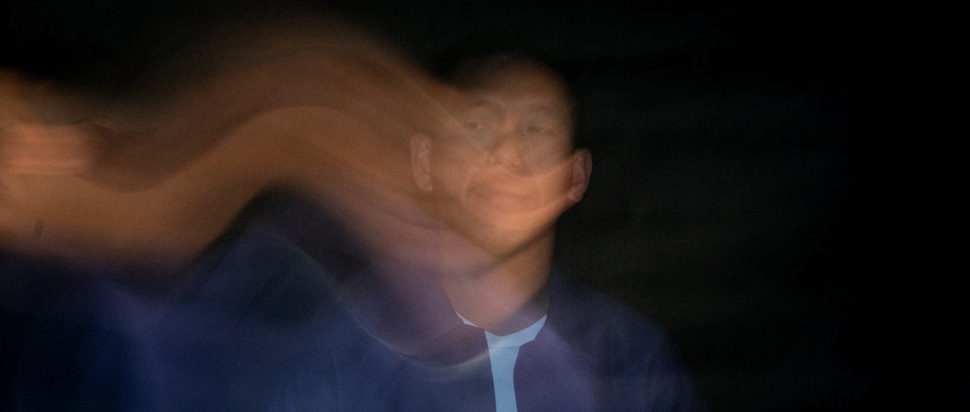
On Friday 20 February, Edinburgh-based composer and multi-instrumentalist Adrian Leung releases his latest album as Drexler. Named after the clinical trial his father was meant to undertake for lymphoma, Olympia-5 was created as a way for Leung to connect with his father while living so far apart while he was undergoing treatment. A deeply personal record rooted in the possibility of grief, its 16 improvised piano tracks are made more beautiful by ambient electronic textures and brought even more to life through collaborative videos.
Ahead of the album’s release, which culminates with a launch show at the Pianodrome in Bruntsfield on Saturday 21 February, we catch up with Leung to find out more.
I’d love to know a bit more about the backstory of this record and how you conceived of the idea?
So my father, who lives in Australia, relapsed with lymphoma about a year ago. He was really struggling and spent most of his days lying in bed, with no energy to watch TV, use his phone or read the paper. He was mostly on his own, receiving visits only from my uncle. I called and checked in on him regularly and asked lots of questions about whether he had improved that day, what conversations he’d had with doctors and what treatment plans were ahead. The answers were usually not what I had hoped for, and eventually it felt like I was adding stress to an already difficult situation.
I decided instead to record piano music for him. The idea was to add some ambience to his hospital room and simply let him know I was thinking of him. It felt like a gentle way to show love without requiring anything from him in return. And for me, it was a way to process everything that was going on through music. I think as a result, the music has this searching quality to it – repeating phrases, trying to find clarity, trying to figure out my thoughts, all happening in real time through the improvisations.
And what was your father's response like to the music you were sending?
My dad is the kind of person who does not want to cause any fuss. One of the track titles on the album is Don’t Worry Son, a phrase he uses regularly to tell us not to go out of our way for him.
Actually, at first he didn't listen to the music I’d written. It felt like too much effort for him to figure out how to play it or which device to use, and I don’t think he had the emotional capacity to receive it at that time. He is a traditional Chinese man in his 80s, and I don’t think the gesture of writing music dedicated to him landed in the way people might imagine.
When I visited him in October, I made a CD of some early masters and brought it with me. He was very grateful. He said the music was a little sad but that he appreciated what I had made for him.
The song titles are so deeply personal in the way they link to your father and your relationship with him. How did you decide on this particular set of 16 memories to shape the narrative of the record?
When I originally wrote the music, I wasn’t thinking about specific memories. It was simply an outlet for processing his illness, the possibility of life without him, and my general feelings towards my dad.
The titles came later. I retrospectively connected each piece to a memory. Some refer to significant places, such as Model House and Quarry Bay in Hong Kong, or Ingleburn in Australia, the first suburb he lived in after migrating to Sydney in the 70s. Others are phrases he often used. Dare You is shortened from “How dare you”, which is how he used to tell my brother and me off in a heavy Chinese-English accent when we were children. Some titles are lighter, like Benson, named after the Benson & Hedges cigarettes he smoked, or Dior, which references his love of expensive ties despite working a low-income job.
I’d love to know a bit more about how you actually recorded the album. It's all improvised, but there's this warmth and intimacy about it that makes you feel like you could be in the room. And what was the process like for adding the more ambient electronic textures?
I tend to record piano in a very intimate way. It is close-mic’d so you can hear the hammers hitting the felt I’ve added to the piano, the pedal squeaks, my fingers on the keys, and even my breathing. Sometimes you can hear me sipping tea between pieces. I think those small details create the feeling that you are in the room, very close to the performance. I love that imperfect nature in music.
The ambient electronic textures were added by my mix and mastering engineer, Bobby Williams. We worked closely and discussed which tracks should have the piano sounding more realistic, which should feel dreamier, and which could be more distorted or abstract. I’ve known Bobby for a long time and trust his taste completely. He really captured exactly what I had hoped for.
As an instrumental album, the song titles and their descriptions really help add a rich depth and understanding to the record, bringing it to life in new ways, although still allowing personal interpretations. I’d love to know more about Prague. Named after a trip you took with your father in 2024, a beautiful video directed by Hannah Papacek Harper accompanies it, turning the song into something else entirely with captivating storytelling dubbed over a collage of New York cityscapes. Can you tell us more about the song, the video and how this collaboration came about?
I went on holiday to Prague with my dad and uncle in 2024. It was one of the first times we had travelled together as adults. I have mixed emotions about that trip. Prague is a stunning city. The architecture is beautiful, the food is great and the pace of the city felt manageable for him. It was a really memorable and lovely time that we had together. But at the same time, symptoms of his cancer were beginning to return, though I did not realise it then. He struggled to walk long distances and there was one day when he slept all day. I remember feeling disappointed that he was not making the most of the holiday, without understanding what was happening.
The collaboration with Hannah was very special – she’s such a talent. Instrumental music allows space for personal interpretation, and I want listeners to have that freedom. The same applies to this film. Hannah and I spoke a lot as friends about care, distance and the idea of home when you are constantly moving. She was in New York at the time because her feature documentary Lost for Words was screening at DOC NYC. Being there resurfaced memories of someone who had been a paternal figure in her life. The film became a way for her to reflect on that relationship through the cityscape of New York.
It’s a really lovely way to experience your music, so I wonder, can we expect any further videos to accompany the rest of the album? Or is this a one-off treat?
Thank you, and yes! I’ll be sharing a film by the brilliant filmmaker Mark Cousins to coincide with the album launch this week, which I’m very excited about. Several more films will follow in the weeks after too.
I’ve been incredibly lucky to collaborate with some of my favourite filmmakers, many of them Scottish. The films span Scotland, Australia, Hong Kong, Norway and Bangladesh. Each one stands on its own, but they are connected by shared themes of place, distance, stillness, memory and family.
You’re celebrating the album’s launch with a very special show at Edinburgh’s Pianodrome, which feels like the perfect setting. What can people expect on the night?
I’m so excited to be launching the music and films at Pianodrome’s new venue in Bruntsfield. It’s a magical space and feels especially fitting given that the album is centred around the piano.
The night will be a hybrid of live performance and film screenings. I want to give the films the platform they deserve and celebrate them alongside the filmmakers, so each film will screen in full on its own. I will then perform several pieces live and will also be trying something a little different by performing live to some unreleased films for a couple of special works, which feels like a natural extension of the project.
I hope it will feel like a shared listening space, an opportunity to sit with the music, the images and the themes of memory and family together. The atmosphere will be very relaxed. I am encouraging people to sit on the floor, come close to the performance, rug up and get cosy. It’s a night I am really looking forward to dedicating to my dad.
And what does the rest of the year look like for you?
I compose music for film and television and am currently working on a documentary for the BBC, alongside a few other exciting projects. For my Drexler project, I’m developing a new series of string pieces, which I hope to bring together with a Vienna-based ensemble called the Freestyle Orchestra. They combine live music with circus and movement, so it feels like a really dynamic collaboration. I’m also considering bringing this show to the Edinburgh Fringe. The interdisciplinary nature of the project – blending live performance and film – could work beautifully in an intimate venue.
Olympia-5 is released on 20 Feb via Sonder House; Drexler plays Pianodrome Bruntsfield, Edinburgh, 21 Feb – tickets here
Follow Drexler on Instagram @drexler.music