Marlo De Lara in conversation ahead of Counterflows
Ahead of their performance at this year's Counterflows festival, we catch up with sound artist Marlo De Lara
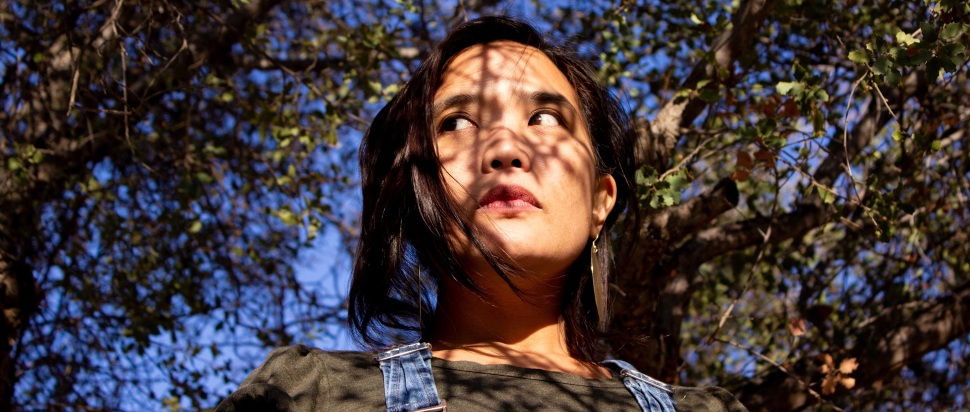
Take a look at some of the objects sound artist Marlo De Lara performs with and incorporates in their recordings, and you immediately get a sense of the physicality and storytelling present in their work: a broken omnichord; knitting needles; indigenous beads from the Visayan; zither; 'junk.' At the upcoming Counterflows festival, Glasgow’s now renowned showcase of experimental music from the fringes, De Lara is thinking of introducing an object (one could say, an instrument) that will allow audiences to see them in a way that hadn’t been possible before.
"Movement and embodiment is in a lot of what I do – controlled breathing and moving my heart rate." De Lara says that with an ultrasound machine onstage they have might be able to show this. It’s a radical and evocative image which is a natural next step in exploration for an artist that has moved from punk roots to deep listening, all while discovering the cross-section of making noise and channeling their identity as a child of migrants from the Philippines.
De Lara is an OG riot grrrl, but through their practice and academic study – touching down in Edinburgh, where their post-doc work on tracking migrant diasporas through sound and listening, allowed them to percolate for a while in the city’s noise-music scene, even producing the very Scottish sounding project cannae – have transitioned to work that is even more politically mindful and cathartic.
“I grew up with this westernised immigrant experience, and I didn't know how to say that, in this array of emotions and feelings of my experience, rage and dissent is yet another phase of existence,” they say, tying together the milestones of their life and career somewhat. “Healing is an anchor, healing is rage, healing can be sitting with all that and breathing too. Sometimes nothing is healthier than getting angry in front of someone about the world. These ideas have been around for hundreds of years.”
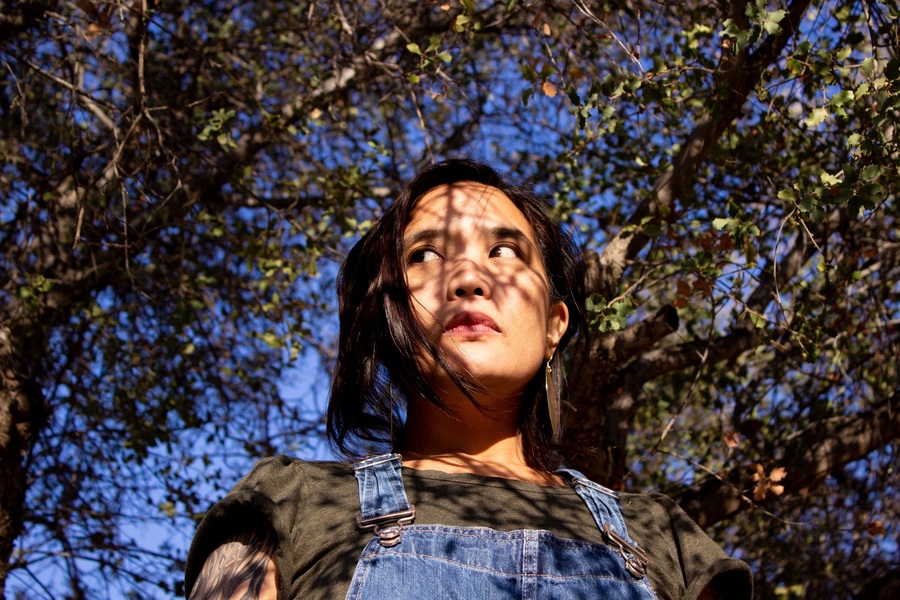
Credit: Martin Paul Wright.
Most recently, De Lara has focused their work on their cultural identity. Watching or listening to a Marlo De Lara piece can be loud, it can be minimalist, but it is always sensorial, visual and active. They talk from home here in the UK, but they’re just back from a long trip to their ancestral home, spending time in Davao del Sur receiving blessings from elders, making field recordings of traditional local weaving techniques and the percussive sounds of looms and wooden shuttles, with the coming Counterflows performance in mind, and making plans to translate graphic scores from indigenous textiles.
“I’ve always been ‘overly’ confessional, and I’m generally unapologetic about how we navigate our sense of self,” they say of traversing their identity in their work. “In Tagalog there’s this word 'kapwa', which means this sense of responsibility to one another [it can apply to the collective or diaspora]. So it was important to me to gather components [for compositions] in the Philippines.”
De Lara has been thinking a lot about taking audiences on that journey with them. “I don't want there to be this fetishisation, but also there's this idea that we're all time travellers, and we're all on this voyage of finding ourselves. Hearing is just an act. So, if you hear without context, my hope is that people seek out and realise their own context.”
Part of doing that will be in translating the found sounds, field recordings and physical elements De Lara includes and reproduces in their performance. They explain that they’ve seen a change in how they approach their work, moving from the mindset of laboratory scientist to something based more around emotional resonance.
Replying to a question about how they land on the sounds and objects they use in their work, they tap into something strangely mystical. “When I hold an object, sometimes it's just the way it fits in my hand. It might not even make a good sound. And I'm hoping that in the accidents of the moment, something might happen, there might be a way that I layer the resonance of the room feedback.”
Sometimes, De Lara says, it’s a little more purposeful. They explain about different types of bells they have, their weight, their shape, their texture, how the sound carries differently in different places. “There's always a relationship,” they say. “Sometimes it's just for me, sometimes it's for you. But it’s kind of like the concept of divining water.”
Counterflows takes place in Glasgow, 9-12 Apr; Marlo De Lara performs at The Art School, 10 Apr
Follow Marlo De Lara on Instagram at @marlodewawa