Breaking Traditions: Isa Gordon on 8Men
Ahead of releasing her brand new album on Lost Map Records, we catch up with Isa Gordon to talk all things cassette tapes, Robert Burns, reinterpretation and more
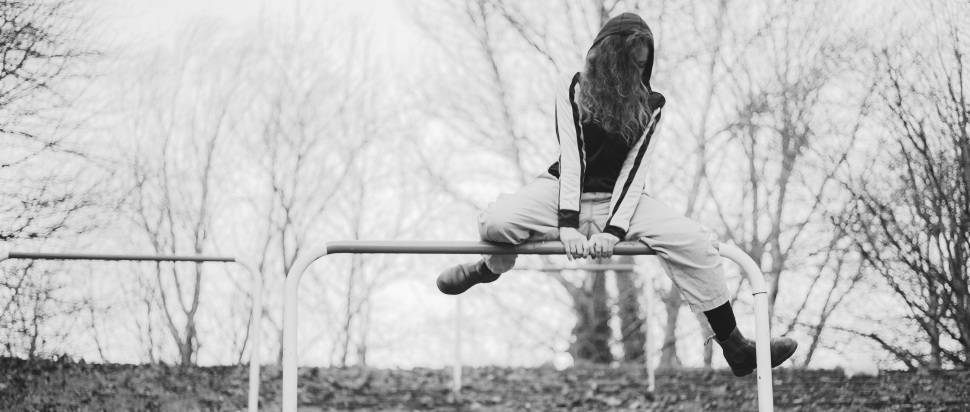
Fresh from releasing a 12" dance record on Huntleys + Palmers alongside septuagenarian Tony Morris, we meet multi-instrumentalist, producer and artist Isa Gordon at The Mitchell Library in Glasgow on a dreich February afternoon. We're here to talk about her forthcoming album, 8Men, set for release on cassette tape via Lost Map Records on 20 March, and when we find Gordon in the cafe, she’s just received some photos from her dad of his old cassette tape collection. Talk naturally flows about the tapes that played an influential role in her childhood.
“Pop stuff like David Bowie and Tom Waits, that sort of stuff is burned into my mind,” she tells me, “and my dad was really into electronic stuff as it was coming out, like Kraftwerk. I particularly remember him driving down the motorway to Autobahn, he just was in his zone [...] And then my dad's pals used to make compilations of stuff, and my dad used to rip shows off BBC Scotland onto tape, like Pipeline, a piping show… He's from the Northeast, so it would’ve been like trad and then he moved to Edinburgh and I guess he was a bit trendy.”
Despite these connections to Edinburgh and the Northeast, Gordon grew up in Auchinleck, an ex-mining town in East Ayrshire. When I ask about the singing clubs she was part of there, Gordon visibly squirms. “It was more like competitions,” she says. “So I grew up in East Ayrshire and then I moved about a good bit actually, but kind of up and down that valley, which is Burns territory. So, that was huge in the school that I went to.
“They really put me off singing for years.” She continues: “I just really had the feeling that people didn’t really know what they were singing about. And that's not really what it was about. It was more about, I dunno, singing it the perfect way… I guess when I became a teenager, I just kind of said ‘fuck this’ and started playing guitar and getting into emo music.” Alexisonfire, in case you were wondering.
Now living in Glasgow, and reconnected with traditional music, Gordon regularly attends the GLARC-affiliated HOW SERENE trad singing night at The Ivory Hotel. Its ethos of sharing songs is carried throughout 8Men with its songs finding their way into Gordon's repertoire through a variety of channels, from songs being shared by friends, passed down in the true oral tradition, to others being etched in her brain since she was a toddler, while others were serendipitous discoveries after falling down what Gordon describes as many an internet “wormhole.”
The first half of 8Men features versions of four trad songs, all of which appear in the Roud Folk Song Index, a database of approximately 25,000 songs collected from the oral tradition, they are impossible to date. Gordon says album opener I Wish, I Wish is probably about 500 years old. Recorded versions under the name What a Voice, What a Voice already exist by the likes of Jeannie Robertson and her daughter Lizzie Higgins, with Higgins' version appearing as a sample on Martyn Bennett's Blackbird.
“One tune on the record, Young Edward, is very old, definitely. But it’s hard to know,” Gordon confesses. Her version of this Scottish folk song that she first heard sung by Northeast band Old Blind Dogs, much like the rest of the record, sees Gordon breaking free from the confines of tradition. Here, she bends Young Edward into new shapes owing to further inspiration from a grime tune she heard at Kelburn. “There was a wee weird horn melody in it – the tune was called Jenny, by a producer called Davinche – and I went looking to try and find if the record label still exists that released it, but couldn't, so I was like, ‘right, well, I’ll just make my own tune rather than sample this.’ I just found [the melody] worked really well with that tune.”
While Gordon’s version is by no means a grime tune, the traditional murder ballad is still centuries removed from how it would have originally sounded as auto-tuned vocals dance over broken beats and fuzzing squelchy synths, with electronic flourishes that wouldn’t be out of place on a HudMo record. “Whether or not he’d like to hear it, there’s wee traddy elements in [HudMo’s] melody making,” notes Gordon when we draw the comparison, describing him as "The Don."
Names like Rustie, Aphex Twin, Sam Gendel, John Cale, Bon Iver and even Timbaland also come up when we chat about the album from a production point of view. "I like a lot of rap music and the way that auto-tune is used," she adds. "I like auto-tune being used kind of like an instrument, it's kind of like pipes, like very definite notes and it's my style choice rather than like trying to make my voice sound pure amazing."
Beyond side one's more trad offerings, on side two you'll find four songs from the 1970s by Richard Thompson, Lou Reed, Robert Wyatt and Black Sabbath. As with the first four songs, as a woman, Gordon is reclaiming the narrative of the songs on 8Men. “I was singing on Burns Night, so I did a bit of a spiel about him," she tells me. “Because he wrote down a lot of stuff, we consider a lot of things to be a Burns song. But a lot of it was written by women. But as he was writing stuff down, he was changing the perspective, the narrator... Not to discredit him, I don’t want to say that, you know, but I do think there’s a bit of nuance. A bit of an erasure has happened.”

Credit: Harrison Reid.
Gordon later adds: “I think what kind of got me thinking was the tune, Ca’ the Yowes. It’s a really big Burns tune. But I went looking into it and it wasn't written by Burns, it was written by a woman from New Cumnock called Isabel Pagan, who had a deformed leg, she couldn't walk. So she had this nickname, which to me is like a rapper’s name, she was called Pistol Foot. She opened a cottage as a howff and just served drinks and sang tunes. And that's how she made a living,” Gordon enthuses. “I don't think it was necessarily like [Burns] stealing the tune. I think people would want their songs to be transcribed... But it’s now just become this Burns tune because it’s now from the point of view of a man. So I think, I dunno, there's something about reinterpreting. I like to reinterpret songs by men the other way around, just reinterpret whatever, change it and transform it.”
The narratives of women are threaded through the album's carefully curated songs, extraordinarily reinterpreted in a style unique to Gordon. Her take on Black Sabbath's anti-war protest song War Pigs, for example, is a swirling, pained and spine-tingling experience that wraps up the record. “I wanted to have a song about war because there's so many Scottish tunes about war,” she tells me. “Some of them I really like, like Johnnie Cope and Killicrankie, they’re really fun to sing, but they're still quite reverent of war and this war hero type thing. So it just didn't really sit right singing any of them.
“I was doing a gig last year at Celtic Connections called Bethlehem Calling. It was a theatre piece and they had a pipe band from Palestine that they tried to get over, but I think only three of them made it because of visa issues... I was doing the support slot for that, so I wanted to do something, so I did War Pigs on the harmonium. And then, aye, Ozzy died [last] year, so I had a version of it and I was like, ‘oh, it's got to be on the tape then, really.’” Interrupting herself, outraged, Gordon quickly notes: “I've seen at the Grammys, Post Malone did a version of War Pigs!” She continues: “I have it on record that I was first, fucking Post Malone copied me,” she chuckles.
Before we part ways, I have one final question for Gordon regarding the album’s artwork. On it a painting of a pregnant woman straddles an apple, nibbling on a slice of the same apple. “My mum painted that,” she proudly states. “She painted a set of tarot cards in the late 80s, 90s… And that card is The High Priestess, which suits my mother,” she laughs. “So there's like 70-odd of these, 20 from the Major Arcana. I've been wanting to use them for something for the longest time.” Before we spoke, I have to admit I was a bit confused at the artwork's relevance, but after talk of reinterpretation and reclaiming the narrative as a woman, it’s perfect. “It’s kind of like eating the apple of all the knowledge of these men,” Gordon shrugs.
8Men is released on cassette tape via Lost Map Records on 20 Mar