Mothers of Invention: Celebrating 100 years of Daphne Oram
As the Oram Awards' oram/100 comes to Scotland to mark British composer Daphne Oram’s centenary, some of Scotland’s leading electronic artists reflect on her influence – and the persistent challenges in today’s electronic scene
If asked to consider the pioneering women of electronic music, your mind might wander to musical chameleon Björk or more recent additions like BBC 6 Music staples Kelly Lee Owens and Nia Archives. But a century ago a different name was laying the foundations of the genre. This year marks the 100th anniversary of the birth of Daphne Oram, a visionary whose techniques paved the way for many of the BBC’s most famous effects and themes.
Declining a place at the Royal College of Music, Oram joined the BBC in 1942 as a junior studio engineer, largely because the post was available while many men were away fighting the war. Regardless, she quickly made her mark, exploring new technologies like the tape recorder, splicing and looping, layering, and building complex electronic scores. These earlier audio adventures propelled Oram (alongside fellow co-founder Desmond Briscoe) to form The Radiophonic Workshop, the very same BBC sound effects unit that Delia Derbyshire would go on to join in the 1960s, realising the iconic Doctor Who theme from songwriter Ron Grainer.
Oram’s inventive spirit continues to resonate with some of Scotland’s leading electronic musicians. Bell Lungs, the moniker of Scottish-Turkish artist Ceylan Hay, recalls a similarly playful approach to sound early on. “During my childhood, I mucked about with mixtapes and recording sounds, speeding them up and slowing them down.” Her enthusiasm grew when she discovered artists closer to home, uncovering sounds in unconventional ways. “I got so excited reading about people like [Scottish musician] Janet Beat, who was exploring different ways of generating tones.”
Edinburgh-based composer and harpist Deborah Shaw, who performs as Aurora Engine, is equally inspired by found sounds in her practice, especially when evoking memories of a bygone era. “I'll hear a sound, find it fascinating, and capture it. Sound can really create a world in a way that visuals or photographs can't. I like that time-hopping element, bringing the past sound into live sets.” Shaw was already planning an Edinburgh event to mark Oram’s centenary when she discovered the Oram Awards – an initiative elevating women and gender non-conforming artists in sound through bursaries and mentorship – was staging events across the UK. But she quickly noticed a gap – “They didn't have a Scotland date on the listings!”
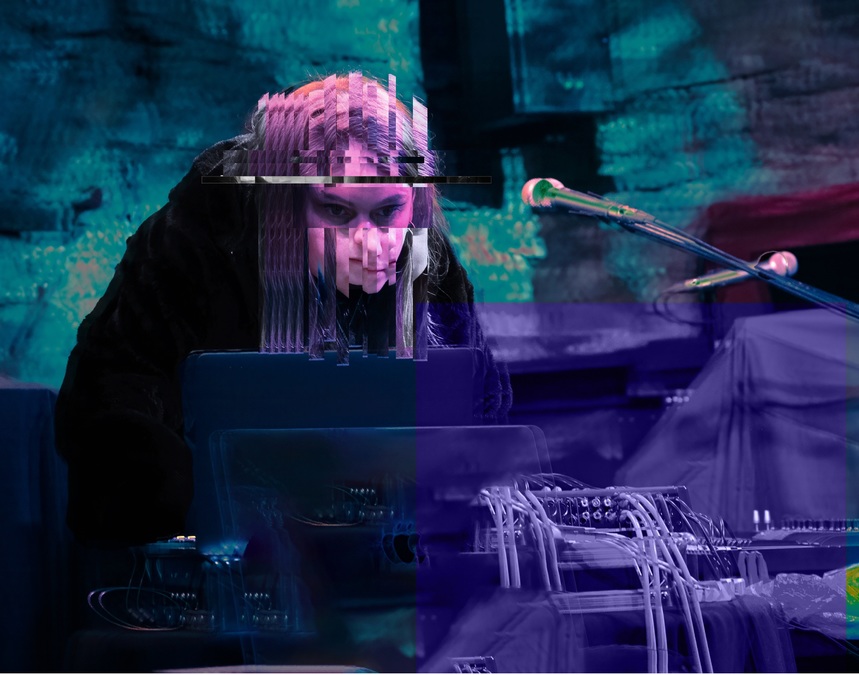
SLY DIG. Image: Deborah Mullen.
The omission was more a matter of resource than resistance. “They're living on funding bids, like the whole of the arts community is at the moment!” In response to low application numbers from women in Scotland and the North East, a partnership was born. Alternative Music Award and Youth Music nominee SLY DIG, the moniker of Jess Aslan, also joins the oram/100 event bill in Edinburgh. Aslan recalls her first encounter with the co‐founder of the Radiophonic Workshop. “When I studied music at university, I focused on Oramics and later worked with the Oram Archives, shout out to James Bulley and Ian Stonehouse!”
Even with trailblazers like Oram in the 1940s and Delia Derbyshire in the 1960s, women remain underrepresented in electronic music. In 2022, Fix The Mix reported that women and non-binary people made up only 5% of recognised producers globally, and less than a third of electronic festival lineups. Many festivals and booking agents argue that there simply aren't enough female artists out there available for festival bookings. Initiatives like female:pressure, a transnational database and network of women, gender nonconforming, and non-binary visual artists and composers, challenge that notion.
Closer to home, Hay has noticed a shift happening in Scotland’s scene over the last six years. “[Previously] I would go to gigs and if a woman came on stage with some effects pedals, she herself would say, 'Oh, I'm just going to use these boys' toys.' Now, there's more ownership of space and empowerment within the women themselves. We don't need that male gaze on what we're doing. We're just doing it anyway.”
In October of this year, another boost to Scotland’s experimental soundscapes opened its doors. Founded by artists Lewis and Suzi Cook, who also perform together as Free Love, Glasgow’s Library of Synthesized Sound (GLOSS) is the UK’s first non-profit, artist-led electronic music library, providing access to instruments, gear and education. For Aslan, spaces like this are crucial, particularly to encourage newcomers. “There's a great electronic music scene in Glasgow. Monthly nights like Attack Release; if you're interested in getting an introduction, they're a good place to go.”
Just like their namesake, the Orams continue to champion artists experimenting outside established systems. But as the British composer herself faced, there are still a few barriers to break down a century on, as Shaw reflects. “The number of times I turn up at a gig with a harp and put it through loads of effects, and someone says, 'Why bother with all of these? Just play the instrument.' Would you say that to a guy with loads of guitars?”
oram/100 featuring Aurora Engine, Bell Lungs, SLY DIG and more takes place at St Vincent's Chapel, Edinburgh, 13 Dec
More info at oramawards.com