Zines That Glitch: From social media to DIY publishing
Analogue media is back, baby! It’s unsurprising, then, that online creators have taken to turning their content into zines – we look at some of the reasons why more and more people are turning to the format
Zines have a long history of thriving on the internet, with new spaces to learn about and share zines, and new avenues for self-publishing. And as so much of our culture now emerges online, creatives are turning to zines to showcase the digital content they love. Writers compile their email newsletter archives into limited run A5 booklets, content creators rework 60 second videos into zines, and artists recount online stories in print through screenshots of comment sections and message threads.
Glasgow Zine Library (GZL) has observed this phenomenon in their collection, noting that both mediums share a similarly low barrier to entry: “Zines, like social media, are an accessible medium to create with: they don't necessarily require any budget or much know-how to get started, so there's natural crossover.” Translating online content to physical print also provides an avenue for the preservation of creative work outside of the privately owned platforms they originated on, granting creatives more control over their digital content. The GZL team enjoys seeing online content made into zines, turning it “into something that can't be deleted or taken down without the input of the creator, [which] can help preserve art from the whims of platforms that frequently censor, suppress and erase content.”
Indeed, while the early days of social media were marked with enthusiasm at the unprecedented opportunity to share creative work with thousands in one click, the early 2020s have made it clear that the tech companies behind our favourite platforms ultimately control the content we engage with – whether we create it or pay to access it. With social media platforms abruptly shutting down and losing user data, and media companies deleting entire cinematic works from their catalogues, social media users have turned to physical media over the past year to resist corporate interests taking over the culture they love, of which digital content is a part. However, even amidst the ChatGPT takeover of Instagram captions, social media is still home to some genuinely funny, insightful and creative content. Whereas movies, music and books all have pre-existing physical formats, zines could be a way to make digital work into a physical media.
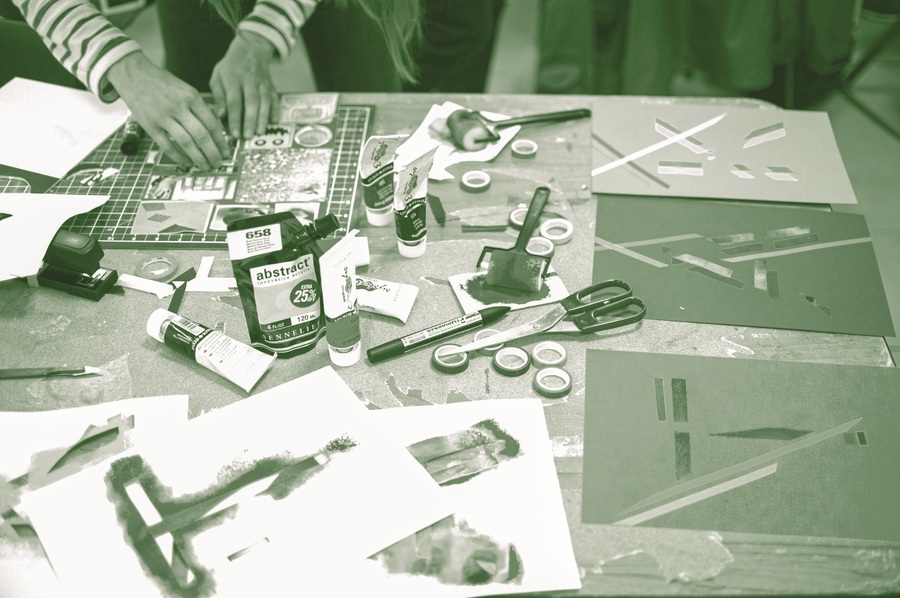
Image: Matthew Williams.
For some creators, zine-making also came before digital content. Writer Sihaam, who turned her latest Substack post into a zine, previously ran seven issues of the zine Stupid Girl. “The DIY ethos of a zine is singular,” she explains to me. “[It] feels instantly bespoke to you as an individual.” Zine-making thus provides creative constraints that do not exist online. As GZL tells me: “A zine has very specific limits and has to be taken as a standalone piece of work, it’s refreshing for content to have boundaries in that way.” These constraints, in turn, may encourage creative play and experimentation, something that is difficult to do when social media algorithms favour trendy content, and it could help us engage more critically with the content we create and consume.
But what happens to a zine once it is posted back to the grid? How can we navigate the need to connect with each other and share meaningful work, and the corporate interests of private platforms that profit off of our creative labour, and often suppress and censor us? “On one hand, depending on the message and intent of the zine, sharing it more widely can be a useful way to spread critical or timely information,” Abby Schleifer – zine librarian at New York’s Pace University – tells me. “On the other hand, we do not live in a vacuum. [It’s] a constant battle of wits against yourself as you weigh the utility of such platforms against their faults.” While sharing your zine on Instagram doesn’t necessarily take away from its inherent meaning, many social media users must wrestle with the tension between the corporate interests of platforms and their necessity for us to find community in the digital age.
Simply turning our social media content into a zine won’t silence the consumerist impulses that have been drilled into our psyche from decades of capitalist expansion. To make our move to physical media a true resistance to the ever expanding spiral of content consumption, we need to divest from the attention economy, and remember that our creativity can exist without being immediately harvested for content. This might look like experimenting with ways to preserve and celebrate the best of our social media feeds through zines, but we can also harness the potential offered by physical media to tend to non-digital networks of creativity. So, post your zines online, send them to a library, swap them with a friend, join a fair, attend a workshop. Preserve online culture and nurture both online and offline life, so when Big Tech finally crumbles, we still have a trace of the creativity we brought to it and the community we found there.