Less Self, More Care: We can’t self-care ourselves out of fascism
A pilates class might help us forget far-right violence – but not for long. We consider the limits of self-care amid the ongoing rise of fascism and unpack the role that community can step into
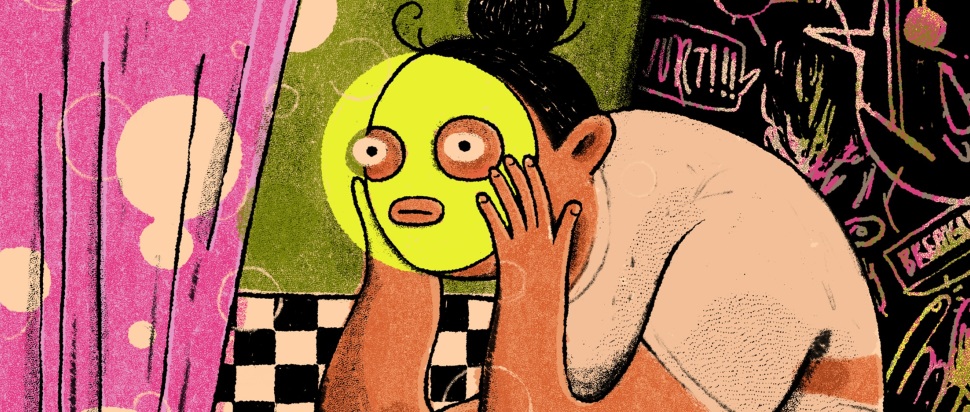
Let’s be blunt: if you're struggling with your mental health right now, you're not alone. Because how are we supposed to cope with the accelerating creep of fascism? With ICE agents murdering people in the streets in the US, with the rise of Reform and increased platforming of racist, anti-immigrant rhetoric in the UK; with the roll-back of trans rights, the villainisation of disabled people; with our government arresting pensioners who think our country maybe shouldn’t be funding a genocide – how could our mental health be intact?
Infographics on Instagram – or an overstretched, underfunded NHS that lacks the resources to meaningfully help when it comes to mental illness – might suggest self-care. But self-care feels entirely insufficient right now, a buzzword co-opted by corporations to sell us a brief distraction from the horrors around us – pretty far removed from the immortal words of Audre Lorde: “Caring for myself is not self-indulgence, it is self-preservation, and that is an act of political warfare.”
While in 2026 we might associate ‘self-care’ with sheet masks and bubble baths, with morning meditating or yoga classes, it has its origins in the late 20th century. Alyson K. Spurgas – associate professor of sociology at Trinity College, Hartford and co-author of Decolonize Self-Care – explains that self-care began with medical providers encouraging patients to take greater personal responsibility for their own health. It was adopted in particular by Black communities, as a means to meet the basic needs that went ignored by a discriminatory medical system. The context in which Lorde – a Black feminist, lesbian, author, poet – was speaking is crucial to understanding the political potential of self-care. Spurgas points out that in addition to living with cancer for many years, Lorde was also “violated and oppressed and harmed over and over and over again under white supremacy, under capitalism.” Lorde saw her own personal survival under those systems of oppression and the survival of her communities as intertwined, according to Spurgas. “In that way, self-care was a way for her to say: ‘I'm going to do this to take care of my people. I'm going to live so that other people can also survive. I’m going to do this for my community,’” they say.
So what has changed? Nowadays, the political power Lorde was speaking of has been watered down by – you guessed it – capitalism. We’re told to buy into this quick fix to systems of oppression; the emphasis is on the ‘self’ rather than the ‘care’.
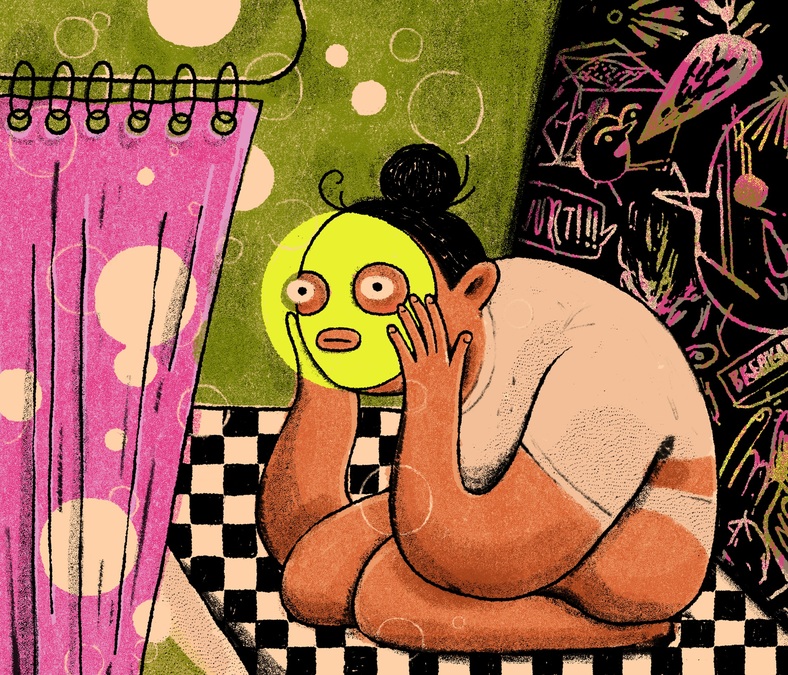
Illustration by Vaso Michailidou.
Fascism thrives when we are isolated from each other, and a concept of self-care dominated by consumerism pushes us towards individualism and self-optimisation. Dr Liz Powell – a licensed psychologist based in California who specialises in working with queer and/or non-mongamous people to build authentic, autonomy-focused relationships with themselves and others – points out how today’s conversations around self-care can leave us blaming ourselves if we're still struggling, rather than the actual systemic issues responsible. They note how we're told that if we're super stressed then we just need to do more meditation (or yoga, or start a gratitude journal) and that will fix it for us, “as though there's any amount of meditation that’s going to make living under fascism bearable.”
This push towards personal responsibility is an attempt to ignore the limits of self-care. “Self-care cannot replace a larger system that is designed to take care of people,” Dr Powell explains. Personal wellness practices won’t make healthcare more accessible, childcare more affordable, or hate speech and state-sanctioned violence any less intolerable. It’s not that self-care is unnecessary – Spurgas points out that women, queer and trans people, disabled people, and people of the global majority still have to interface with a world that doesn’t take care of us. “In many ways, self-care is a reasonable response to sexist, misogynistic, anti-black, anti-disabled, anti-queer violence – the slow harm of neglect and a lack of support,” says Spurgas.
We need self-care, but we also need to recognise when we’re using it as justification to buy a new skin care product as opposed to tuning into what we actually need. And sometimes – maybe more often than we realise – what we need is connection. Amari, who is 26 and a trainee therapist, sees community as the cure to isolation. Amari is bisexual, non-binary and disabled; they rely on their communities to give them safety in a world that views them as ‘deviant’. They volunteer with Food Not Bombs – showing up for their local community by helping reduce food waste and providing hot meals to those facing food insecurity – and are also part of their hometown's City of Sanctuary. To Amari, community care encompasses the intersecting ways we turn up for each other: “be that as ‘small’ as having a phone call with a friend who's having a rough time, or as ‘big’ as protesting for the Filton 24.” There are ways we can all reach out and show up for each other, shifting the focus away from ‘self’ and towards ‘care’.
Self-care isn’t going to save us – at least not without community care alongside it. If it’s going to be part of how we survive our current descent into fascism, we need to work towards a self-care that’s just as political as Lorde once imagined.