The Odyssey
Christopher Nolan’s adaptation of Homer's Greek epic balances spectacle and emotion, presenting its classic hero as a resilient survivor navigating mythological trials and endless solitude
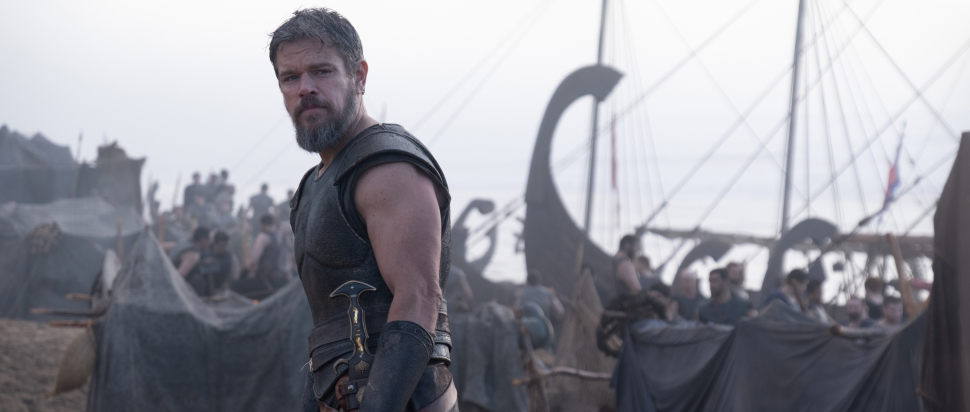
Christopher Nolan’s three-hour-long adaptation of Homer's magnum opus, The Odyssey, is his most ambitious project since 2014’s Interstellar. The film takes audiences on an epic journey following Matt Damon's Odysseus, immersing us in both his seafaring adventures through storms and monsters and the vast natural spectacles surrounding him. The grandiose scope and scale of Nolan's vision warrant multiple viewings.
The Odyssey opens at the end of the Trojan War. In the conflict’s aftermath, Odysseus is left adrift, out of touch with his kingdom, Ithaca, for almost a decade. His subjects presume he's dead, but the queen, Penelope (Anne Hathaway), and the prince, Telemachus (Tom Holland), are still agonisingly waiting for his return. In this power vacuum, the leading suitor, Antinous (Robert Pattinson), covets the throne, and a civil war is on a hair-trigger.
Odysseus is, of course, still very much alive, now a castaway on the island of Ogygia. Rather than following parallel stories, Nolan's film unfolds through a series of flashbacks tracing Odysseus’s past adventures. The multi-stranded narrative reflects Nolan’s fascination with fragmented storytelling, but the frequent shifts between timelines can make the story difficult to follow initially, especially if you're not familiar with the classic tale.
What’s most interesting in Nolan’s interpretation of Odysseus is that he’s not necessarily a heroic figure. Instead, our protagonist is presented as a survivor of the Trojan War – or more precisely, an exile who ends up disillusioned and struggling to confront his own destiny. As a husband, father, and king, Odysseus’s will to conquer nature becomes the film's driving motif, representing his long-standing desire to come back home. Damon's Odysseus is brave, a great leader, but he's also steeped in caution and reserve, bringing a new dimension to the character. His captivating performance is likely to cement him as a strong contender for Best Actor in the forthcoming Oscar race.
A-listers stud the supporting cast, and they all slot nicely into the ensemble. Holland successfully banishes his Spider-Man persona, revealing Telemachus’s vulnerability alongside his growing strengths. Hathaway gives a striking portrayal of Penelope, imbuing her with classical elegance and quiet resilience. Pattinson, on the other hand, makes Antinous a compelling villain, embodying treachery and calculation; you'll love to hate him.
The score from Swedish musician Ludwig Göransson is emotionally stirring, with gradually accelerated tempos. But it can feel, at times, overwhelming, especially when it comes alongside scenes with long, unbroken takes. Hoyte van Hoytema’s cinematography, meanwhile, lends the film a mythic vision, and his 70mm IMAX cinematography creates close-ups of faces full of details and texture. Even in some of the darker scenes, the contrast between warm and cold lighting creates a nuanced, dramatic tension in the limited space.
With The Odyssey, Nolan once again demonstrates his talent for balancing shock and awe with subtle emotion. Whether audiences are familiar with Homer's magnum opus or encountering it for the first time here, the film offers up a cinematic vision of Odysseus as not simply a legendary hero, but a man defined by exile, resistance, and a resilience to survive.
The Odyssey is released 17 Jul by Universal Pictures