EIFF 2026: Snapshot
Director Joseph Archer and writer Cathy Wippell give the found footage horror subgenre a shot in the arm with the eerie Snapshot, which is presented as a proto documentary from the late 1880s that reveals new information about Jack the Ripper
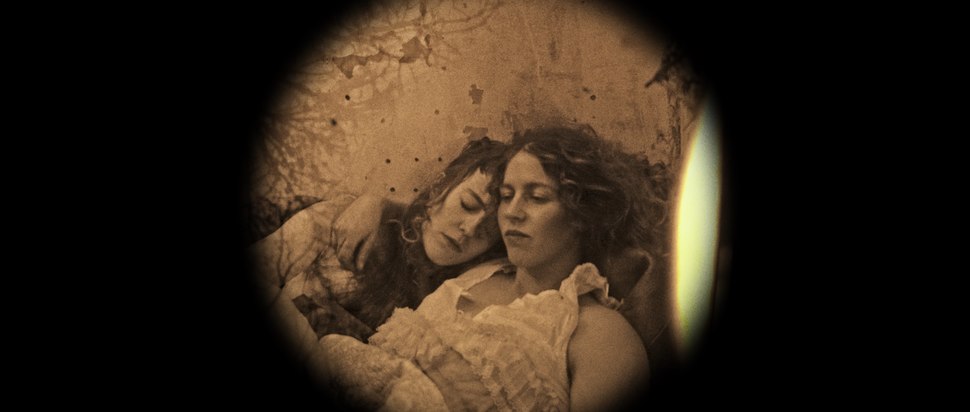
Just when you thought the well of found footage horror creativity had run dry, along comes Snapshot, an ingenious new take on the subgenre. Its premise is that a feature film from 1888 has been uncovered. Alongside the reels are some wax cylinders of dialogue that match up with the images, which means not only is this film a pioneering work of early British cinema, it also beats The Jazz Singer to be the first talkie by nearly four decades. The footage is significant for another reason: it reveals who is responsible for the Whitechapel murders of 1888 attributed to Jack the Ripper.
The filmmaker behind the found film is Tamworth (voiced by Tom Stourton). He’s making a documentary about Minnie (played by Cathy Wippell, who’s also Snapshot’s writer) and her group of friends, who are members of an all-ladies ghost-hunting society. They have become convinced some sort of evil spirit is responsible for the recent killing of women in the Whitechapel area, and Tamworth’s camera can get them the proof they need that this is the work of a phantom. Minnie, who’s a lady of high society, brings the director in tow to spend time among the rowdy pubs, threadbare brothels and unkempt opium dens of the East End. The sex workers Minnie meets, including her close friend Fanny (Hazel Rogers), are terrified of the Ripper, but have no option other than to ply their trade.
Minnie’s focus is the potential victims, but Tamworth also makes time for vox pops around town with some of the local men. One vigilante tradesman claims he wants to catch the Ripper to protect women, although his friend points out they’re mainly after him because he's bad for business. The filmmaker also speaks to the police, who are deeply unhelpful, and to the press, who are amping up the salacious details of the Ripper case to sell papers. The unreliability of media becomes a key theme as the film goes on.
Snapshot’s title neatly describes its form: the story is built up from a series of short vignettes, some of which have been stitched together expressionistically or out of order. Often they’re observational: Tamworth capturing the atmosphere of a madam’s boarding house or peering into the eerie darkness of a cobbled lane. Other times, people are crammed into the tight circular frame and address the camera directly; almost all are initially confused by this newfangled piece of technological witchcraft. But more disturbing snapshots of gore and the macabre also sneak in. These fragments are only onscreen for a flash and are rarely clear, but the ambiguity makes these flickering images all the more disquieting.
Sound and music also unsettle. There’s no score initially. Instead, we hear the whirling mechanics of the camera, which gives the feeling we’re directly inside Tamworth’s pinhole box observing his unsettling scenes. The music hall ditty Two Lovely Black Eyes, which appears to be 1888’s song of the summer, also features prominently. It’s a political satire about a Liberal and a Tory getting into a punch-up, but in Snapshot’s world of casual misogyny, the tune's violent imagery takes on different connotations.
Séances and spooky occurrences factor into the plot, but Wippell’s queasily compelling narrative is more interested in real-life monsters. The formal ambition of the filmmaking is also to be commended. Director Joseph Archer’s commitment to approximating the sort of visuals that could have been captured on primitive moving image devices in the late 1880s is admirable, even if it means he’s somewhat limited in his visual storytelling. The result is a wonderful experiment. While not quite believable as a lost film from the Victorian age, Snapshot’s recreation of that era's atmosphere on a limited budget is remarkable.
Snapshot had its world premiere at EIFF on 15 Aug, with additional screenings on 16, 17 & 18 Aug