Sirāt
Oliver Laxe’s desert rave odyssey delivers a thrilling sensory experience, but it is often sloppy and cynical
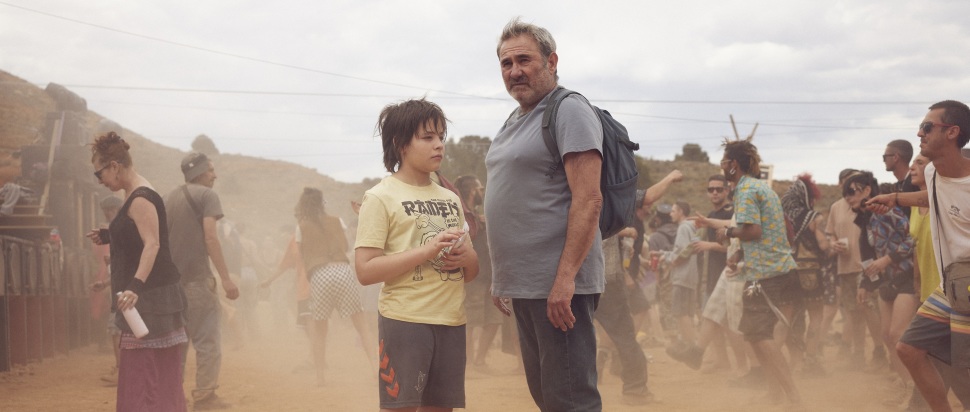
Sensory maximalism is the name of the game in Óliver Laxe’s latest. Luis (Sergi López) and his son Esteban (Bruno Núñez) journey into the Moroccan desert in search of Marina, their daughter and sister respectively, who they suspect has joined the rave scene there. As they follow the path of these rave parties towards the Mauritanian border, the pair find companionship among these itinerant revellers.
Laxe and cinematographer Mauro Herce capture bodies in an unfeeling space, utterly insignificant against blurring desert sands and skies, just as close-ups on speakers and prosthetics highlight tangible, often brutal lives. The sound design is similarly overwhelming, veering between rave tracks, loud diegetic noises, and complete silence. Movement and music are dual forms of survival, or – as the film progresses – sinister forms of escape.
Sirāt’s commitment to exteriority, however, does not give human relationships time to unfold and reveal depths. One extreme and random tragedy that should be unbearably bleak comes across as a farce in its reliance on frenetic expository dialogue. Another horrifying turn of events reaches towards symbolism but falls into moralising and self-parody – worse, turning a legacy of violence (the world’s largest minefield and Western Sahara’s status as Africa’s last colonised state) into cheap shocks. Interestingly, Sirāt never brings up the fact that Mauritania and Morocco do not share a border, unless one considers Western Sahara to have been subsumed by its colonising power.
Ultimately, Sirāt impresses more than it moves, and its political sloppiness makes its cynical denouement all the more uneasy.
Released 27 Feb by Altitude; certificate 15