Scotland on Screen: A Year in Scottish Film
From the grind of poverty to the perfection of porridge via samurai and swearing, this was 2025 in Scottish film
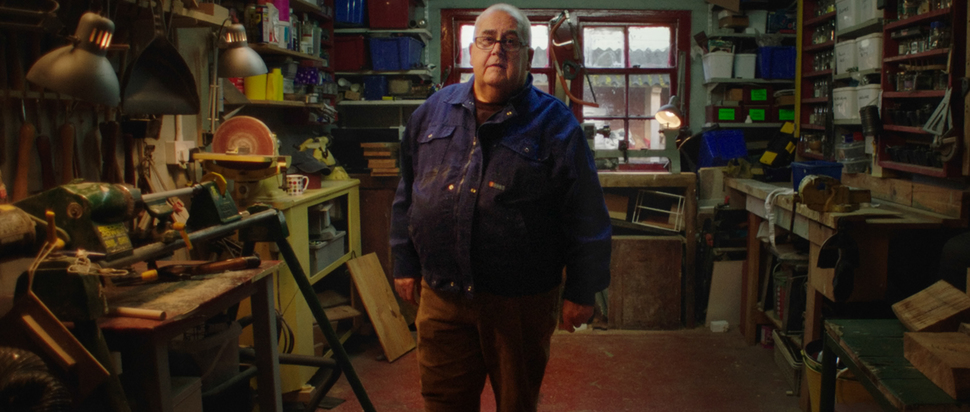
The finest Scottish film of 2025 had already made itself known to audiences the year prior, thanks to its rapturous run on the autumn festivals circuit. I refer to, of course, On Falling, the melancholic debut from Laura Carreira, which premiered at Toronto before going on to win awards at San Sebastian (Best Director) and London Film Festival (Best First Feature). With precision and care, the film follows the struggles of Aurora (Joana Santos), a 30-something Portuguese woman who works at an Amazon-like fulfilment centre in Edinburgh as a 'picker', one of the workers responsible for running around the sprawling warehouse to find items customers have ordered. It’s a process that’s very convenient for the shopper but anything but for the worker, whose speed and efficiency are monitored and tracked. If you've ever wondered how your online Christmas shopping gets to you so fast, a big part of the expediency is down to the exploitation of people like Aurora.
The daily humiliations of trying to navigate late-stage capitalism are laid bare. Carreira’s film shows how working so hard for so little reward damages not just your bank account and your body, but also your soul. The loneliness of poverty, the isolation from never having any spare cash to do something as frivolous as leave the house, has turned Auroa into a shell desperate for connection. Carreira's great skill is that she communicates this isolation and instability almost entirely visually and through Santos’s performance. Her film was a worthy Best Feature winner at November’s Scottish Bafta awards.
On Falling screened at Glasgow Film Festival, as did two more promising homegrown works that never quite took flight. Tornado, the second feature from Beta Band member John Maclean, opened GFF. Its unique premise – a samurai Western set in the Scottish Borders in 1790 – had the potential for something special, but there wasn’t much to cheer about. Maclean’s script was deeply malnourished and was missing the subversive wit of his debut, Slow West. A charitable reading would be that he was reaching for something mythic with his threadbare plot and thinly-sketched characters, but harder to forgive was the stilted action. Why so many scenes of the bad guys walking slowly across the screen? Why so little swordplay?
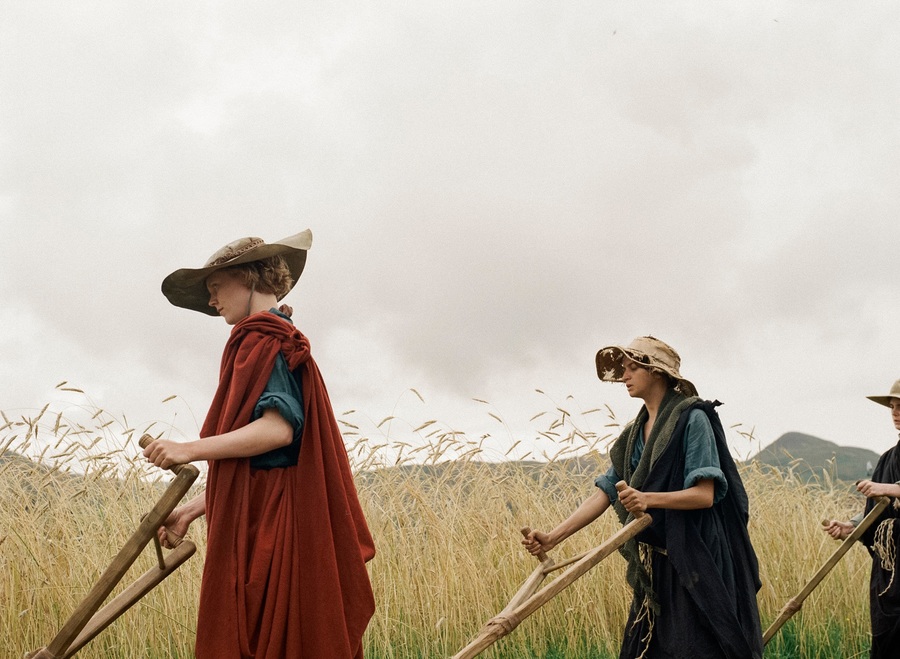
Harvest. Courtesy of MUBI.
There was much buzz, too, around Harvest, Athina Rachel Tsangari’s adaptation of Jim Crace's 2013 novel of the same name. It’s a gorgeous film dripping in atmosphere, with Good Time cinematographer Sean Price Williams delivering the goods with 16mm cinematography that captures the feral beauty of the Highlands better than any film I know. I was so deeply immersed in the sound and visuals of Tsangari’s film that it took me a few minutes to register how shapeless her story is. Set over seven days, we’re introduced to an isolated Highland village on the precipice of inevitable change. The community has some strange rituals and customs, and there's a vague menace of folk horror suggested, but the existential threat to the village isn’t the occult; it’s plain old capitalism. Harvest may be an analogy for the Highland Clearances, but it's so meandering and unfocused that it’s hard to tell. In the end, the film’s got little else going on but vibes.
I Swear is less ambitious but more satisfying. It’s an unashamedly straightforward biopic telling the story of John Davidson, a lad from Galashiels whose life alters overnight, going from golden boy football prospect to social outcast, when he starts displaying symptoms of Tourette's syndrome as a teen. Scott Ellis Watson plays John at 13, while Robert Aramayo plays him across the next three decades. Both are terrific, and there are rich, soulful supporting roles from Shirley Henderson, Maxine Peake and Peter Mullan. Does writer-director Kirk Jones lay on the sentiment a bit too thick at times? Absolutely, but he’s not afraid of digging into the darkness of social attitudes towards anyone who was different from the norm in the 80s and 90s, either. The resulting balance of humour and heart is pretty much note-perfect.
Edinburgh Film Festival's closer was Paul Sng’s Irvine Welsh: Reality Is Not Enough. The Trainspotting author is a tad over-exposed at this point (this is the second documentary about Welsh to screen at EIFF in three years), but he’s an undeniably engaging subject, and his left-field musings on everything from Brutalist architecture to Thatcher to Scottish independence almost always elicit some good lines. Sng deploys a rich tapestry of techniques to keep things interesting. Clips from the various movie adaptations are used judiciously, and some famous voices (Liam Neeson, Maxine Peake, Stephen Graham) are brought in to read revealing excerpts from Welsh’s novels. Like its subject, the film is loose and hazy, verging on the hallucinogenic at times; it’s also pleasingly unconventional and consistently funny.
Edging Sng’s film for Scottish doc of the year is Constantine Costi’s delightful The Golden Spurtle, which takes us inside the annual World Porridge Making Championship in Carrbridge. The colourful kooks who put on the tournament and take part each year feel like they’ve come directly from a Christopher Guest mockumentary, while the playful, picture-postcard framing by cinematographer Dimitri Zaunders is straight out of Wes Anderson. Costi gets so much mileage from the central joke: the enthusiasm these people have for creating the perfect bowl of porridge and the inherent futility of such an endeavour, given that every bowl passed in front of the camera looks identical. It’s also a beautiful portrait of community, and how having a passion in life is as deeply nourishing as, well, a hearty bowl of porridge.