Romería
Carla Simón’s follow-up to Alcarràs is another sharp dissection of family, cloaked in an hazy aesthetic
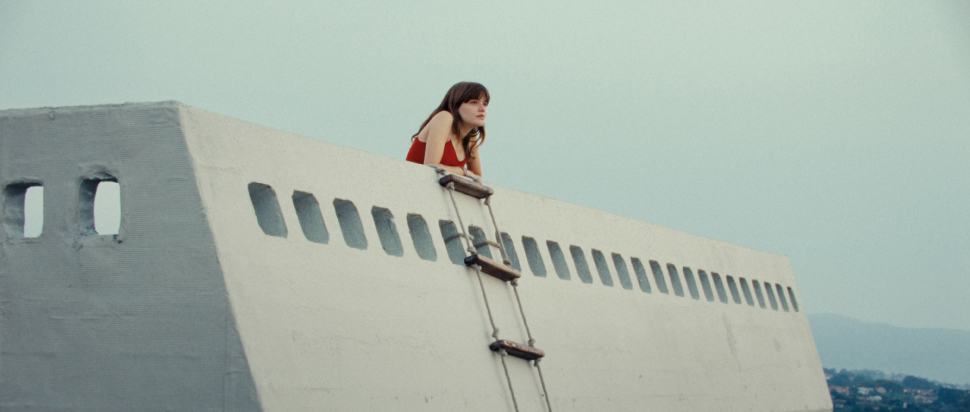
No one is doing languor quite like Carla Simón at the moment. Her previous two films (Summer 1993 and Alcarràs) dealt in a kind of leisurely naturalism; they seemed to be pushed forward by the breeze as opposed to plot or tension. What this gentle aesthetic masks, though, is a filmmaker with a steely eye for the difficulties and intricacies of family and history, and in Romería this eye is keener than ever.
A fictionalised retelling of a story from the director’s own youth, the film follows a young woman (Llúcia Garcia) as she comes to Vigo, a port town in Galicia, searching for answers about the parents she never knew. She stays with her father’s family, and revelations begin to emerge about his and her mother’s time together in the 80s.
Romería is a deeply personal film, but its gaze is far from narrow. The uniformly strong cast is fantastic at articulating the hypocrisies and varying shames of characters across three different generations (although the script does dip, occasionally, into cliché). Garcia, in particular, carries the film with a supremely well-judged central performance.
It’s all beautifully done: Simón’s trademark ambling momentum and sun-soaked vistas are a brilliantly distracting balm that's increasingly rocked by moments of quiet devastation. It creates this cumulative ball of restrained tension that pays off in a final act that is maybe the boldest gambit of Simón’s career thus far, one that blows wide open what could come next for this immensely talented filmmaker.