EIFF 2026: Goodbye Cruel World
Félix De Givry – best known as the lead actor from Mia Hansen-Løve's Eden – announces himself as a hugely promising filmmaking talent with this sensitive teen drama that calls to mind the youth films of the French New Wave
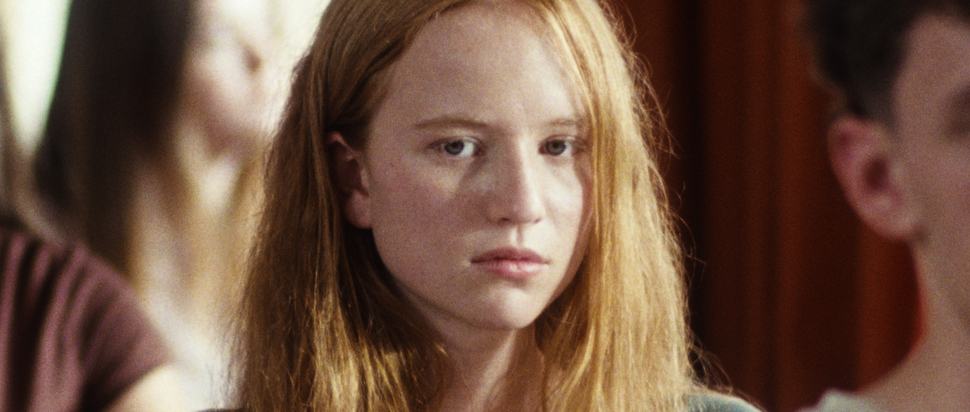
Félix De Givry’s achingly tender coming-of-age film opens on a pitch-black night over a small provincial French town. There’s commotion on the street: shouting, scuffling. Cinematographer Tara-Jay Bangalter’s 16mm camera floats high over the houses. After searching through the velvety darkness, it eventually picks out 14-year-old Otto (Milo Machado-Graner), who’s cowering behind some bins to avoid his bullies. The next day, he writes a suicide note, sends photocopies to all his classmates, and jumps off a tall bridge on the outskirts of town.
Otto’s felo de se does not go to plan. He survives the drop, and by the time he washes up on shore, the efficient French postal service has already delivered his letters. A combination of embarrassment and fear of going back to his tormenters forces him to hide out in town like a baby-faced fugitive, surreptitiously observing the townspeople’s reaction to his supposed self-annihilation.
The film’s title suggests irony, the hyperbolic utterance of an over-emotional teen, but De Givry treats Otto’s malaise with utmost sincerity. A narration by an unnamed older woman (Françoise Lebrun) also spills over with compassion.
Otto’s limbo of anonymity is broken when Lena (Jane Beever), a girl from school, spots him eating out of bins behind her mother’s hotel. Rather than turn him in, she invites him to hold up in a dilapidated room in the hotel directly beneath her bedroom. Clandestine rendezvous soon follow, involving elaborate schemes to avoid detection. The grainy 16mm photography, the mellifluous voiceover and the delicate score by Arnaud Toulon had already created a dreamy atmosphere, but as Lena and Otto slip into their own secret world, Goodbye Cruel World starts to resemble a fairy tale.
A pleasing timelessness adds to this uncanny atmosphere. It’s ostensibly the modern-day, but smartphones and social media barely feature. Otto keeps abreast of his missing status through old-school media like newspapers, television and the radio, while the landline in his hotel room is his main line of contact with Lena, along with a tartan scarf she dangles from her bedroom window to get his attention like she’s Rapunzel.
De Givry’s filmmaking style also feels out of time. The editing rhythms, film grammar and compositions of Goodbye Cruel World are closer to the work of François Truffaut or Louis Malle than any contemporary French filmmaker. Even the opening and closing credits (it ends on a wonderfully old-school title card reading ‘FIN’) evoke yesteryear.
All this aping of cinema past might have come across as the showboating of a first-time director keen to show off his cinephile credentials if it didn’t so perfectly match the film’s enchanting mood. From an opening of bleak despair, De Givry and co-writer Marie-Stéphane Imbert find a path through for Otto, who finally begins to feel life is worth living when everyone he knows and loves, apart from Lena, thinks he’s dead. It helps that, in Lena, he’s found someone willing to look deep into his soul to see the person he really is. Ultimately, it’s what we all crave, but Goodbye Cruel World isn’t only a film about first love. It’s also about learning to love yourself, which sounds cheesy as I write it down but feels like real catharsis on screen.
The fairy-tale life that Otto and Lena have created can’t last forever, but De Givry finds an unbelievably beautiful grace note to leave his film on that suggests our doomy protagonist will be OK. The result is a small but perfectly formed gem that wouldn’t look out of place next to those great coming-of-age films by Truffaut and Malle that De Givry clearly admires.
Goodbye Cruel World has its UK premiere at EIFF on 17 Aug, with additional screenings on 18 & 19 Aug