Cover-Up
Laura Poitras and Mark Obenhaus deliver a portrait of legendary investigative reporter Seymour Hersh that's incomplete but powerful in the way it exposes the rotten heart of US journalism
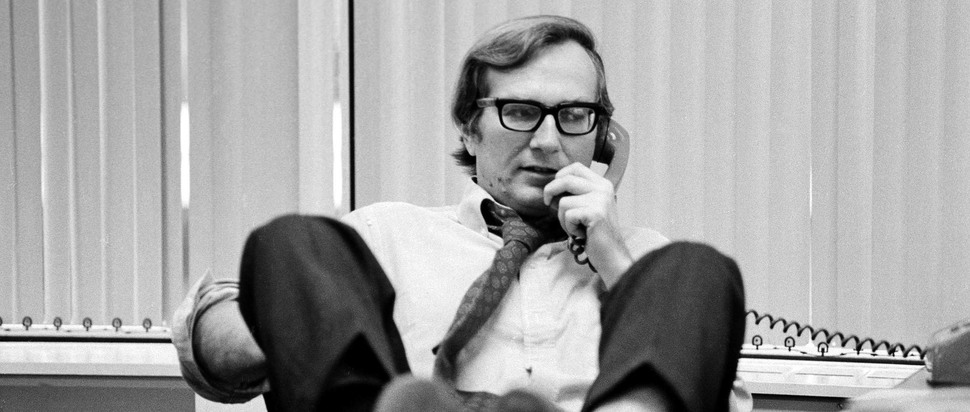
Few journalists have been at the frontline of investigating the United States’ darkest deeds as often as Seymour Hersh, and after two decades of her asking, he's finally agreed to a documentary by Laura Poitras. Hersh, the 88-year-old journalist who across his seven-decade career broke scandals like the My Lai massacre and Abu Ghraib prisoner abuses, is straightforward and sharp, a compelling presence whose inquisitive approach is unafraid to question the powerful and secretive. Archival footage is judiciously spliced into present-day interviews, juxtaposing how the cases Hersh covered – be they world-shaking human rights abuses or insidious secret testing of chemical weapons causing ‘unexplained’ animal deaths and human illnesses – were treated by the media before Hersh and his colleagues dug beneath the surface.
Cover-Up is not without flaws; it doesn't grill Hersh on proven erroneous reporting, notably in Syria, and other causes célèbres where reports conflict. It also leaves his reliance on anonymous sources underexplored – an ethical quandary, though vital for sensitive investigations. But in a career as long as Hersh’s and considering his cooperation in the documentary, these are not surprising omissions.
While not a complete portrait of a man or the recent epochs of US history, Cover-Up gets to the rotten heart of US journalism, where ‘self-censorship of the press’ hollows out the country’s illusion of transparency, freedom and fairness. It is disheartening to see how little has changed across a career dedicated to holding the powerful to account; this documentary reminds us how much work is still to be done.
In cinemas 5 Dec by Netflix, streaming from 26 Dec; certificate 15