Cannes 2026: Coward
Lukas Dhont's World War I romance avoids the trauma and tragedy of his past work, anchored by two stunning and award-winning lead performances
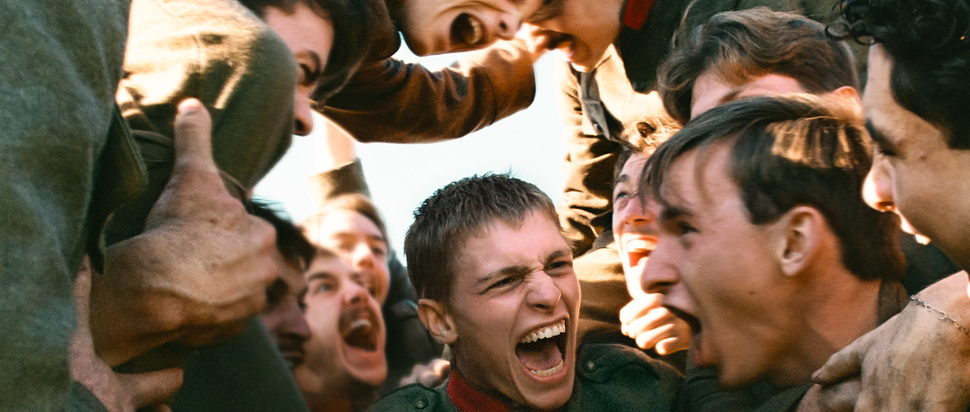
Love is on the battlefield in Lukas Dhont’s Coward, though little time is actually spent in the trenches of World War I in this tender romance. Instead, the most intense, fiery moments happen on stage, where Belgian recruits Pierre (Emmanuel Macchia) and Francis (Valentin Campagne) are enlisted to create elaborate song-and-dance productions to boost soldiers' morale.
Even as the film takes place within the throes of war, Dhont avoids the trauma and tragedy of his divisive first two features Girl and Close. It’s gentler and euphoric, revelling in the ephemeral freedom that can be found behind the front lines. Coward is virtually a musical, where young men keep spirits high despite the bloodshed that surrounds them by breaking out into lively chants. Francis, who would rather perform than return to his old life as a tailor, doesn’t want the war to end. But Pierre, falling hard and fast, feels differently: the threat of homophobia looms, but it’s also the spectre of death that has him yearning for an escape with Francis.
Dhont shoots much of the film in tighter medium shots, focusing primarily on faces for the glimmer of longing and vulnerability in Pierre and Francis’ steely gazes. There’s electricity between them, bolstered by the intoxicating chemistry between Macchia and Campagne, who the camera feels drawn to as much as they feel the pull of one another. The title – referred to so frequently that the message verges on becoming heavy-handed – refers to the soldiers too afraid to risk life and limb, but Coward also posits that the bravest thing anyone can do is to love against all odds.
Coward will be released in the UK by MUBI