Vladimir de Fontenay and Woody Norman on My Father's Island
French director Vladimir de Fontenay and English actor Woody Norman talk to us about working together on My Father's Island, following a father and son on an ill-advised trip to live on a Norwegian Island for a year
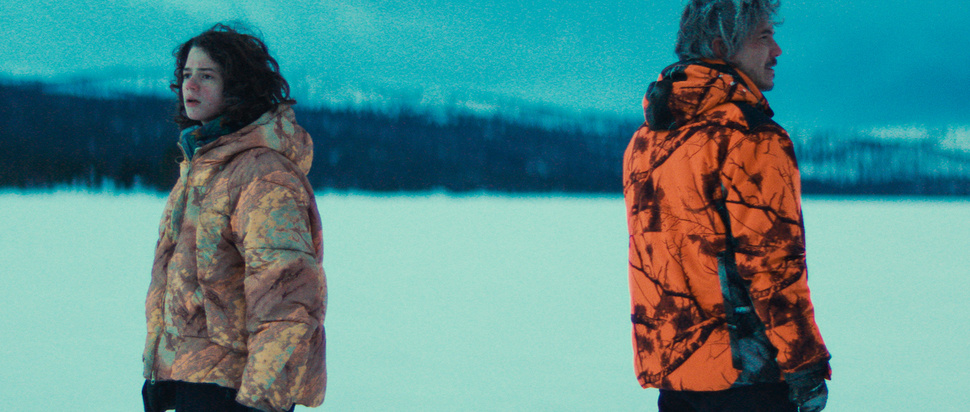
It’s a wonder anyone ever goes into the great outdoors, given how often things go awry there in films. Anyone planning a camping trip to the outback should certainly avoid My Father’s Island, which begins as a tender story of a father and son reconnecting during a year-long adventure to an uninhabited Norwegian island, before taking a darker turn into a survival thriller as the realities of an Arctic winter take hold.
The film is written and directed by French filmmaker Vladimir de Fontenay, and is based on an autobiographical novella by American author David Vann called Sukkwan Island. The story begins with scenes shot in Glasgow, with Roy (played by Ruaridh Mollica) preparing to revisit the island cabin that he and his French father (Anatomy of a Fall’s Swann Arlaud) stayed in ten years ago. The film then flashes back to that trip, with teenage Roy now played by talented young English actor Woody Norman, best known for his breakout role opposite Joaquin Phoenix in Mike Mills’ C'mon C'mon.
Ahead of the UK premiere of My Father’s Island at Glasgow Film Festival back in March, we sat down with de Fontenay and Norman to discuss the film, the challenge of making a film in the Norwegian wilderness and how life started to imitate art on the film's tough shoot.
Vladimir, I believe you had wanted to adapt Sukkwan Island for a long time now. What got you hooked on the book?
Vladimir de Fontenay: So my dad gave me the book. He had read it and loved it, and when I read it, I did too, but I couldn't quite tell why. This is usually a good start: if I'm not exactly sure why I like something, then I keep wanting more, so I think that's how it started. There was something about this epic tragedy in the wilderness, and this father-son relationship that really stuck with me, so basically I started looking for the rights. I asked my agent, and we found out someone else had snapped them up. So I forgot about the book, but then a few weeks after my first movie [2017's Mobile Homes] came out, there was a second run in Paris, and I met some producers who'd seen my movie.
We had a meeting, and they were like, "Oh, we have the rights for this book, it's called Sukkwan Island, would you be interested in reading it, because we want to adapt it into a movie?” And I was like, "Oh my god, this is crazy.” But what was interesting is that it wasn't just the book that they wanted to adapt; they also wanted to adapt the story that was hidden behind the book, David Vann’s story [that inspired the novella]. So I got to meet David Vann, and he was involved from the early stages of the writing.
So that was in like 2017/2018?
VdF: 2019 I think?
Woody, you must have still been a kid back then. When did you get involved?
Woody Norman: It must have been like 2021 or maybe 2022. I mean, I hit puberty while I was first attached to it, and then finished puberty before it started filming in early 2024, so it was a while.
And what drew you to the part?
WN: Honestly, I'm gonna give you such a bad answer, but, I just thought it was well good. It was just such a good story, and one that I really wanted to be a part of.
And what about you, Vladimir? Why did you want Woody for the part?
VdF: I remember it was late COVID, and I went to the movies and I saw C'mon C'mon, Mike Mills’ movie, and I loved [Woody]’s performance in it. He looked so young, and yet he felt so mature, and I don't know, just the maturity of someone that looks so young appealed to me for this part. But I guess that was a different story because when you got involved, you were about 14, right?
WN: No, younger. I was 12, and when we started filming, I was 15.
VdF: Another reason Woody was great was that I didn't want someone who hadn’t acted before. You know, you could look for someone who’s new to acting, and you know, kind of steal something for them. But I didn't want that. I wanted a young actor who would understand everything that was at stake and who understood the part. So that was everything I felt when I saw Woody in C'mon C'mon. I was like, "Oh, this is someone I'm going to be able to collaborate with.” In that film, Woody isn’t just acting out the scene or what his character is going through. He’s sort of living the scene, as opposed to trying to convey what the scene is about. I think that’s a big skill for an actor.
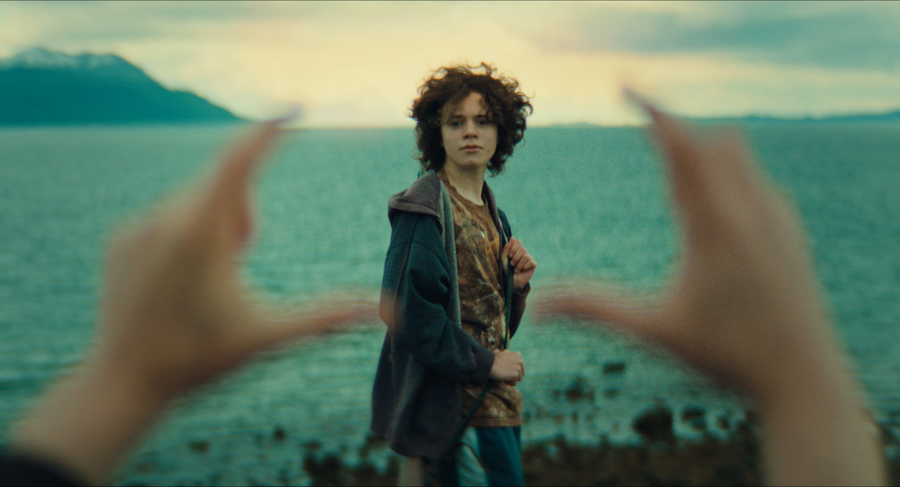
Woody Norman in My Father's Island, courtesy of Curzon
C'mon C'mon was your first major role, Woody. Have you changed as an actor since then?
WN: I’m not sure. As a person I have changed, so I guess as an actor I must have changed. But I've always been very... well, I’m not a method actor at all. I'm just really big on living the scene and being very loose on memorising my lines. I don't want them to be second nature. I like them feeling new, so that it feels like I'm having this new experience, in this new moment, while the character is having it. But I didn't do that during C'mon C'mon; that's something I've only picked up recently, so maybe that's the main difference.
While being very different tonally, there are some parallels between C'mon C'mon and My Father's Island, in that they're both concerned with the dynamic between a child and an adult. Was that partly what drew you to Woody for the role?
VdF: I was very much looking at those dynamics in films, like in Paris, Texas and Alice in the Cities, those moments when things shift and the child has to become the adult in the room. But I think mostly I just fell in love with Woody’s performance. And then I met him in London, and that was really cool, because he and his mom invited me to their place, and we just hung out and had some whiskies.
WN: Well I didn't have any, I was 12 at the time.
VdF: Well maybe I had some whiskies. But that day was great, because often as the director, you’re like, ‘Who will I cast?’ But this was the reverse. I wanted to work with Woody, so it felt like I was the one being cast.
One thing that's so impressive about your performance in C'mon C'mon is that you're matching one of the best actors in the world, Joaquin Phoenix. Here you're playing opposite Swann Arlaud, who is no slouch either. Did you ever get intimidated on either set?
WN: I think I was more intimidated this time around, because I had actually seen something with Swann in it. I watched Anatomy of a Fall when it came out, and I was like, 'Oh shit, he's really good,' and that made me a little nervous for like a day, but then I got over it. But when I worked with Joaquin, I hadn't seen anything of his except for Brother Bear, and this was while Joker was just coming out, so there was a lot of buzz around him, but I had never seen it. I think my mum wouldn't let me watch anything on purpose, so I wouldn't be intimidated, so I wouldn't be starstruck by him. That really helped and allowed me to create a bond with Joaquin on and off camera. And the same thing happened with Swann. So you're right, there are actually a lot of parallels between the two films.
One thing that must have been quite different was the working conditions. What was it like shooting up in the Norwegian wilderness?
WN: Oh, it was overwhelmingly beautiful every day. Being from London, it was completely opposite to what I’m used to. It was amazingly silent all the time; you could hear your own heartbeat. But then it was also minus-30 degrees, and I think everyone on the crew went a bit insane. It was like The Shining by the end, really. You could tell it was an endurance test for everyone, not only because of the temperature and how far we were from home, but also because we were battling with light every day, and filming in four feet of snow. It was completely new for probably everyone filming, so it was nice to band together and find our way through it.
How did the shoot work, because it takes place over the course of a year? Did you shoot in blocks?
VdF: We did, and we actually shot in reverse order. We started the shoot in deep winter, and actually, the first scene of the winter is our camera test and everybody was freezing. I think that was the coldest day.
WN: That was when my nostrils were freezing up.
VdF: And people were like, ‘Is this what this shoot is gonna be?’ But then we had a little break, and came here to Scotland for the scenes at the beginning and the end of the movie, and then we went back to Norway during the spring.
WN: And it was lovely and hot outside.
VdF: What was so nice for me is that it’s so rare to get to come back and shoot in the same place, same location, with the same crew. There was such a struggle; the first time was so hard and physically excruciating. To be able to come back and see different colours, different sounds, different seasons, insects... All of a sudden, it was just very nice.
WN: And also, for some reason, we didn't hate each other for that bit of the shoot. Yes, that was really nice.
Not to spoil anything, but that sort of mirrors the tone and emotions in the film.
WN: Yeah, completely.
So, maybe you are a method actor after all, Woody?
WN: I accidentally method-acted. I never knew!
My Father's Island is out now via Curzon