SQIFF: More Than Just a Film Festival
Two filmmakers whose work is screening at this year's Scottish Queer International Film Festival (SQIFF) tell us why the event is so vital to Scotland's vibrant queer filmmaking community
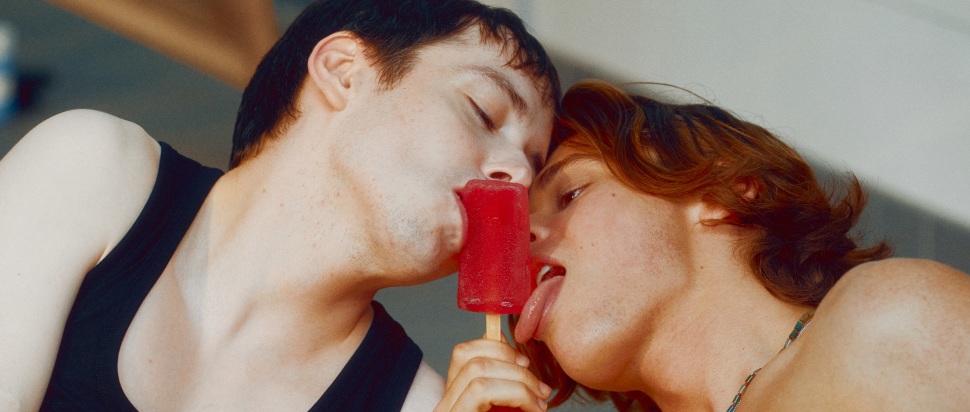
SQIFF is much more than a celebration of queer cinema. The annual film festival is a hub for Scotland’s queer community and an incubator for filmmaking talent, with networking, training and funding provided to emerging queer filmmakers across the year. This dedication to Scotland's film scene is reflected in the programming, with local talent showcased in a pair of Scottish Shorts programmes.
Two such filmmakers are Diego Migliorini and Lara Delmage, whose latest shorts screen in Scottish Shorts 1, which opens this year's event. When I speak to both ahead of SQIFF, they reveal they recently became fast friends after meeting at Glasgow Film Festival back in March. “It was a networking event, so you’re always being introduced to new people, but Lara and I instantly clicked,” says Migliorini. “For me, it was kind of like love at first sight.” He puts their connection down to several factors: “I guess because we're both queer, we're both Virgos, we're both beautiful… oh, and we’re both filmmakers, so we started talking about our projects.”
One of those projects likely discussed is PANG, Delmage's bruising examination of the friendship between two teen girls in the final year of secondary school whose relationship has reached an erotic intensity that neither of them knows how to cope with. “The idea came from this big friendship breakup I had when I was the same age,” explains Delmage. “I wanted to write something about it: this feeling of longing and loss for this really intimate grey area friendship that was so formative.”
It's a deeply personal story, but when Delmage began sharing her idea for PANG with people, she found these types of fervent teen friendships were pretty universal. “I spoke to a lot of my queer female friends, and our stories were almost carbon copies of each other. What we all had in common were friendships where each person would idealise each other to the point of complete impotence, so there was nowhere for the relationship to go once it reached its peak. I thought that was so interesting, and it's something I really tried to grapple with in the short.”
Her film is set over one afternoon while the girls laze by a communal pool alongside two boys from school. The setting was key. “It's a space so suffused with sex and desire,” Delmage says of swimming pools. “Like, everyone's basically naked, and everyone's pretending that they're not. And when you're that age, you're so performative with each other, and there's something so naturally performative about being at the pool.”
PANG was made within the Sean Connery Talent Lab, a new filmmaking initiative run by the National Film and Television School and the Sean Connery Foundation. There she connected with a producer, cinematographer and editor also taking part in the year-long course. Migliorini’s film at SQIFF, They Bend Stars, is similarly collaborative. It's his graduate film from the Kino Eyes European Film Masters, an Erasmus programme in which Migliorini, who's from Brazil, was teamed with a producer, cinematographer, editor, sound designer and screenwriter. “That made it a challenge because this was the first of my shorts I didn't write,” he says.
They Bend Stars is an expressionistic, dialogue-free science fiction film centred on an alien (played by trans actor Beau Minis) who’s being held captive in an underground facility and experimented on by a mysterious scientist (played by the great radical playwright Jo Clifford). Migliorini was the only out LGBTQ+ person in his cohort. Despite being outnumbered, he pushed for the film to be a queer allegory. “We had to find an idea that would talk to all of us involved,” he explains. “So I pitched this story and said, ‘OK, we’re in Kino Eyes. We’re international; everyone is from somewhere else. So let’s talk about immigration, let's talk about colonialism, and I'll handle how to make it queer.'”
The Matrix proved instructive inspiration. “Because the Wachowskis’ film was so big, everyone knew it. It was not a niche film, so it was a good point of contact between all of us. For me, The Matrix is completely queer-coded, but if you ask a cis straight guy, they might not see its trans narrative. So that inspired the idea that you can have layers of interpretation. And for me, that’s the beauty of having it premiering at SQIFF: its audience will understand all those layers.”
SQIFF is clearly a special place for Migliorini. He calls it “the most accessible festival I've ever seen in my life” and cites it as a chief reason why he moved from Edinburgh to Glasgow. “I love that SQIFF's priority is to be as accessible as possible. They understand that accessibility, disability, neurodivergence, queerness – these things are not separate. To have a festival that’s worried about all of those aspects, and queerness is at the core, like an umbrella, is so special, especially being an immigrant. It’s like, OK, this place is safe.”
“SQIFF has been amazing for me as well,” adds Delmage. “Especially in my professional development. I didn't go to film school; I'm completely self-taught, and I started going to SQIFF’s queer filmmakers group a couple of years ago, where I picked up some skills and met lots of people who're also making films. So they're not only creating a space for people to come together and celebrate queer cinema; SQIFF also help get people's careers off the ground. What they do is genuinely trailblazing.”
SQIFF runs 19-24 Oct at venues across Glasgow
Delmage and Migliorini's films screen in Scottish Shorts 1, Glasgow Film Theatre, 19 Oct, 8.30pm