Scotland on Screen: Ryan Pollock on Gowk
With the second cohort from NFTS Scotland's Sean Connery Lab due to premiere their short films at next month's Edinburgh International Film Festival, we look back to one of the most impressive works from the scheme's inaugural year: Ryan Pollock's Gowk
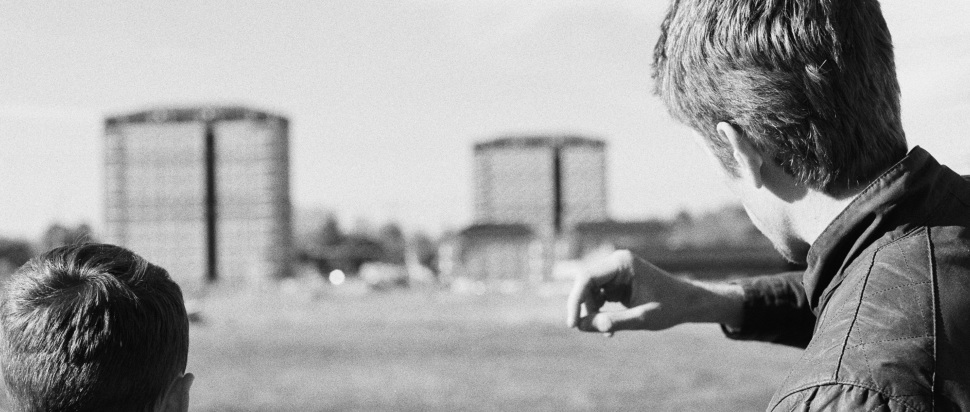
Filmmaking tends to be dominated by rich kids, and no wonder, given the expense of film school, the safety net required to enter such a precarious profession, and the scarcity of talent development funds available. It’s fair to say, though, that Ryan Pollock, one of the most promising young writer-directors to emerge on the Scottish scene in the last few years, doesn’t fall into this camp. “I grew up in Wishaw,” he tells me over video call, “so not a huge film scene there, know what I mean? It’s something I’ve always wanted to do, but in Wishy, there’s nae route to it. You've never heard of anyone making films; naebuddy’s got a camera.”
Pollock clearly found a route through. He’s currently talking to me from London, having received a scholarship to do an MFA on the Directing Fiction course at the National Film and Television School. But his hometown remains key to his filmmaking. He’s made several self-funded, no-budget shorts there, including the bruising Bluebird, which was set in Gowkthrapple, a down-at-heel neighbourhood in the Lanarkshire town. “Wishy, it's such a fascinating place to me,” he explains. “It’s really unanalysed territory, full of fascinating characters and fascinating lives of people who have never had the chance to even really leave the place.”
These early shorts fit neatly into Scotland’s long tradition of social realist filmmaking. “I think it was just natural that my films [are in that style],” Pollock tells me. “When you're telling real stories about people you've grown up with, or people in your family, naturally it falls under that sort of lens.”
After Bluebird, Pollock then got a small bit of funding to make the documentary Exile on Stanhope Place, which focused on Nick Wisniewski, the last holdout on a council estate in Gowkthrapple that’s earmarked for demolition as part of a redevelopment. And last year, he was part of the first cohort to complete the Sean Connery Talent Lab, a new training initiative at the National Film and Television School in Scotland that brings together emerging writers, directors, producers, cinematographers and editors to collaborate on new short films.
From that year-long programme came Gowk. It’s a tender study of a young boy (played by extraordinary newcomer Jack Mavin) who comes to the realisation that something is broken at the heart of his family. The film is so vivid that it feels like we’re watching Pollock’s own memories. It turns out the story is based on childhood recollections, but they belong to his father. “[This] happened to my dad when he was about 11,” Pollock explains. “Basically, his mum – my gran – tried to commit suicide and she was sectioned. What happened was kept from my dad, but one day he overheard the name of [the psychiatric hospital] she was in. So he snuck out to go see her and took this wee girl from his class with him on a sort of first date.”
Bluebird and Exile on Stanhope Place suggested Pollock was already a gifted director, but Gowk takes his filmmaking to the next level. The Sean Connery Lab teamed him with producers Kitty McMurdo-Schad and Katriona Tweedie, editor Fraser Ballantyne and cinematographer Vasileios Kapnis, and they were given a £25,000 production budget. Pollock and his team were also advised along the way by mentors and industry professionals. He singles out Ian Sellar, the co-head of fiction at NFTS, for his particularly sage advice. “He would always tell me, ‘Never pick your shots before you know what’s happening in the moment of the scene.’ What's the core of a scene? What will the character remember? Find the emotional journey. That was quite revolutionary, because I think when you're starting oot, you've got this tendency to pick flashy shots, or what you think might sort of impress, rather than actually telling a story with economy.”
Pollock clearly heeded Sellar's counsel. Gowk’s dialogue is minimal, with its narrative conveyed through the actors’ faces and close-up details. It’s a film grammar that chimes with the taciturn emotions of working-class Scotland. “In places like Wishaw, there's very little said directly when it comes to something like mental health," says Pollock, "everything is spoken around. So we've tried to sort of translate that into the image as well.”
Gowk is still social realism, but file it along with the great British filmmakers who've done something more poetic within that space – think Lynne Ramsay, Bill Douglas and Terence Davies. “I was definitely more careful than I've previously been to not make Gowk this kind of handheld camera, scrappy, run-and-gun looking thing," says Pollock. Gowk's more composed style was also informed by its content. “The core idea is that everything is being seen through this boy's eyes, and he doesn't quite grasp what's happening in his family. So everything in the film had to be slightly shrouded and hidden – even a lot of the adults’ faces are cut off or obscured.”
Expect more shorts from Pollock in the near future as he works through his MFA, but he’s itching to make something more ambitious. “After a couple of years at this film school, I'll definitely be looking to come back to Scotland and do features,” he says. “That’s always on the back burner, feature scripts. I don’t want to be sitting aboot.”
Filmography: Gowk (2025), Exile on Stanhope Place (2024), Bluebird (2023), Who's That Riding? (2022)
The second slate of films made on the Sean Connery Talent Lab will have their world premiere at EIFF 2026. Details at edfilmfest.org