Sailm nan Daoine takes us on a tour of Gaelic psalm singing
Documentary Sailm nan Daoine brings audiences along on an intimate road trip exploring the emotional and cultural resonance of Gaelic psalm singing. Director Jack Archer and musician Rob MacNeacail tell us more
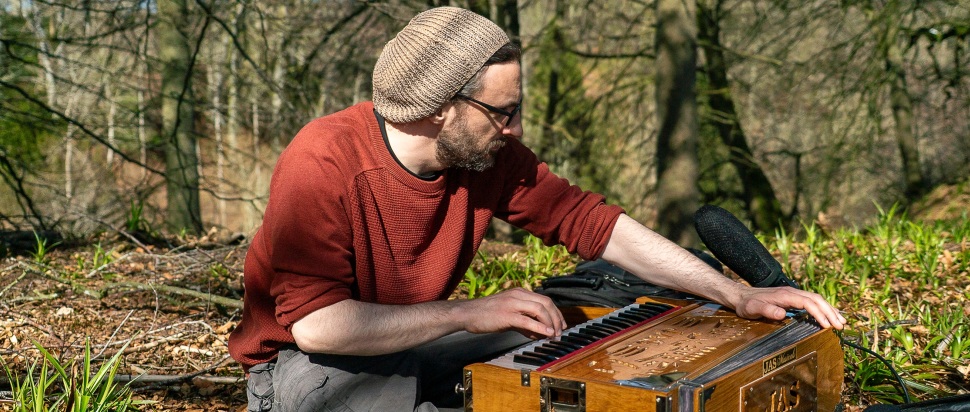
Gaelic psalm singing holds a special place among musical traditions. While rooted in Ossianic ballads and Presbyterian services, its influence is felt worldwide following lines of immigration. In the mostly Gaelic-language documentary Sailm nan Daoine (Psalms of the People), director Jack Archer and musician Rob MacNeacail focus on people's shared experience of psalm singing, exploring threads of music, community and identity.
The project began with Archer filming MacNeacail’s psalm group and realising that the creativity and tradition of psalm singing offered a rich vein to mine. “I had someone interesting who was doing something interesting,” is how the filmmaker puts it. When Archer proposed the documentary to MacNeacail, the musician initially wanted a behind-the-scenes role, but as the project developed, it made sense for him to act as the guide through a world so important to his art and life – a role he enthusiastically embraced. “Gaelic psalm singing is a huge subject, and I liked that we weren't trying to tell every aspect of it,” explains Archer. “If we made it about what Rob was doing, then it would be personal. Singing should be personal.”
“Psalms are such a precious part of Gaelic culture,” adds MacNeacail, “and Jack is very good at threading needles when it comes to rich but sensitive culture. If I had been making the film, it would have been a three-hour polemic standing next to my granny’s grave, going ‘And another thing!’ Jack brought out everything I wanted to say in much better taste.”
Sailm nan Daoine follows MacNeacail on a journey from Carlops in the Borders through the Inner (Kilmure, Skye) and Outer (Lewis) Hebrides before moving west and south to East Belfast and Cork as he encounters church groups, community choruses and prominent psalm singer Calum Martin. “The film came naturally,” says Archer of the resulting road movie doc. “There was not much that didn’t happen in front of the camera.”
MacNeacail jokes that he was often trying to make Archer laugh, but in a documentary covering sensitive and intersecting cultural, religious, and linguistic grounds, levity proved a valuable tool. Winning trust with the various communities they visited was achieved through enthusiasm, research, and not taking themselves too seriously. “You get people to open up by being yourself,” Archer says, “and Rob would struggle to be anyone but himself. People relate to that.
“Psalm singing is a precious religious tradition, and you don't want to offend, but people who are not religious but brought up in that culture also find it precious, and there are sometimes difficult, unclear feelings, so you don't want to stumble in. We had a lot of discussions about sensitivities, including with BBC Alba, so we had support in every aspect of the planning and the filming.”
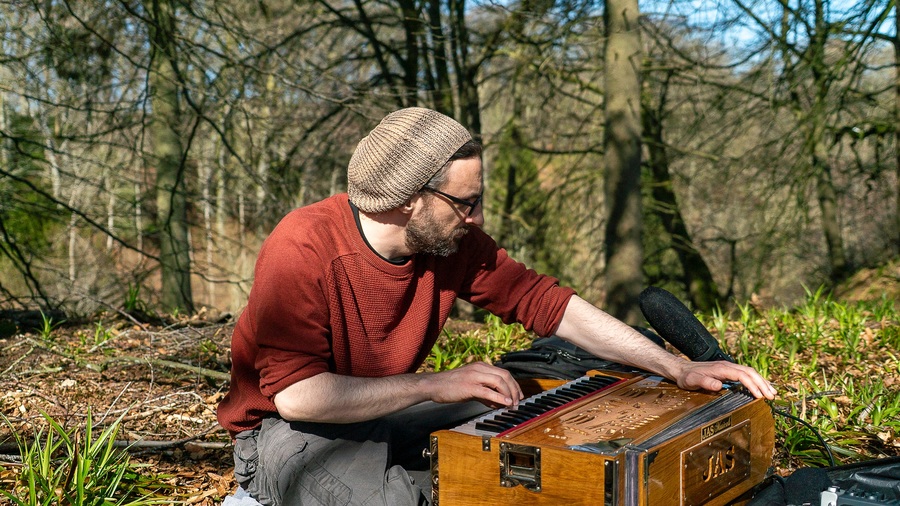
MacNeacail notes the passion of the film’s subjects made them willing sharers: “Everyone is keen to get other people on board with psalmery, and you can tell when somebody treats something precious with respect.”
The pair say they find the living, embodied, communal action of psalm singing as important as its history. “Psalmery is participative,” Archer says. “What Rob is doing is not making history, it's making the present and the future. I'm interested in how people remember it, what they do with it, and how that helps them see the world.”
MacNeacail stresses he is no history expert, but he shares his personal thesis: “The psalms are where I see the experiential aspect of the religious tradition, because Presbyterianism is very much based on reading the Bible and educating yourself. Whatever one might say against Calvin and Knox, they probably helped spread reading in Europe. But the psalms create bonds. I can imagine communities doing that in times of extreme hardship.”
The church is difficult ground for some, but psalmery can still be treasured whatever your level of belief. MacNeacail’s family mirrors this complicated relationship. He sees his practice as reconciling his dad’s and grandmother’s perspectives. “It’s terribly complicated and difficult to articulate,” he says, “but there's something going on internally that is part of that history. The Gaelic psalms are like unpacking generational trauma through song.”
While records may introduce people to psalmery, live music-making cannot be replicated on Spotify. For Archer, hearing the music recorded with background noises – “the music of what happens” – had a special, immediate energy: “Even if you were to do the same psalm twice with the same group of people, it would be different.”
Psalmery offers MacNeacail an open, communal artistic tradition, he says, and presenting in Carlops alongside three other presenters was one of his favourite psalm singing moments. “We passed this music around and held the whole community. It felt so special,” he recalls. “One of the great crimes of modernity is believing that singing is the job of the artist and performer.”
In Gaelic psalmery, every group’s unique mix of experience, emotion, and talents gives the singing “a rich texture, so you want as broad a group as possible,” explains MacNeacail. He's a talented singer who loves to perform, but he clearly gets a lot from bringing these songs to others. “I don’t get self-conscious when presenting in the way I do if performing,” he says, “because I have a role and a function to benefit people around me. On a personal level, that is lovely.”
Sailm nan Daoine is released 15 May by Hopscotch