Nicolas Winding Refn on Her Private Hell
Nicolas Winding Refn is back with Her Private Hell, a sci-fi slasher that's split critical opinion. We catch up with this cult filmmaker to discuss daddy issues, the thrill of revenge and the power of opera
I’m talking to Nicolas Winding Refn over Zoom, and I want to throw up. Not because of his film, I tell him. I’m genuinely unwell. “I love the headline,” he smiles. “Her Private Hell made me throw up. The internet would love that.”
This is the kind of response I expected. Refn is, after all, the Danish enfant terrible of modern, neon-soaked, hyper-stylised, ultraviolent cinema, and during our interview he’s everything you might imagine: über-passionate, unapologetic, mischievous.
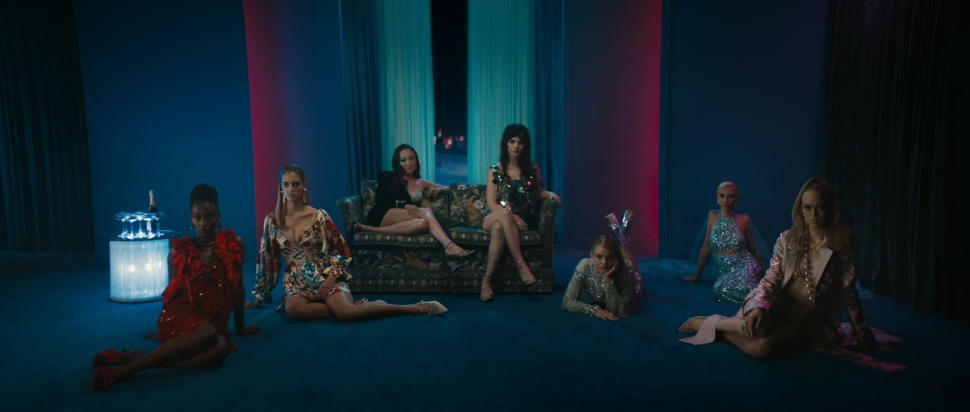
His latest film, the aforementioned Her Private Hell, is a hypnotic grand guignol space opera with doses of fairytale magic and 1970s exploitation thrown in. It’s also concerned with an Electra Complex and Refn’s own urban legend in the shape of the Leatherman, and manages to be futuristic in a wholly unique way.
More than a simple revenge tale, the film’s tone, visual language and dialogue are informed by the suffocating underwater feeling of grief. Elle’s (Sophie Thatcher) father, whom she idealises, is absent (and implied, not a good guy); Private K (Charles Melton) is a bloodthirsty monomaniac searching for his lost daughter; even the Leatherman, a terrifying boogeyman creature, is haunted by his daughter’s loss and pushed into violence in his doomed search. As someone who lost a parent in recent memory, I recognised the feeling – hopeless searching in an underworld – as a familiar one.
“I think it’s a common trap to fall into where you look at your life as your personal hell and you can't get out of it,” says Refn. “It also sets the stage for a form of dream logic where it's based more on the subconscious because… what does it mean to be in your private hell?” The title actually came from a cheap, second-hand 60s pulp paperback Refn found in the US, which he never read.
Refn says the film belongs to one of his favourite subgenres: the dadsploitation movie. Think Hardcore, The Virgin Spring, The Last House on the Left. “It's basically a [genre] where fathers are allowed to inflict extreme pain in the name of innocence,” says Refn of the dadsploitation canon. “And it usually revolves around their daughters being taken. It’s almost religious. Fathers are set free to basically use the most extreme, vicious side of the human psyche to inflict and cause pain.”
I laugh at this, wondering if this is a well-known feeling amongst men, remembering how my dad would recite the infamous Liam Neeson monologue from Taken to me when I moved out. Refn thinks so. “To men, these films have a pornographic texture. Because it's such a desirable release, you know? We fantasise about it, and those fantasies become enormously popular in mass entertainment. So it obviously does appeal to a lot of men.”
The theme of revenge is the lifeblood that pulses within Refn’s work, from the Pusher trilogy to Drive to Only God Forgives. “Revenge is one of the three most human factors of our existence,” he says when I ask about this preoccupation. “What you experience on social media is an avatar that can be in conflict with your human instincts. It's like the brain is moving towards a digital existence, but your heart always remains in the primitive stage of survival and desire.”
Familiar Refn territory it may be, but Her Private Hell happens to be the first time the director has worked with legendary composer Pino Donaggio. The Italian maestro, famous for his work on films like Carrie and Don’t Look Now, understood what Refn wanted to make: an opera. The resulting score is restrained, without needle drops, which lends it its hazy, otherworldly quality.
“Operas are more stoic,” says Refn. “Words are very symbolic, themes are grandiose. So I needed to find a film composer who also knew opera, and there's not a lot like that except for Italians.”
Refn took a voyage to Italy where he “realised that all the composers that I love, and I'm sure you love as well, are all dead.” Donaggio is the last man standing. Refn reached out to the composer, asking him if he wanted to work together on an opera for the film, then said, in his classic blunt style, “Great, let's do one before you die,” which Donaggio apparently found amusing.
The philosophy of opera – symbolic, grandiose, emotionally open-ended – seems to extend to Refn’s approach to filmmaking itself. He has no interest in making a film easy to decode, something refreshing in our age of definitions. As he puts it, “I'm not there to spoonfeed the audiences because I don't have an agenda. I'm not a politician. I'm not here to sell you something. What I'm offering up is an experience. And I can say with hand on my heart that it's an experience that comes from my heart to you. Now what you do with that is beyond my control. What you think about that is beyond my control. Whether you like it or not is beyond my control.”
Her Private Hell is an exercise in concentration. For some audiences this is a thrill. To others it might feel, well, hellish. I’m curious how Refn would describe the film for those who may ask what it’s about.
“Four words,” he says, with a devilish smile. “Nicolas. Winding. Refn. Movie.”
Her Private Hell is out now via MUBI