New GFF head Paul Gallagher on the future of Glasgow Film Festival
Paul Gallagher, the long-time programmer at Glasgow Film Theatre, recently took over as Head of Programme for all of Glasgow Film's operations, which include the annual festival. We chat to him about his hopes for GFF ahead of his first edition in charge
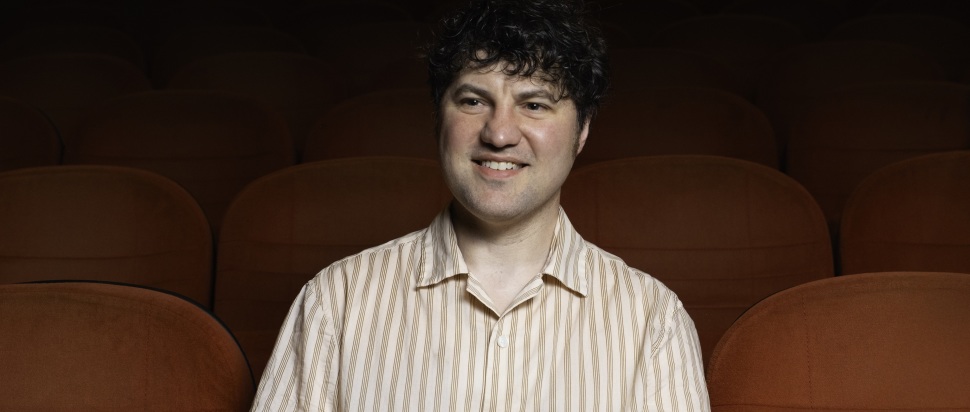
Another year, another Glasgow Film Festival, or so you might think. While at first glance, this year's edition doesn't look all that different from its immediate predecessors, it will be the first of GFF's 22 editions without the involvement of Allison Gardner, the festival's indomitable director, who retired back in October last year. Stepping into Gardner's shoes as Glasgow Film's new Head of Programme is Paul Gallagher. Ahead of launching the programme to his first GFF in charge, we spoke to him about the state of Scottish cinema, his ambitions for GFF's future and his dream festival guests.
The Skinny: You’re a few days away from launching your first Glasgow Film Festival programme. How are you feeling?
Paul Gallagher: At this point, I'm just really excited to get this programme out and for people to start getting excited about coming to see all of these great films that we've pulled together. I just started in this role as Head of Programme in September, and it has been like jumping on a train that's already moving, but I’m stepping into a team that has been delivering this festival for a few years now, and I’m stepping into a festival that’s going into its 22nd edition. I’m like, ‘OK, this is in a good place’. So I want to deliver an edition that lives up to that, and I feel like that's what we've done. We've got a programme here that prioritises audiences, which is what Glasgow Film Festival has always been about, and brings a great spread of new films. I'm particularly delighted at the spread of Scottish films, starting, obviously, with our opening and closing films, Everybody to Kenmure Street and California Schemin', two of the most anticipated Scottish films of 2026, I would say, made right here in Glasgow.
Let's talk about those opening and closing films. Was it important for you to lead with Scottish work, or is that just a coincidence that both came along at the perfect time for GFF?
For two galas like this to happen at GFF, a lot of stars do have to align; there's no getting around that. But it is a huge priority for us to support Scottish talent, and it's really exciting to see the huge spread of Scottish talent in front of and behind the camera across the programme. I think we have 13 films this year, which are all genuine Scottish productions, whether that's made by Scottish filmmakers or with Scottish production companies. To me, one of the things Glasgow Film Festival is here for is to be a cheerleader for the Scottish film industry; to be a place where great new Scottish films have their first big moment and are presented to the world. I love that that's what we're doing in my first edition: we're giving our highest honour to two excellent new Scottish films.
Can you talk about those two Galas? What, for you, makes them excellent?
I think they make a great pair of opening and closing films, because they're both films about true Scottish stories with very different approaches. Everybody to Kenmure Street is a documentary about a real event that happened very recently in Glasgow, and the director, Felipe Bustos Sierra, has already noted that the making of that film was picked up on the day. He lives in that community; he realised this was happening and was like, 'I think this could be something that people will want to get under the skin of and know about, I should investigate.' The way he does that in the film is by looking at the community and the individuals who make up that community, and it's a picture of this place, Pollokshields, and the people who make up that community. I found it a very moving experience, and so close to home that watching it, I thought this is a perfect opening film. It reflects Glasgow to itself, which is exactly what cinema can do – reflect ourselves back to ourselves.
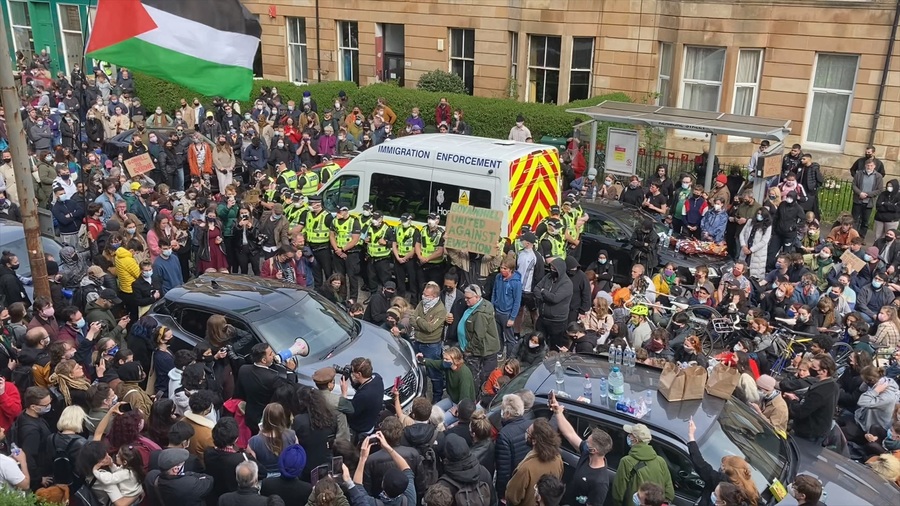
Everybody to Kenmure Street.
Then California Schemin' is at the other end of the spectrum, in the sense that it's a piece of big fun entertainment, rooted in a true story that comes from Scotland, but told on the biggest Hollywood-style canvas in a way that shows Scottish film can perform at that blockbuster entertainment level. So these two films, I think, really complement each other in terms of showing what the festival is about, and showing what Scottish film can do.
Setting GFF aside for a moment, what, to you, makes a great film festival?
The headline is, the film programme has to be something that captures people's attention and makes filmgoers think, 'I want to go there. I want to get the opportunity to see all those films in that focused space of time.' That's where it starts from. And then it's the experience of actually being there, the granular detail of, what is it like to step into a film screening at this festival? Do I feel welcome? Do I feel like these people love cinema? That, to me, is one of the real joys and privileges of attending film festivals, that feeling of, 'Oh, wow, I'm with a bunch of people who hold cinema in the highest regard.'
And in terms of this year's GFF, you described it as a moving train, so I assume some of the festival had already been planned. Can you give me a sense of that? Is this you nurturing a festival that had already begun?
In terms of the train that's already moving, I would say that's the structure and the core elements that make up Glasgow Film Festival. So if people look at the programme this year, they'll see something they are familiar with, in terms of the spread of things that are happening. We've got a couple of big special events. We've got our Audience Award strand. We've got a focus on Marilyn Monroe in the retrospective, and then we've got the free retrospectives in the morning, the Truth to Power strand. And the bulk of the programme is still our Official Selection, so world premieres, UK premieres, Scottish premieres. That structure, it's basically the same one that had been successfully set up by Allison Gardner and Alan Hunter over the last five to 10 years, which has really taken root and found a strong audience. So I knew stepping in, we were going to do that structure; that's what we're going to work to. So then, in terms of the actual films and the sort of detail of that programme, I was in from day one on that. Like I was saying, there was a team in place, and certainly it wasn't my intention to come in and basically pull the rug from under that team and say, 'Let's shake it all up,' because I knew that was the last thing this festival would need. So I'm confident that we're delivering a really excellent 22nd edition of a festival and that audiences can look forward to what they're going to experience here with some familiarity.
What about future editions? How do you see the festival evolving under your stewardship?
I've been asked this question already, and will continue to be asked it, I'm sure. So I have a little bit of a holding answer: that's something on my to-do list from the moment that GFF 26 is finished. And believe me, I do have big ideas and big hopes, and I see the potential for growth at Glasgow Film Festival to be huge. One way I can talk about that briefly, though not in specifics, would be my ambition to expand the footprint of the festival across Glasgow. Glasgow is a cinema-loving city, and it's a big city, and I want Glasgow Film Festival to feel accessible to everyone in Glasgow. I would love for these 12 days for anyone in Glasgow to feel they can connect with GFF. They can go and experience it, even if they aren't able to come into GFT. Now obviously GFT is always going to remain the heart of GFF, but I'm thinking about how it can be for everyone in Glasgow. That's something I'm keen to look at in the future.
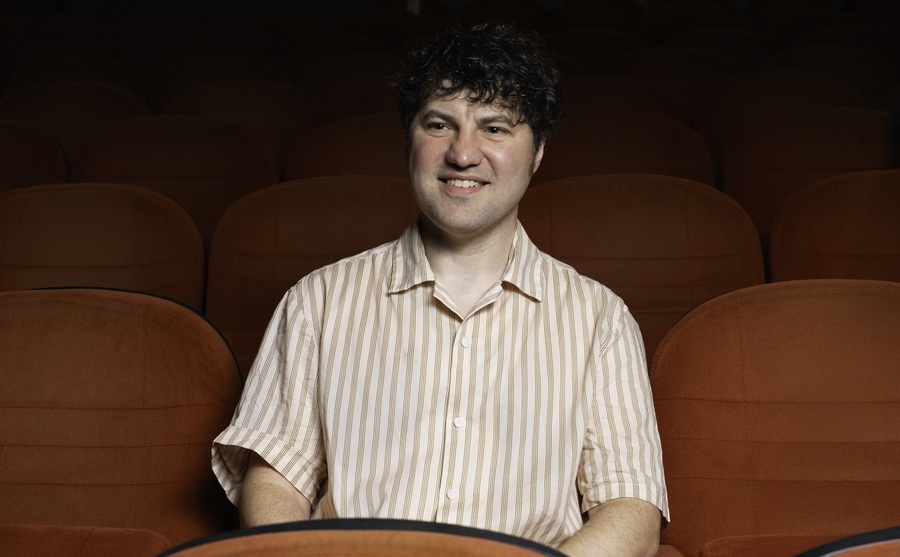
Paul Gallagher. Photo: Ryan Rutherford.
I look forward to hearing some of those plans, but are there any elements of GFF you would never change?
I mean, the heart of GFF is, and will always be, the audience. It's a public-facing festival, so even as our industry strand develops, GFF will always be first and foremost for the person who buys a ticket to come and see a film. So it's always going to be the audience member who loves film and wants to buy a ticket to see something who is the highest priority person at GFF. Yes, there are festivals around the world that are just for industry, and there are festivals around the world that are clearly split into, the public can go here, and the industry can go here. At GFF, the big events are always going to be the ones that everyone can get to.
Who would be your dream guest or retrospective subject?
Dream guests: Barry Jenkins, Martin Scorsese and Sofia Coppola – ideally all having a conversation together. And to take that a step further, they could then programme a GFF retrospective of their key influences and favourite films.
What are three film screenings that have shaped you as a film fan and a film programmer?
Two of them are not so much about specific screenings, more about first-time experiences: the first (and currently, only) time I went to Il Cinema Ritravato in Bologna, ten years ago, really blew open my mind about how wide the world of film history is, and how alive and present it can be. Then the first time I went to Cannes; just that sense of absolute adoration of cinema and filmmakers. I’ve never seen filmmakers held in such high esteem, and it is infectious and inspiring. And the third, seeing The Matrix the weekend it was released in 1999, at the UCI in East Kilbride. I came reeling out of that film with a whole new understanding of what a cinema experience can be.
Glasgow Film Festival runs 25 Feb-8 Mar; more info at glasgowfilmfest.org