Kleber Mendonça Filho on The Secret Agent
Nominated for four Academy Awards, including Best Picture, The Secret Agent has been a huge success for its talented director, Kleber Mendonça Filho. Even world leaders are taking notice of it! The Brazilian filmmaker tells us more
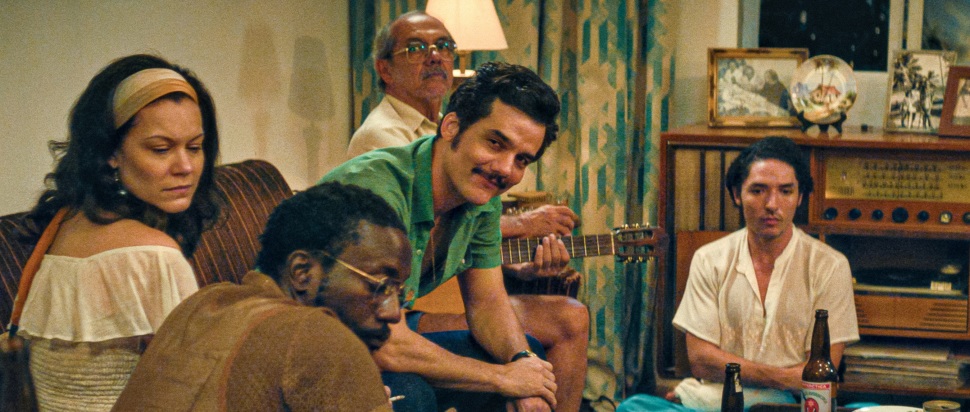
Considering we’re to talk about his political thriller that has many tense scenes involving characters on the phone, it’s funny that my conversation with The Secret Agent writer-director Kleber Mendonça Filho is postponed an hour due to what can actually be described as a political phone call. A few days after the Brazilian film’s two Golden Globe wins (including Best Performance by a Male Actor in a Motion Picture – Drama), Mendonça and star Wagner Moura – who I’m not speaking to, but is also doing press the same afternoon – apparently have to make room in their schedule for a chat with the president of Brazil.
Presumably, President Lula’s call was congratulatory. Maybe it was recorded, with or without permission, and we can hear it one day. A key element of The Secret Agent is how recorded conversations are presented and maybe even recontextualised after the fact, whether it’s days or decades later; the struggles of individuals becoming understood through people listening to tapes and going through reports years later, getting to know them in very different ways to the loved ones they had to keep at arm’s length for their own safety. The subject of one’s thoughts and feelings being recorded for posterity has very much been on Mendonça’s mind while promoting his latest film, ever since it premiered at Cannes, winning Best Director and Best Actor awards in competition.
“I’m the son of a historian,” Mendonça Filho tells me. “I grew up with my mother discussing her work. She used oral history as a tool. She recorded hundreds of tapes in her time, and I remember her coming home one day, when I was ten, and telling me about this wonderful series of interviews she'd done with the surviving early filmmakers of the silent era. In the last five years, I got to listen to those as I was preparing Pictures of Ghosts, my previous film [a documentary exploring social changes in the city of Recife through its history of moviegoing]. And I thought it was so moving to listen to my mother 40 years prior, talking to voices from the past. They’re all dead now, including my mother. I really feel that it’s probably the closest you can get to time travel.”
He tries to evoke something similar with The Secret Agent. “When I was editing the film with [editors] Eduardo Serrano and Matheus Farias,” he continues, “we used to say that every time we showed the cassette in a big closeup, it should almost feel like [a] time machine; that’s when we’re going forward or backwards in time. Recorded conversations like the one we’re having now might become a piece of history if this recording survives. I love the idea that somebody might be listening to us in the future.”
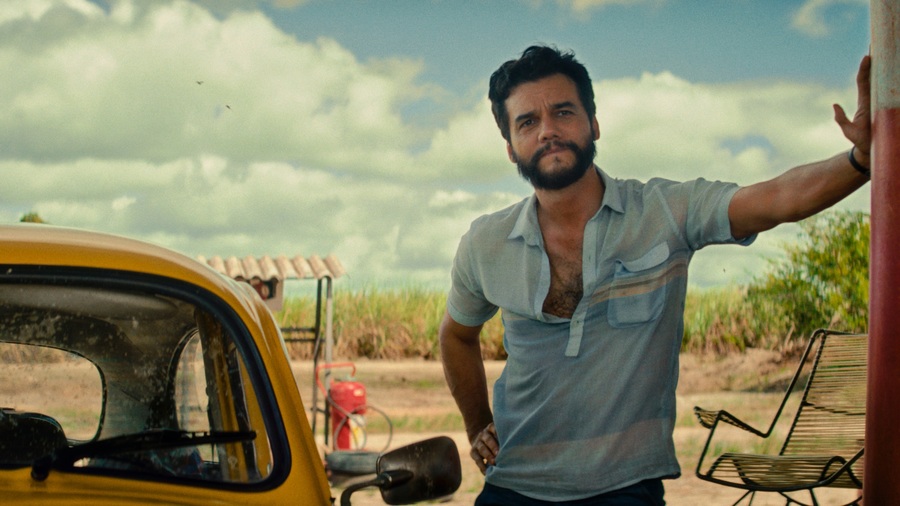
The onscreen cassette tapes Mendonça refers to connect the film’s two, arguably three timelines, though the majority of the film is set in 1977, during the political turmoil of the Brazilian military dictatorship. Using the alias Marcelo, Armando (Moura) is lying low back in his hometown of Recife. A recently widowed professor with a young son, Armando/Marcelo is put up in a safe-house refuge for fellow political dissidents, who are all awaiting a safe path out of the country via the help of an underground network. What exactly Armando is supposed to have done and who’s after him are gradually revealed across the novelistic, frequently genre-bending feature, which encourages viewers to piece the plot together, in keeping with the alluded-to theme of reconstructing history from snippets of context.
When it comes to reconstructing history visually, the period film’s production design is as worthy of praise as its direction, screenplay and deep bench of captivating performers (including the late Udo Kier). Some of the details are informed by records, others through memories of 1977 Recife from when the director was a child. “Part of what we write comes from the real texture, the truthful elements of life,” Mendonça Filho says. The obsession that Armando’s son has with the advertising for a returning run of Jaws seems like an especially autobiographical touch.
Newspaper research for Pictures of Ghosts also informed period reconstruction beyond the art direction and costuming teams’ designs: “Words that have been retired from modern Portuguese just because society has moved on, maybe because some words were racist or misogynistic. I had a long conversation with the cast, explaining that some of those words were really harsh but were truthful to the period. And little details like [characters] saying, ‘Can I make a phone call?’ And the reply, ‘As long as it’s not long distance.’ Little things like that come from the period and they establish behaviour connected to the past.”
The Secret Agent is a hugely satisfying political thriller brimming with horror, tragedy and humour, but much of its pleasures come from its small period details. "I’m delighted to see so many great reactions, not only in Brazil but internationally, to the texture of time in the film. Many contemporary films and television series, they follow some rule book on how to do period and a lot of that is superficial. It’s not about having the right sofa. It’s about having the couch in the right place because it’s closer to the ashtray.”
The Secret Agent is released 20 Feb by MUBI