Kaouther Ben Hania on The Voice of Hind Rajab
The murder of five-year-old Hind Rajab by IDF soldiers shook filmmaker Kaouther Ben Hania to her core. She tells us why she felt it was her responsibility to tell Hind's story as a devastating piece of cinema
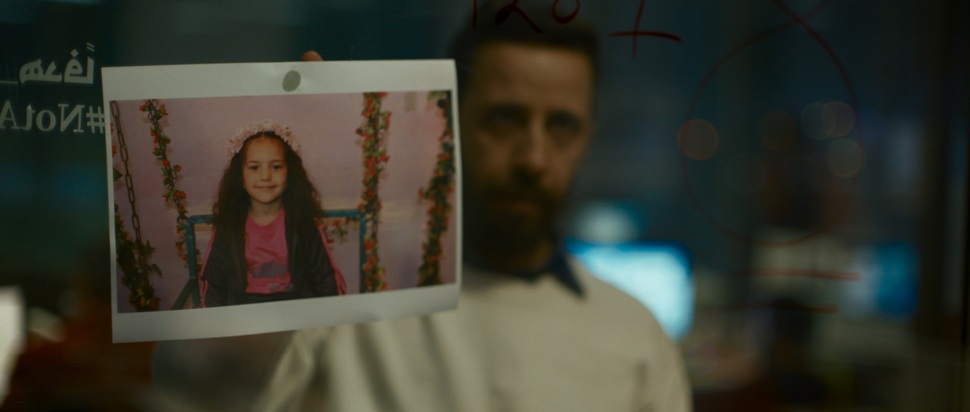
When Western news outlets reported in January 2024 that Hind Rajab, a five-year-old Palestinian girl, had been killed by Israeli gunfire in Gaza, Kaouther Ben Hania was in the process of preparing a completely different feature to the one she is promoting as she speaks to us, but the conflict was rarely far from her mind. “I was always thinking about the Palestinian struggle,” says the Tunisian director. “The genocide in Gaza is such a wound, but still the Palestinian people are not given the right to a voice, to a face. They are numbers.”
By the fourth month of Israel’s assault on the 141 square miles of the Gaza Strip, the IDF had already claimed the lives of at least 26,000 Palestinians. Individual tragedies were lost in a sea of statistics. But the voice of Hind Rajab – captured in a recorded phone call with volunteers at the Red Crescent rescue service – cut through and echoed around the world. Her voice also altered the course of Ben Hania’s career: she immediately put her shoot-ready project on hold.
“We talk about representation in cinema,” Ben Hania explains. “Whose story gets to be told? Stories from the occupied Palestinian territories are not heard very widely at all. So when I first heard this recording, the voice of Hind Rajab, I felt it was my responsibility as a filmmaker to amplify her voice, however I can.”
What resulted from Ben Hania’s rapid production, wrapped by May 2025, was The Voice of Hind Rajab, a nerve-jangling work of hybrid cinema merging action-thriller aesthetics with harrowing documentary. For nearly the full span of its brutally effective 90 minutes, the film puts audiences in the room with Red Crescent emergency responders who are portrayed by actors but are responding in real time to the actual recording of Hind Rajab’s voice from that fateful call.
Despite being made at speed under exceptional circumstances, The Voice of Hind Rajab remains consistent with Ben Hania’s oeuvre to date. In the Oscar-nominated Four Daughters (2023) and The Man Who Sold His Skin (2020), she similarly manipulated filmic codes to blur the divide between fiction and documentary, performance and reality.
“We already had these detailed investigations into Hind’s case by the news media, so the question I asked myself was ‘What can cinema do?’" she explains. Her answer appears to be raw emotion and empathy: “Cinema can bring the immediacy I felt in Hind’s voice. Cinema does not explain, it makes you feel, it connects you to the Other. That’s why I decided to focus on the responders, because you can feel the urgency with them. They want to help her, so you do too.”
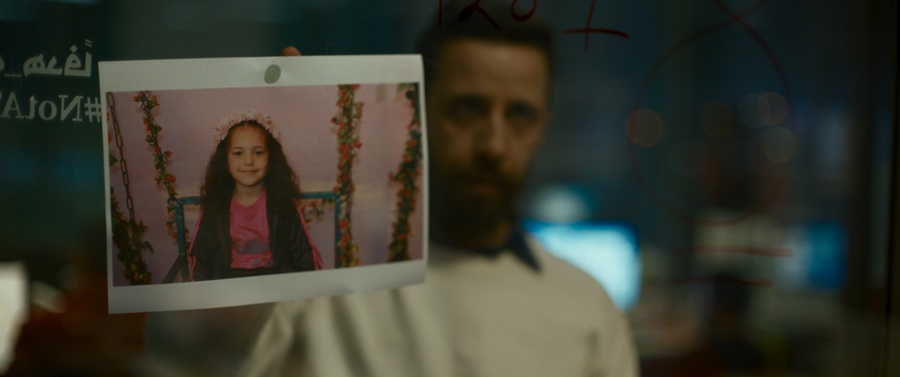
While watching The Voice of Hind Rajab, it’s easy to get swept up in the tension, convinced that everything will work out fine, like in a Hollywood blockbuster directed by Michael Mann or Kathryn Bigelow. Ben Hania’s challenge was to constantly remind viewers that they are watching a representation of something real: a real little girl who was killed by the IDF, and real rescue workers who desperately tried and failed to save her. “That’s why I knew I had to use her real voice,” explains Ben Hania. “This isn’t a Michael Mann movie. This is real life for Palestinians every day.”
Real life and real experiences sit at the heart of the film’s emotional realism. In assembling her cast, Ben Hania proactively sought out performers from the Palestinian diaspora who could draw upon their own experiences of exile and dehumanisation. “Motaz Malhees [who plays phoneline operator Omar A. Alqam] was born in the West Bank, in Jenin,” she tells me. “His neighbourhood was constantly raided by Israeli forces when he was the same age as Hind when she was killed. That memory was an engine for his performance, seeing himself as a child in the place of Hind as he tries to rescue her.
“Everyone had a story like that, which they brought to set. They are actors, but they are also Palestinians. Their performances became part of the struggle of their people.”
The Voice of Hind Rajab has stormed the international film circuit since its celebrated premiere at the 2025 Venice Film Festival, where it received the event’s longest-ever standing ovation. A raft of big Hollywood names, including Brad Pitt, Rooney Mara and Joaquin Phoenix, have committed their clout and finances to boost the film’s market profile. Despite this, it still lacks a distributor for a wide US release.
But the film's most significant screening came in October, when it opened the inaugural edition of the International Festival for Women’s Cinema in Gaza, organised by Palestinian filmmakers Ezzaldeen Shalh and Najwa Najjar amid the rubble left behind in the wake of the tenuous and oft-violated ceasefire agreed earlier that month.
“To know that this film, a Gazan story, is playing to a Gazan audience, it’s such an act of resilience and resistance,” says Ben Hania. “It’s a reminder to us all that, even after all this killing, destruction and displacement, Gaza still wants cinema. They want art. They want to live.”
The Voice of Hind Rajab is released 16 Jan by Altitude