James McAvoy and his cast discuss California Schemin'
Ahead of releasing his directorial debut, James McAvoy discusses the directors he's learned from over the years. The talented young actors from California Schemin', meanwhile, reveal what they learned from their director
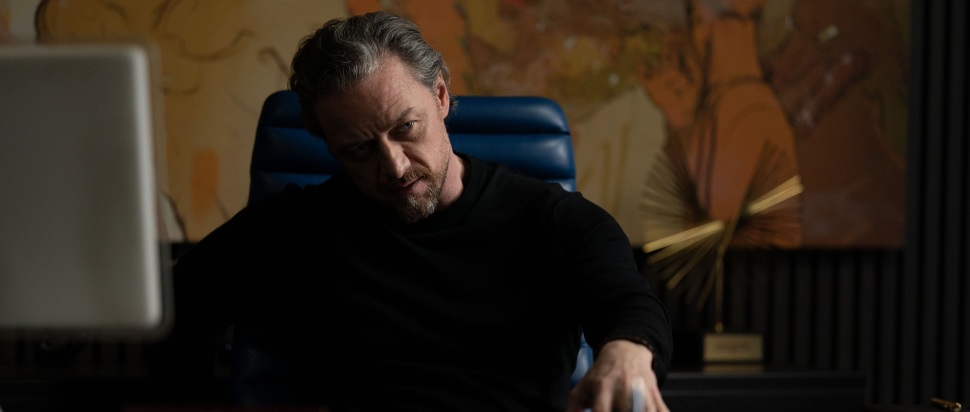
Here’s a fun debate to try out next time you’re down the pub and there’s a lull in conversation: who’s Scotland’s greatest living movie star? There are a few actors in the running, for sure. 90s kids will throw their weight behind Ewan McGregor (“He’s Renton! He’s Obi-Wan!”). The arthouse set will be in Tilda Swinton’s corner, while those who spend too much time watching straight-to-streaming action flicks will be backing Gerard Butler. And if we’re talking pure box-office numbers, there’s an argument that Karen Gillan, with receipts from the MCU and the Jumanji franchise, takes the cake.
All decent contenders, but the proper heads will know it’s James McAvoy’s crown. Certainly, none of the above can match him for versatility. In his 30-year career, he’s navigated highbrow period dramas (Atonement), kids’ fantasies (The Chronicles of Narnia: The Lion, The Witch and The Wardrobe) and nihilistic comedies (Filth). He’s confidently stepped into established franchises (X-Men) and helped create new ones with aplomb (Split). He can play a boyish charmer (Starter for Ten), a buff action hero (Wanted) or a terrifying brute (Speak No Evil). He’s added another string to his bow: he’s now a director, with his first movie, California Schemin’, landing in cinemas this month.
The film is based on a true story, and it’s a doozy; in some corners of Scotland, it’s practically a modern-day myth. It tells how, in the early 2000s, two wannabe rappers from Dundee, Billy Boyd and Gavin Bain aka Silibil N’ Brains, were mocked at a record company’s open audition in London because of their Scottish accents (one smug A&R guy dubbed them “the rapping Proclaimers"). Rather than go back to their call centre jobs in Dundee, they came up with a novel solution. They auditioned again with the same songs, only this time they performed them with decidedly dodgy American accents and spun a preposterous backstory claiming to be a hip-hop duo from LA who were tight with Detroit legends D12. Incredibly, their harebrained plan worked: they signed a record deal with Sony, performed on national television and even partied with Madonna. Their ruse lasted three years, although McAvoy’s rollicking comedy-drama compresses the action down to several intense months.
California Schemin’ brought the house down when it closed Glasgow Film Festival last month. Before that screening, I made my way to a flash hotel in Glasgow to meet McAvoy and the three talented young stars of his film: Séamus McLean Ross, who plays Bain/Brains; Samuel Bottomley, who plays Boyd/Silibil; and Lucy Halliday, who plays Mary, Boyd’s girlfriend, the only person who knew the duo’s secret.
McAvoy explains that he was drawn to the script, based on Bain’s high-octane memoir, California Schemin': How Two Lads from Scotland Conned the Music Industry, for two reasons: it was an entertaining rollercoaster ride with real emotional stakes, and it’s about the kind of people we don’t often make entertaining movies about here in Scotland. “When you come from a council estate, you don't usually get comedic or escapist films made about you,” says McAvoy, “and I don't really understand why that is. When I read this, I saw two wee guys that I very much recognised from my life growing up in Drumchapel.”
McAvoy has worked with an eclectic murderer's row of directors over his career, from Wim Wenders (Submergence) to M. Night Shyamalan (Split, Glass), and he describes himself as a bit of a sponge on set. “I've absorbed a lot by osmosis,” he reckons. “I took a lot of advice from Jon S Baird, who directed me in Filth and is now directing me in Meantime, and James Watkins, who directed me in Speak No Evil. I also tried to take a lot of the boundless enthusiasm I saw in Danny Boyle from when I worked with him [on 2013 psychological thriller Trance], so I’m definitely consciously riffing off a couple of attributes from directors I appreciated.”
He singles out two directors for special praise, though. The first is Joe Wright. “I definitely took a couple of things from Joe,” he explains, “particularly in his practice with the crew.” On the set of Atonement, McAvoy recalls how Wright would welcome everyone on set into the creative process. “Before each scene, Joe would give the crew full access to what the scene was meant to be about, the effect he wanted it to have on the audience, the ups and downs of it, the twists in the scene, the atmosphere that he was trying to create. He’d then describe what shots we were going to do. I don't think I've worked with any director who's done that, other than him.”
McAvoy’s second chief influence is theatre director Jamie Lloyd, who’s directed him in four productions. “Maybe it’s because I've worked with Jamie so many times over the last 20 years, but it started to become clear as he evolved as a director that he’s more interested in the performer, that they feel they can give of themselves freely, than he is of the character. And yet the stories in his plays were still getting told so clearly.”
As is often the case with actors turned directors, McAvoy's biggest thrill behind the camera seems to be working with his fellow thespians. Turning to them now, he’s practically gushing. “I was very into that with you four,” he says, referring to Lloyd’s technique. “I wanted you guys to feel that you could give of yourselves. The characters' stories will be told, but the thing I’m looking for from you is direct, pure, authentic access to that performance. And man, you four gave that in bucketloads.”
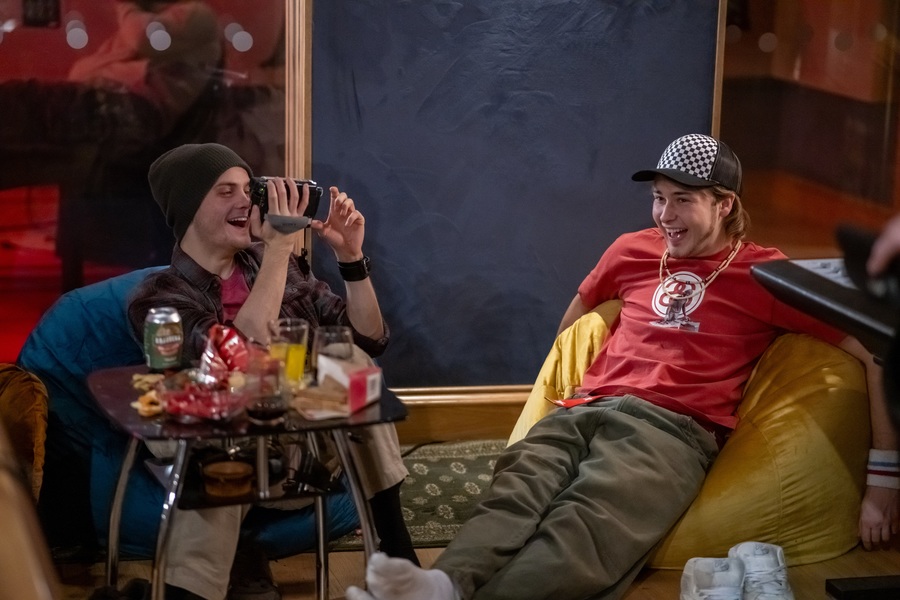
How was it being directed by James McAvoy, aka Scotland’s greatest movie star? Pretty effortless, according to Halliday. “Everything James says is so easy to understand because he articulates performance notes very clearly,” she tells me, “and I do think that comes from a place of him being an actor. So in that sense, it was very easy to take notes from him.” And boy, were those notes useful. “I do remember there were times he would give me and the boys notes,” she recalls, “and it was almost as if he was giving us a little insight on how he would do the scene. And we're like, ‘This is great. We're basically just doing a listen and repeat with James McAvoy.’ If a scene went really well, we’d be like, 'No wonder it went well, because we just did what James would do.' So there are points in this film where we're basically all just James McAvoy with a mask on.”
“What I took away from working with James was that he's actually just a very normal guy,” says Bottomley. “I mean, he's an absolute Hollywood superstar, but also very, very down to earth.” He thinks part of the reason McAvoy felt so relatable was that he was in a new role as director. “He was clearly under a lot of pressure, and it was actually nice to see that, because so were we. To understand that he was feeling the heat just as much as we were, it felt like we were all in the same boat.”
McLean Ross, meanwhile, reckons having McAvoy on set improved his performance, especially in the scenes he shared with his director, who has a supporting role as the gruff CEO of the record label they sign to. “It's like when you're playing with a really good footballer, you up your game when you play with someone who's better than you,” McLean Ross suggests. “James has got a laser focus. He knows this industry so well, and this acting game so well, so you have to adapt quickly and pick up the pace.”
“But at the same time, he understood lots of what we were going through,” adds Bottomley. “He could really read you well, what you were thinking or what you were doubting. And he’d tell you how to channel those feelings.”
Were any of the young cast ever intimidated by their superstar director?
“There was definitely an element of wanting to impress him,” says Halliday. “Because aside from him being the director of this job, I was aware of who he is. Don't get me wrong, there were times I'd forget he's the same dude I grew up watching in films like…”
“Arthur Christmas?” offers McAvoy.
“I was thinking Narnia,” laughs Halliday. “And sometimes I'd remember, ‘Oh, I’ve been watching him in films since I was a child. He's been acting longer than I've been alive,’ so there is that level of respect.”
“Don't rub it in, love,” protests McAvoy, who's still pretty fresh-faced for a 46-year-old Glaswegian. “I do want to work with you again, but I don't know after that comment.
“Seriously, though, you all gave such strong performances. I was so lucky that you really gave yourself over to me.” The performances are so good, in fact, he reckons they might have spoiled him for other casts. “I do worry that if I direct again, and I don't work with actors who are new to the business, I end up working with a bunch of forty-year-olds, they’ll be like, 'you can get ta fuck, there's no chance I'm doing that.' But you guys really went for it and went with me on it. I'm so grateful to you for that.”
California Schemin' is released 10 Apr by StudioCanal
Listen to Jamie Dunn's interview with James McAvoy and Lucy Halliday on the newest episode of the Cineskinny below, or wherever you get your podcasts