Hlynur Pálmason on The Love That Remains
Hlynur Pálmason's fourth feature is an idiosyncratic look at a family in crisis that's set over four seasons and regularly drifts from the quotidian to the surreal. The Icelandic writer-director discusses his unique approach to filmmaking
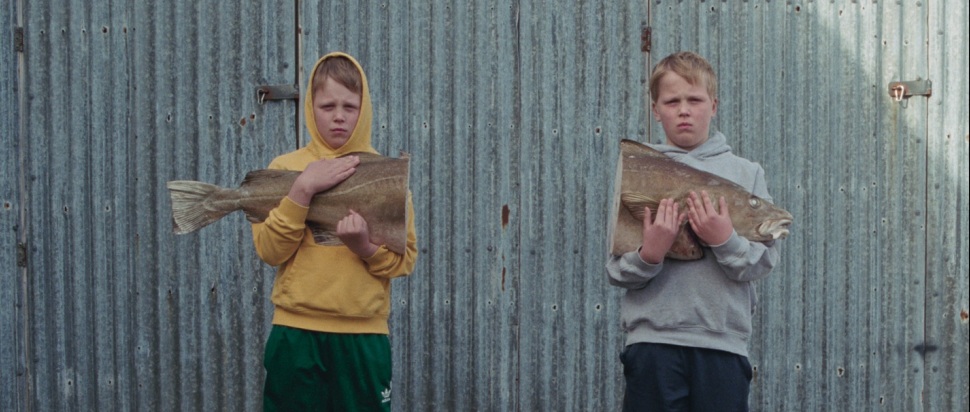
Time is of the essence in Hlynur Pálmason’s films. For his extraordinary epic Godland (2022), the director spent two years photographing the decomposing remains of a horse; in the film, this is presented as a minute-long montage, evoking time’s inexorable passage. A few months before Godland premiered at Cannes, Pálmason screened Nest at the Berlin Film Festival, a 22-minute short that took 18 months to film. The camera sits at a fixed position, observing Pálmason’s children as they construct a treehouse in their backyard. The changing seasons and landscape are as integral to the film as the action in the foreground.
The first seeds of The Love That Remains were planted while Pálmason was making Nest, which he shot during a COVID lockdown. “I was filming my kids building a treehouse and I wanted the elements and animals and everything to be part of the film, so I had to build this house around my camera so the animals wouldn't see me,” he recalls. “I ended up spending a lot of time in this small shed, just sitting there and waiting, recording sound and reading and writing, and I started thinking about what the parents of these kids are doing. I was seeing these kids build a treehouse, so I started writing these narratives of their parents, and that was one of the places where it began to be serious.”
The narrative that Pálmason dreamed up is a portrait of a family coming apart, with the parents (played by Saga Garðarsdóttir and Sverrir Guðnason) going through a separation. Most films would zero in on that point of drama and discord, but in The Love That Remains, marital strife is just one of the threads that gets mixed into a mosaic of family life, and it is given no more importance than any of the tender, funny, surreal or painful incidents that occur in the span of a year.
“I always have a very strong feeling of what I don't want my films to be, but it's sometimes a little bit mysterious what I want them to be,” Pálmason explains. “You start by saying, ‘OK, I don't want this film to be another separation film where people are screaming at each other,’ because I know people go through those processes, and we don't need to always emphasise the most dramatic things. Sometimes the more effortless things are just as important. They're a little bit trickier to capture, but I think if you give yourself time, you can capture that and create a film that is as strong as the more dramatic film.”
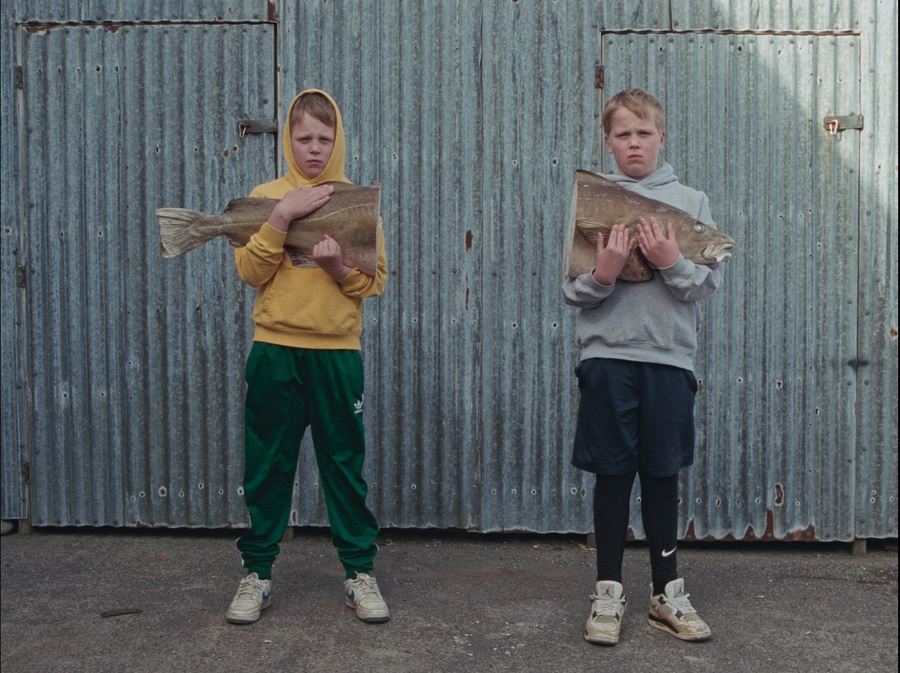
The Love That Remains.
Pálmason spends a lot of time capturing these fleeting, incidental moments. When he moved his family back to Iceland from Denmark, he bought a 35mm film camera and made shooting an everyday part of his life. “I didn't want to write and develop for four years and then shoot a film over two months; I wanted to shoot every week,” he says. “It’s more like a painter’s process, just like being a painter in a studio. If there was such a long time between filming, I didn't feel like a filmmaker, you know? When it came to filming, I was rusty.”
This organic approach means there is little separation between life and work, reality and fiction, and much of The Love That Remains is built on footage collated over many years. The opening shot is an incident Pálmason filmed in 2017, and the father’s job as a trawlerman emerged from the three summers he spent documenting that profession. Even the mother’s artistic practice is something that Pálmason had previously developed; large metal shapes are left outside so they rust into the canvases beneath them and create images. It’s work that speaks directly to the film’s themes of time and nature.
You need patience and freedom to make a film this way. These are two things most independent filmmakers can only dream of, but Pálmason has established a process that works for him. “We are enjoying ourselves and we're making things that we really love, so we have been trying to make a setup where we're always working on a couple of projects in parallel,” he says, mentioning a book called Lament for a Horse, which will contain all the decomposing horse photographs from Godland.
“I'm lucky that I have a solid crew of my editor, my sound designer and my producers and distributors. Whatever we make, they help us figure out how we make this so it's never about the one project, it's more about the body of work and the direction. We have a certain amount of time and we're going this direction, and then the projects kind of decide for themselves what project wants to be made now, because I think each project has its moment.” The project of the moment is The Love That Remains, and immersing yourself in the world Hlynur Pálmason has crafted is guaranteed to be time well spent.
The Love That Remains is released 13 Mar by Curzon