HippFest: Dan Abrahams and Philippe Boudot on scoring Finis Terræ
Dan Abrahams and Philippe Boudot discuss their latest collaboration, a new folk-tinged score to Jean Epstein’s landmark experimental drama Finis Terræ, which they will be debuting live at this year's HippFest
HippFest introduces old films to new audiences. In the case of Sheffield-born, Edinburgh-based Dan Abrahams and Frenchman Philippe Boudot, it also introduces musicians to the art of film scoring. The pair collaborate frequently, with drummer Boudot joining Abrahams’ duo Dowally (with Rachel Petyt) for recent performances and recordings. Writing a film score, let alone a silent one, is new territory, but they've done just that for Jean Epstein’s 1929 genre-defying Finis Terræ, and will be performing this new score live at this year's HippFest.
Abrahams, who plays electric guitar, synth bass, and bass pedals for Finis Terræ’s score, has wanted to compose for film since working with Cinetopia on a project where he and Petyt curated traditional music recordings that were edited with moving-image clips from the Scottish archive. He had been chatting with Alison Strauss, HippFest’s Founding Director, feeling that his music with Dowally would be suited to silent cinema. When a live score was proposed by Edinburgh Film Guild for Finis Terræ’s 4K digital restoration, Cinetopia’s Amanda Rogers called Abrahams to take the idea forward. The project clicked together when Abrahams brought in Boudot, who has connections to Brittany, where the film is set.
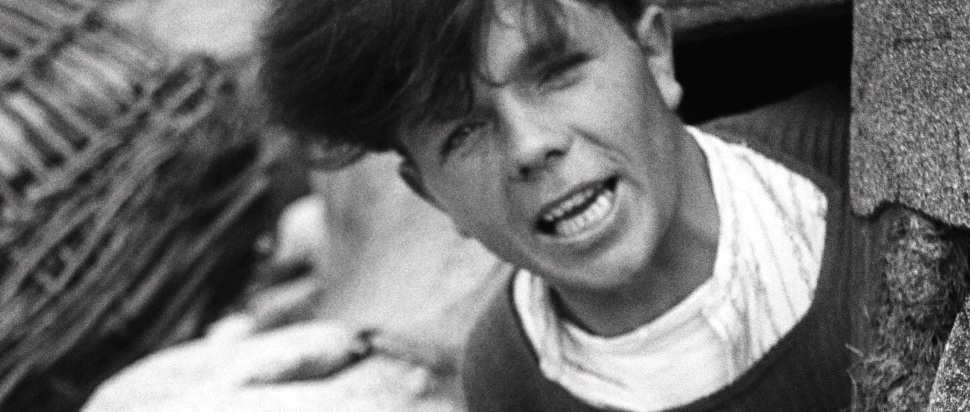
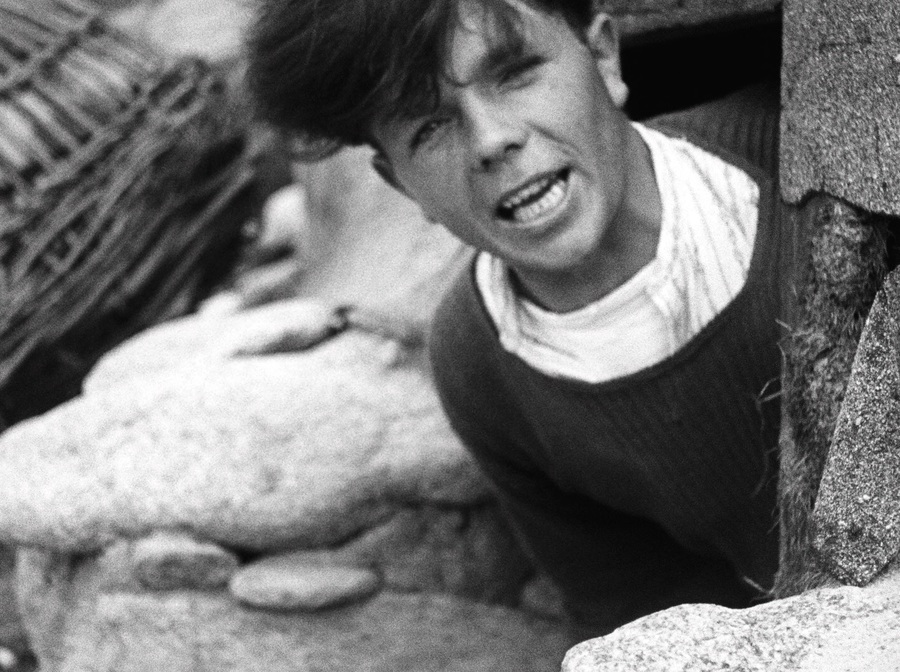
Epstein’s groundbreaking, experimental drama centres on a small group of seaweed farmers. Abrahams reckons his and Boudot's music works perfectly with Finis Terræ’s aesthetic. “This film has a folk feel due to its remote setting, with men collecting seaweed,” Abrahams says. “But its blending of fiction and nonfiction, use of slow motion, and weird camera effects were modern in 1929. Our music is like folk, but with new harmonies. It feels like a great fit.”
Boudot’s percussion setup includes a traditional drum kit as well as pitched percussion, and a “fairly simple” analogue system that allows him loop sounds live. “With Dan, we explored all the possibilities to sample his music or mine, or other sounds entirely,” says Boudot. “It’s a very enjoyable process to create this atmosphere together.”
Performing to a film is similar to playing an 80-minute set, though performing a “continuous chunk of brand new music” is different, Abrahams admits. He has broken the film into fifty sections, though these sections blended and morphed in rehearsals.
“We have some passages that are very precisely written,” Boudot says, “but there’s also an improvisation side, where we can keep it fresh and a little bit different.”
Epstein’s passages focusing on the quotidian and Brittany’s harsh landscape invite both melodies and atmospheric drones. “There will be a contrast between melodic sections and dreamy soundscapes with looping percussion and pedals,” reveals Abrahams. They are currently playing with the idea of Boudot singing an original song at a particularly tense moment. This is the freedom that comes when composing music for a 97-year-old movie. “Unlike new film scores where a director can say yes or no, we can do what we want,” Abrahams says.
Instead of pulling from particular influences for their Finis Terræ score, the duo agreed to “express ourselves in a fairly natural way,” according to Boudot. “It’s close to what we play all the time,” he says. “We have enough ideas together – the hard part is choosing.” Boudot also looks forward to exploring tension through silence. “Moments don’t have to have rhythm, melodies, harmonies, or even sounds at all. We'll play with everything we have, but we don’t have to play all the time.” If their live score to Finis Terræ tours further, they might add more instruments – perhaps accordion, a staple of Scottish and Breton folk music.
“We trust that the things which have always influenced us, from folk, jazz, and cinema, will come out subconsciously and spontaneously,” Abrahams adds. They have to “move fast with the first thing that feels right” when in-person rehearsal time is limited; they had two days together back in January around their Celtic Connections concert. Remotely, their process includes sending voice notes to share ideas and develop the score’s shape. Abrahams will go to France in early March to work with Boudot before final rehearsals in Scotland.
Someday, scoring a new film might be on the cards. Abrahams is currently working with the RSNO Film Composers Lab, writing frame-by-frame with a 60-piece symphony orchestra. “It's a completely different feeling and process,” he says. “But I love the interaction between music and film. There’s something magical about being driven by the image.”
Boudot, who's currently composing for dance, is similarly enthusiastic about cinema. “I’ve realised the film is a third member of the band,” he says. “We have to take it into account in the process and performance.” Working to enhance the moving image, the music has more freedom to breathe. “The sense of space with the pictures allows the music to extend, but the space does not have to be filled,” he says. “The movie doesn't stop, slow down, or start again, but simple things can stretch for a long time within this rhythm.”
The performance, however exciting, is only one aspect of the process. The duo are heartened to see such support – including funding from Help Musicians UK, Hope Scott Trust, and The Cockaigne Fund – for their work. “Creation is not always easy, but it is encouraging that these projects happen,” Boudot says.
“The joy of making music is the discovery,” Abrahams adds. “It’s not about the final sound.”
HippFest opens with Abrahams and Boudot's live performance to Finis Terræ on 18 Mar at the Hippodrome Cinema Bo'ness
Abrahams and Boudot will also perform with the film at Cinetopia Salons on 24 Mar at the Institut Français in Edinburgh