François Ozon on The Stranger
François Ozon's latest is a gorgeous-looking adaptation of Albert Camus’ The Stranger. The French director explains why he wanted to give this literary classic an update that's both faithful and speaks to today
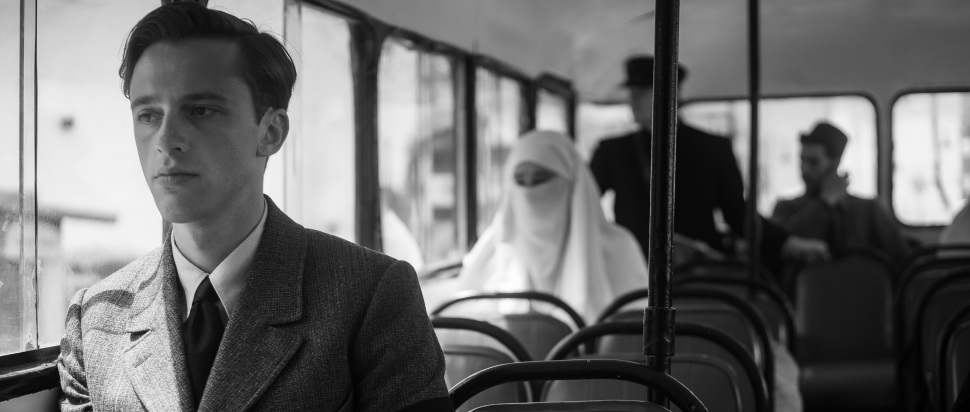
Somehow, there has never been a French-language film version of Albert Camus’ 1942 novella L’Etranger – until now. This is surprising, given its considerable status in French literature and its enduring legacy as a gateway drug into existentialism for generation after generation of moody teenagers, both in France and all over the world. It stands to reason that directing the definitive adaptation might sit high on the bucket list of many an aspirant auteur. Even more surprising, then, is that for the director who finally pulled it off – the hyper-industrious Parisian troublemaker François Ozon – it really wasn’t that big a deal.
“When I was 15 or 16, it wasn’t the kind of book I felt had anything for me,” he says. “It was just something that we were assigned in class. As a gay teenager, I was more drawn to books like [Aidan Chambers’ 1982 novel] Dance on My Grave, which had more to say to me about my life at that time.”
Ozon did adapt Dance on My Grave in 2020 as the sun-drenched queer rom-com-cum-murder-mystery Summer of ‘85, which featured a star-making turn from its charismatic co-lead Benjamin Voisin. The Stranger, which is out in UK cinemas on 10 April, actually started life as an original project conceived to reunite Ozon and Voisin.
“I had written a script for Benjamin about a young man adrift in the modern world, cut off from others by the oppressions of modern society. We couldn’t get the financing for the project, which is when I remembered L’Etranger and picked it up for the first time in maybe 25 years.”
Camus’ masterpiece concerning a Frenchman living in colonial Algeria whose detached worldview leads him into difficulties, both personal and criminal, had more than a few resonances with Ozon’s drafted screenplay. But to a young French actor like Voisin, still early in his career, tackling an iconic character like the titular ‘stranger’ Meursault was no small ask. “When it became clear to me that this project should become an adaptation, I had to ask Benjamin if he felt comfortable taking on such a legendary role in French culture,” Ozon explains. “It’s an interesting challenge for an actor, to play this character who doesn’t play society’s game and exists outside of its expectations.
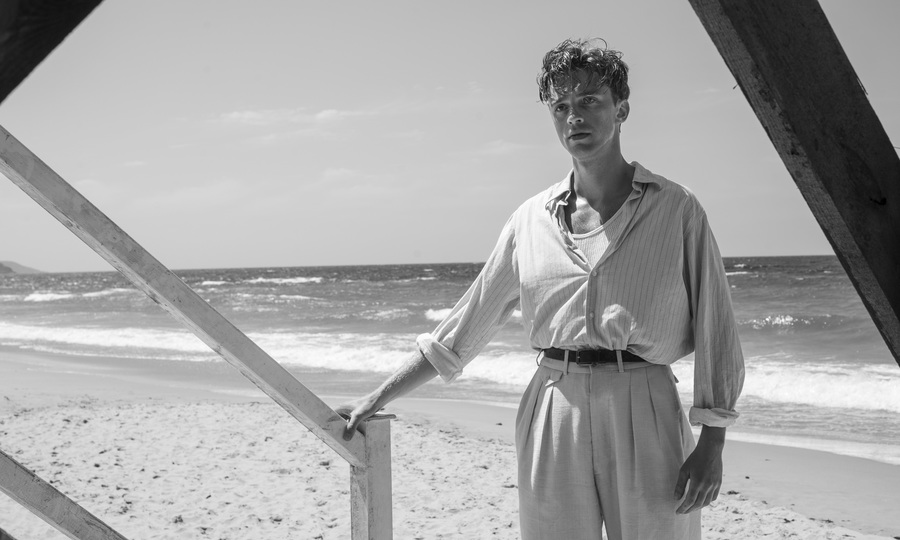
“With Meursault, you’re basically asking an actor not to act. Actors are used to seduction, trying to charm you, but with Meursault, it’s the exact opposite. For someone as expressive as Benjamin, I knew it would be quite difficult, but he was ready for the challenge.”
As Ozon delved deeper into pre-production, mining archival material and his own family history to grapple with France’s colonial legacy, he found more than a few echoes to our fraught, fragmented contemporary moment in the highly historically-situated story of Meursault. “What struck me most when I read the book again was the invisibility of the Algerian Arabs,” says Ozon. “What we did in Algeria is like dust swept under the carpet for France. We did a lot of terrible things to the native population that we need to make sure we remember.
“My grandparents lived in Algeria around the time of the book, and it was always something they struggled to speak about. There’s a contradiction to that colonial existence, because you were living in this beautiful paradise if you were French, but it came at the price of the terrible abuse of the Arab population.
“So, it became important to me to tell this story in a way that shows the two communities living in parallel – the French colonists and the Algerian natives – and the tensions that will generate. It felt important that, while staying true to Camus’ story, I find space to give voice to the Arab population, which is represented [in the book], yet repressed.”
This reverence both to the source novel and to its historical context comes through in the finished film in several ways, from the careful production design to recreate the streets of mid-century Algiers on location in Morocco, to the austere, observational black-and-white cinematography, and the decision to explicitly give names to the key Arab characters in the novel who Camus leaves unnamed. “In the end, everyone who has read the book will have their ideas about how it should be filmed,” says Ozon, “so my priority became to make a version of The Stranger that can speak to today.”
And yet, such a significant milestone in the French literary-cinematic canon is but a drop in the ocean for a filmmaker as relentless as Ozon. As soon as promotion concludes for The Stranger, he will begin production on his 26th film in 28 years. “I like to work,” he concludes simply. “If I didn’t have to do promotion, I would shoot two films a year. I never need to look for inspiration because there are stories all around us.”
Released 10 Apr by Curzon