Meet FilmHub Scotland's New Producers
Every year, FilmHub Scotland selects four Scotland-based film programmers to be their New Producers, a scheme that teams early-career film producers with established film organisations for training and mentoring. We meet this year's cohort
While doomscrolling the other day, a seemingly innocuous Instagram story threw me into a rage. “Who wants to move to Edinburgh and programme manage the film fest?” asked a prominent London film producer while sharing a story from the Edinburgh International Film Festival’s feed advertising for a Programme Manager. What vexed me, of course, was the implication that there was no one currently living within commuting distance of the Scottish capital who might be suitable for the position.
This thinking is, of course, poppycock. Scotland has one of the most exciting film scenes in the UK, and that’s thanks in no small part to the wit, knowledge and ingenuity of the homegrown programmers who put on inventive and forward-thinking film events up and down this fair country. One organisation that’s trying to bolster this scene's talent pool even further is Film Hub Scotland with its New Producers programme, a paid training scheme for early-career film event producers to help them gain experience in programming, marketing, and delivering film screenings.
Four participants are chosen for the scheme every year. Each is paired up with an established film organisation, with whom they’ll work and train for several months, during which time they’ll contribute new film events for the organisation. With the year’s activities now nearing completion, we spoke to this current cohort to find out what got them interested in film programming, how this year’s New Producers activities went, and what they’ll take away from the scheme.
Michael Lee Richardson
Teamed with Scottish Mental Health Arts Festival
Michael Lee Richardson’s career in film has been pretty varied thus far. “My CV is very millennial,” he says, “in that I’ve always been attempting to have at least three careers simultaneously.” Those careers include as an award-winning screenwriter (he won a Scottish BAFTA in 2018 for his bruising short film, My Loneliness is Killing Me) and a programmer as part of the selection team at Glasgow Short Film Festival, so he’s coming into the New Programmer scheme with plenty of experience. But more substantial, long-term programming gigs had eluded him. “In honesty, I’d applied for a few jobs in film exhibition, and I think that slightly sporadic experience was what was holding me back, so I applied to New Producers to put all my experience in one place.”
Placed with the Scottish Mental Health Arts Festival (SMHAF), Richardson’s programme was a diverse lineup of screenings exploring conversations around art and mental health. His philosophy of film seems to chime well with SMHAF’s ethos. “Film is a feelings business, and I’ve always believed in cinema as an empathy machine,” he says. “The theme of this year’s festival was 'Comfort & Disturb', so I was thinking about films that hold both of those feelings in the same breath, that invite us to sit with discomfort and discover something tender within it.”
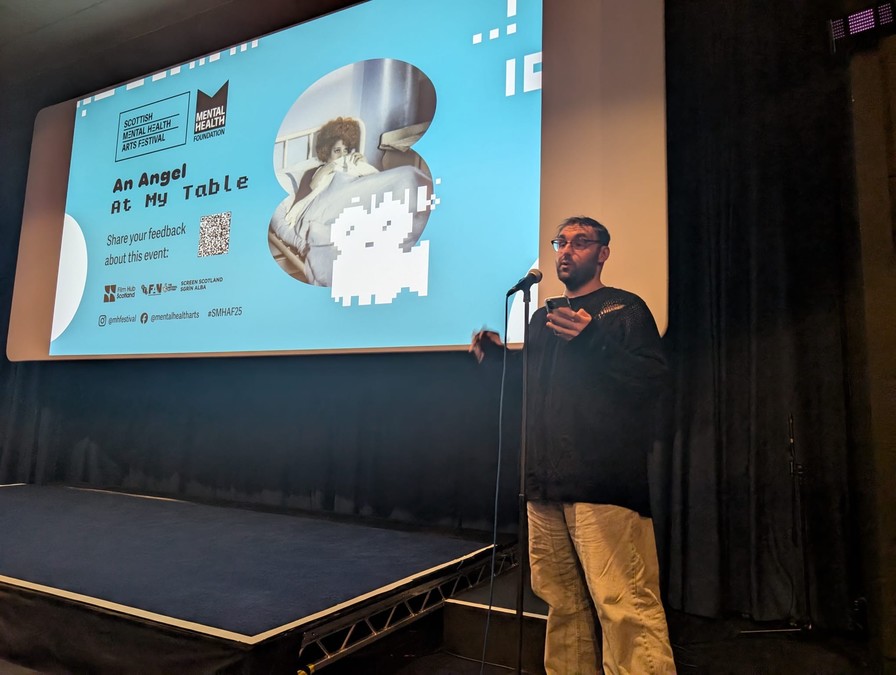
His programme ranged from Jane Campion’s 1990 feature An Angel at My Table (screened from 35mm at GFT) to the new documentary A Want in Her, Myrid Carten’s searing exposé on her relationship with her alcoholic mother (screened at Filmhouse, followed by a Q&A with Carten). Looking back at his programme, Richardson can see a strong theme of family shining through: “They were all, in their own way, wrestling with what it means to belong, to love people who might hurt us, to define ourselves beyond the stories we’ve inherited and to find connection even in isolation.”
Richardson put together a pretty heavy lineup for SMHAF, but if he was given free rein to programme anything, he’d take a different tack. “I’m a big fantasy film fan; I make a podcast with my partner, Once Upon a VHS, where we revisit 80s and 90s fantasy films, so I’d love to do some screenings of those films, stuff like Return to Oz and The Dark Crystal and The Witches of Eastwick.” He even used his time on the New Producers scheme for a bit of a recce. “When I did my screening in Dundee, I got a tour of the projection room, and they had all the gear set up for a VHS screening they were doing as part of Dundead, which has really got my gears turning!”
Caireen Stuart
Teamed with Scottish Documentary Institute
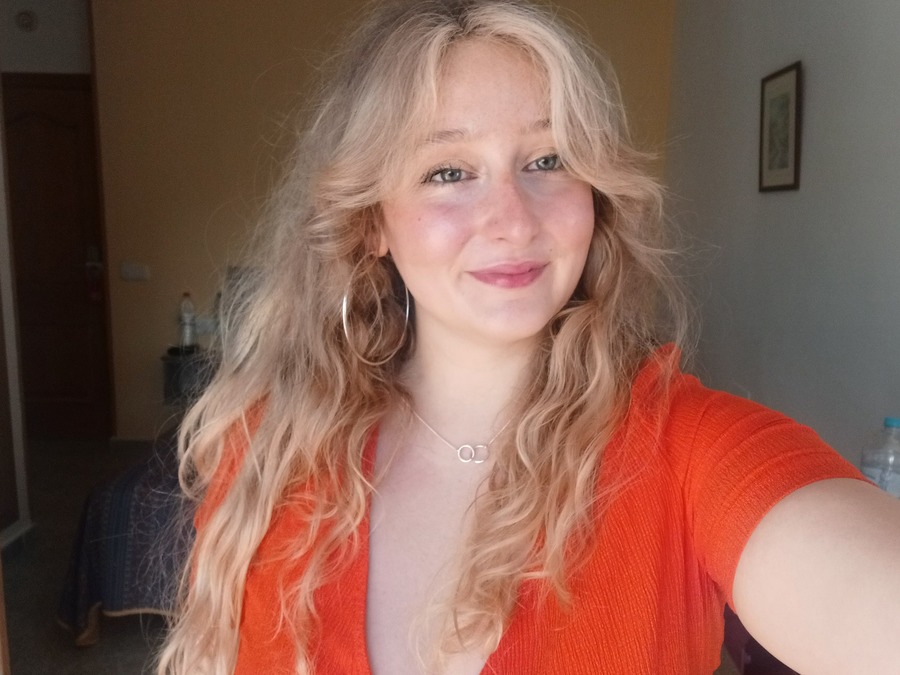
“Film programming appeals to me because it brings communities together,” says 28-year-old Glasgow-based filmmaker, curator and sometime stained-glass designer Caireen Stuart. “It isn’t just about selecting films: you're creating a space where audiences can explore ideas collectively and connect with each other.” Stuart applied to the New Producers scheme in 2024 but didn’t make that cut. She wasn’t deterred, though. “I received really helpful feedback from my interview and knew I wanted to put it to use and apply again if the opportunity arose. I saw it advertised in June of this year and was determined to secure a placement – and I did!”
Stuart was teamed with Scottish Documentary Institute, who put her to work developing Who We Are, a new season aimed squarely at younger audiences. She explains that a quote from French philosopher Simone Weil – “to be rooted is perhaps the most important and least recognised need of the human soul” – was on her mind when planning her programme. “I’m really interested in this idea of cultural roots – the stories, songs, traditions and languages that connect us to our communities,” Stuart explains. “I wanted not only to celebrate those ties, but also to explore what happens when our roots are severed, forgotten, or taken away, and how people find ways to reconnect, rebuild, or reimagine them.”
Her programme took the form of three special screenings at the Filmhouse in Edinburgh this November, each with additional elements beyond the screening and with sliding-scale ticket prices applied. There was the animated doc Endless Cookie from Seth Scriver, which included an intro from Scriver; a programme of shorts titled Young Scots on Screen, which featured a Q&A with the filmmakers; and Augusto Zegarra’s doc Runa Sumi, which was followed by an indigenous language workshop. “[I wanted] to create meaningful conversations about intangible cultural heritage,” explains Stuart, “and to show that film is a powerful tool in keeping roots alive, of connecting the past and future. I wanted audiences to reflect on their own cultural identities, to recognise the value of preserving stories and traditions, and to see how film can spark dialogue across generations and communities.”
You’ll be seeing more screenings from Stuart in the near future. “I’m currently in the process of organising film events focused on the 1926 UK General Strike,” she reveals. “May 2026 marks the centenary of the Strike, and I think it's an important opportunity to reflect on, reevaluate and commemorate this historic moment in UK working-class history. Looking back at the Strike allows us to ask essential questions about how past struggles can inform our present challenges. How might this history empower people now?”
Archie Kershaw
Teamed with North East Arts Touring
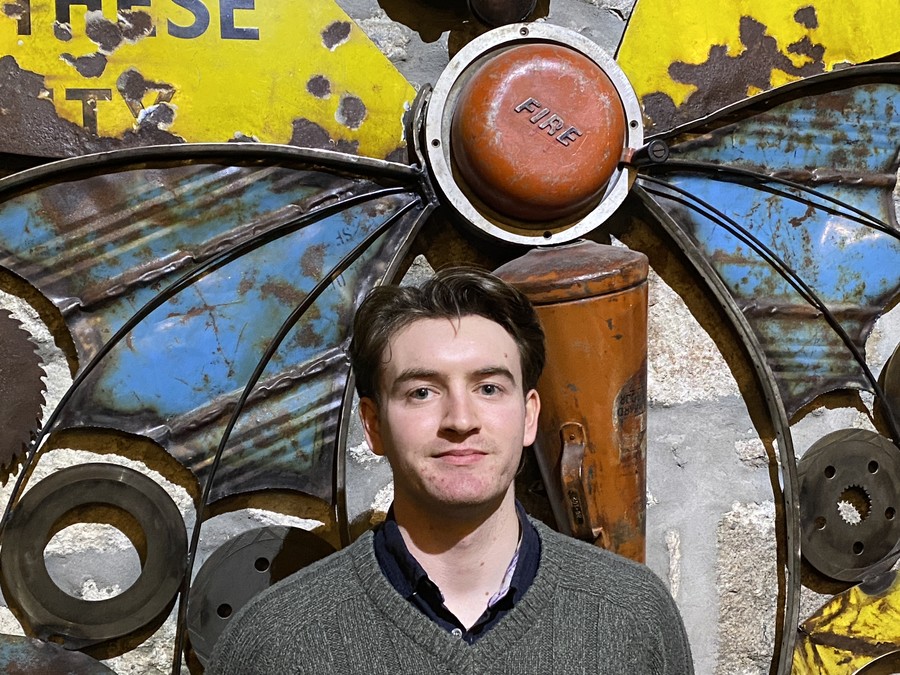
Archie Kershaw hails from Moffat in Dumfries and Galloway, but the 22-year-old’s current home is in the North East, where he’s just graduated from a sociology degree at the University of Aberdeen. He says his passion for film was instilled in him by his parents (“my mum and dad brought me up on movies”) and the New Producers scheme allowed him to stay in the city and explore this passion fresh from uni. “The entry-level position was ideal as I have no prior experience in film, so [this opportunity] provided an immediate entry into the world of film exhibition.”
Kershaw was assigned to North East Arts Touring, an organisation that brings film screenings to communities across the North East of Scotland. His chief piece of curation was a mint-fresh film festival called Mither Earth. The title takes inspiration from the Doric word for 'mother' – mither – combined with earth, reflecting both the festival’s local roots and its shared focus on the environment and sustainability.
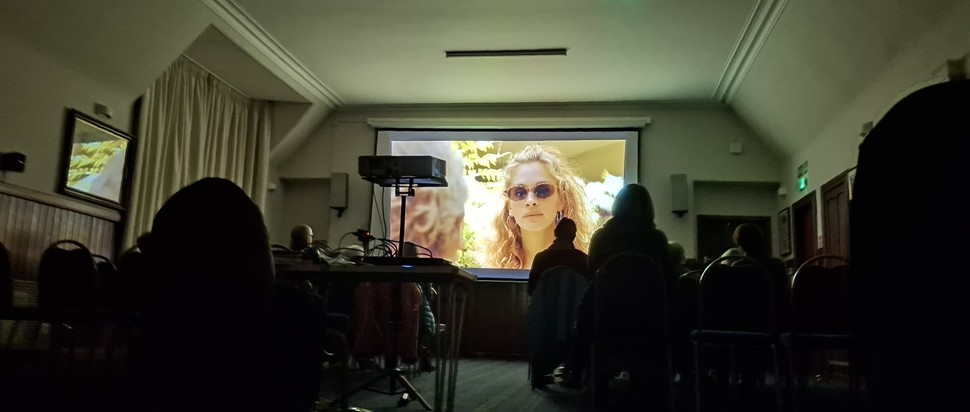
Mither Earth Film Festival would be screening to rural communities, and Kershaw’s aim was to curate a programme that was as friendly to a casual film audience as possible. “I wanted to use popular Hollywood films with recognisable faces to draw audiences in,” he explains. “Movie stars matter to me, so I enjoyed displaying excellent actors in important films.” Stars don’t get much bigger or more iconic than Julia Roberts (Erin Brockovich) or Brad Pitt (Ad Astra), to name two films in the Mither Earth lineup. But the choice of these big names wasn’t just to put bums on seats, it was to put the festival’s message across to the biggest audience possible. “I have a passion for climate change (after spending summers previously planting trees), so using cinema to push the message, but subtly, was meaningful to me,” Kershaw explained.
He’d like to continue programming festivals around legendary actors: “I would love to do a festival around iconic male stars from the 60s and 70s like Steve McQueen, Paul Newman, James Dean and Clint Eastwood. Possibly with an angle on men's mental health and masculinity. Newman, McQueen, Dean and Eastwood were more than archetypes of toughness; they were portraits of vulnerability, independence, craftsmanship, and moral struggle. Their films invite contemporary audiences to rethink what strength looks like – and to discover the humanity that has always lived beneath the surface of the ‘strong, silent’ man.” I’m sold!
Olivia Knight
Teamed with MacRobert Arts Centre
When 25-year-old English and film studies graduate Olivia Knight decided to make the leap into the film industry, she was met with a familiar story. “I had the ambition and heaps of enthusiasm, but was constantly being met with the response that I needed more hands-on experience,” she recalls. “Of course, it’s then that catch-22 of needing experience to get experience.” When she heard about the New Producers scheme, it felt like a “perfect match”.
Knight reckons that from a young age she’s been using film as a way to open herself up to the world around her, and programming is just an extension of that. “Programming provides me a vehicle to share with other people, to offer up a piece of work and allow them to experience it for themselves.” The reaction she gets once the credits roll is one of her favourite parts of the process. “What I’ve always loved about film is the debrief: the conversation afterwards, whether it’s split opinions or a shared admiration, I want to be a part of the journey that delivers films to the audience.”
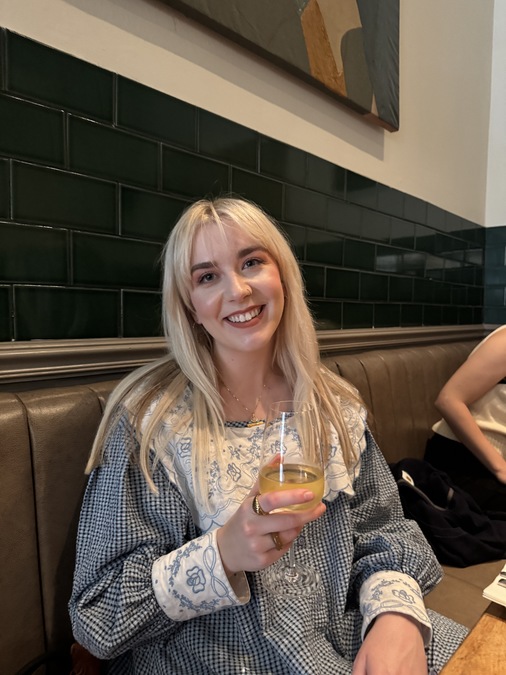
She’s had plenty of chances to be part of this journey with the New Producers scheme. MacRobert Arts Centre in Stirling was her assigned venue, and her array of work there included designing events for MacRobert's ongoing cinema activities as well as the opportunity to curate for the venue’s biggest film event, Central Scotland Documentary Festival. One of Knight’s contributions to the latter was a screening of Kim A Snyder’s documentary The Librarians in a pretty unique but apt location: Stirling’s indie bookshop cafe, The Book Nook. “I’d always liked the idea of hosting a screening in a cafe, and after visiting The Book Nook, I knew it was the perfect venue,” explains Knight. “Since it also doubles as a bookshop, I was inspired to find a title that worked with the space thematically, and it all fell into place when I came across Snyder’s film.”
Knight also dug into the archives for a programme to complement the University of Stirling’s exhibition Remembered: 80 years since the bombing of Hiroshima and Nagasaki. She came up with a double-bill of films made in the 1950s by filmmakers shaped by the atomic bomb (Lindsay Anderson and Karel Reisz’s March to Aldermaston and Norman McLare’s Oscar-winning anti-war short Neighbours), as well as a screening of Isao Takahata’s harrowing animation, Grave of the Fireflies. Elsewhere, she curated several films for MacRobert’s contribution to BFI’s nationwide season Too Much: Melodrama on Film, the final element of which screens on 6 December. “I’ll be hosting an event titled Blondes vs. Brunettes: A Hollywood Debate, consisting of a double-bill of Gentlemen Prefer Blondes and Gilda, and a creative workshop for those who attend both screenings. The screenings aim to unpack the ‘blonde vs. brunette’ debate, reclaiming it as a celebration of women’s individual strengths.”