Lost Generation: Carla Simón on Romería
Spanish director Carla Simón is once again mining her own painful upbringing with Romería. She discusses recreating memories, embracing magic realism, and explains why now is the perfect time to look back at her parents' radical generation
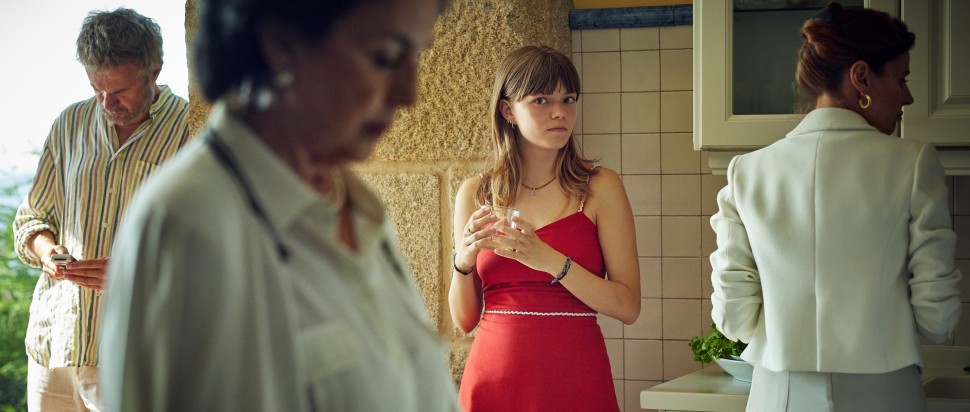
“If you need to heal something, you'd better go to a psychologist because it's cheaper than making a film,” Carla Simón says with a laugh, after I ask if she views making a work of autofiction as a way of healing. Three features into her career, the Spanish writer-director has established herself as one of modern cinema’s most gifted storytellers when it comes to textured tales of childhood. Each centres on non-professional performers, takes place in warm, scenic backdrops evoking a fully inhabited sense of place, and features young main characters grappling with life-changing developments they can’t yet fully comprehend. These stories are fictionalised rather than fully autobiographical, but they are inspired by Simón’s own life.
Her debut feature Summer 1993 (2017) follows a six-year-old girl moving to the Catalan countryside with her aunt and uncle, after the death of her mother; when Simón was six, her own mother died from an AIDS-related illness, as did her father. Simón’s Golden Bear-winning agricultural drama Alcarràs (2022), meanwhile, is set in a rural village in Catalonia, the same place where the family she grew up with has maintained a peach farm across multiple generations.
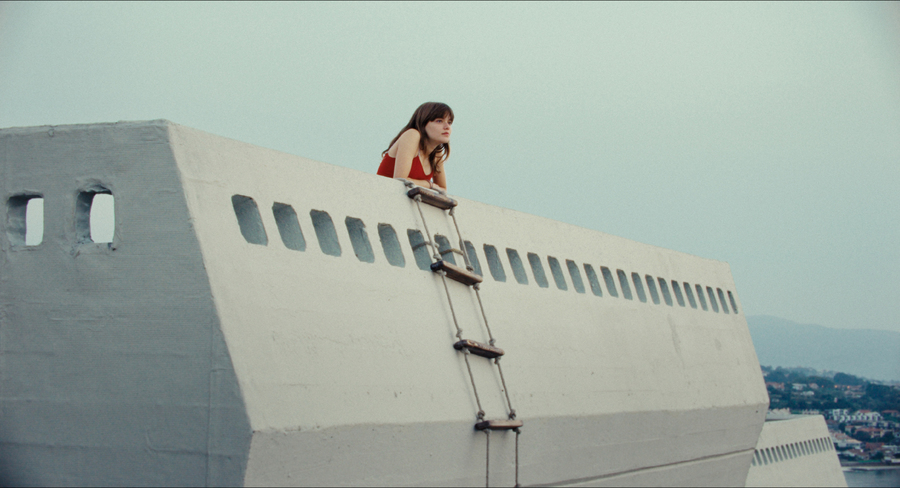
Her new feature, Romería, is set in 2004, when Simón would have turned 18, the same age as the film’s orphan protagonist. It's perhaps her most (semi-)autobiographical work to date, though with some key embellishments. For one thing, it concerns a wealthier class of estranged, extended family members than is apparently true of her own situation. But most importantly, the film’s second half takes Simón away from her now well-established naturalistic style and into the fantastical, whereby the director’s onscreen avatar, Marina (engaging newcomer Llúcia Garcia), has an encounter with her long-deceased parents. We won't delve into specifics, but the results are properly spellbinding.
“When I [determined] that I really wanted to talk about memory, that’s when this idea came,” Simón says of the film’s bold, magical realist move. “I spent all my promotion of Summer 1993 saying that you cannot [re]create your own memories if you don't have them. But at some point, I realised that you cannot trust the other family members’ memories and that memory works in a very interesting way. You don't remember what really happened; you remember the last time you remember what happened. So, it keeps changing in your mind. And I thought, look, if my parents were alive, maybe they would tell me their story and I wouldn't know if it was exactly like that. So, I came to the conclusion that I have cinema to create the memories I'm lacking. [Marina’s] way of getting liberated from this frustration of not being able to reconstruct [her parents’] story is that it can be through fantasy.”
One such fantastical flourish includes a tender nude embrace between characters as they lie draped in seaweed. Simón, art director Mónica Bernuy and cinematographer Hélène Louvart (La Chimera) drew inspiration from a photo of Galician artist Maruja Mallo, in which she’s similarly almost entirely covered in kelp, albeit not while passionately kissing someone. “When we were thinking about a love scene between the parents,” Simón says, “this idea came because my dad loved the sea and my mom has lots of references to this landscape in her letters that I [used] for the film.”
In Romería, Marina visits the Galician city of Vigo, meeting aunts, uncles, cousins and grandparents for the first time, hoping to learn more about her biological father. She also needs a legal document written up confirming that she is his daughter in order for her to obtain a scholarship to study film. Marina has letters that her mother wrote about her parents’ free-spirited ways before they had her, but this administrative adventure flags up inconsistencies with what she thought she knew about them – alongside buried secrets about how Marina’s father’s family treated him when he contracted AIDS.
“They embraced freedom,” Simón says of her parents’ “really important” generation. “They broke with all the old values, conservatism and Catholicism of Spanish society in ‘75. What they did, bringing more progressive ideas, is very [relevant] to where we are now, especially with the threat of the rising right wing. They took drugs as an experiment and didn't know anything about heroin or AIDS until later. They were really unlucky. There are words like ‘shame’, ‘punishment’ and ‘blame’ that put them in a situation as though they chose their [fates]. But they didn't choose.
“In Spain, we had what was called the heroin crisis, and then the highest rate of AIDS in Europe. Heroin and AIDS are related to so much taboo and stigma, and it was very painful for most families to accept the losses because of that. There were some films made at the time about this, but then we kind of stopped talking about it. Now, I feel that enough time has passed for us to recover [that lost generation], somehow.”
Romería is released 8 May by Curzon