Solidarity and Escape: Alchemy Film and Moving Image Festival 2026
At the latest edition of the mighty Alchemy Film and Moving Image Festival, we found an event filled with comrades rather than schmoozers, where the films were akin to protest songs and the rat race seemed to stop for a while
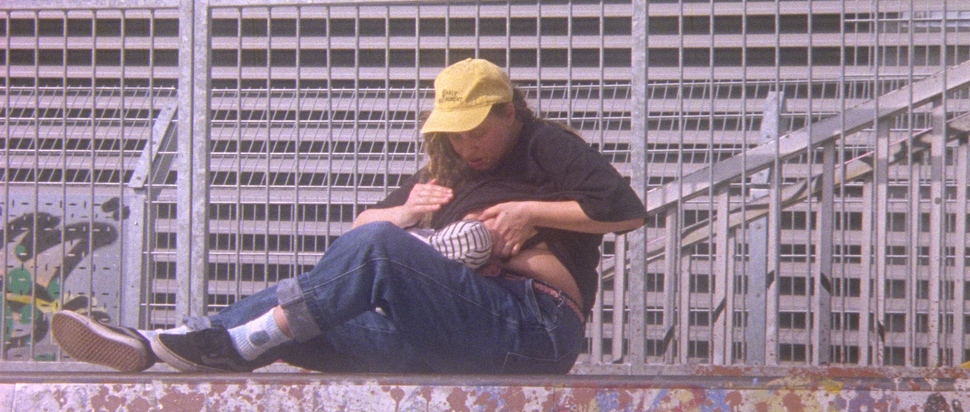
What does it mean to be a comrade? What does it mean to be a parent? What does it mean to labour? The 16th edition of the Alchemy Film and Moving Image Festival wrestled with these questions and more.
It was my first time at this film festival in Hawick, tucked up in the Scottish Borders, and I wasn’t sure what to expect. Falling asleep to the soothing oneiric lull of the cinema screen after mainlining analogue films into my veins, maybe? Staying up late with people I won’t see until another edition of the festival rolls around, perhaps? But stuffing my face with Indian and Iraqi-Scottish food (the latter provided by Alchemy artist in residence, Luna Issa), dancing myself red in the face at my first ceilidh, and chatting with filmmakers into the wee (after) hours at the local working man’s pub, arguing over the jukebox, were not among my predictions.
Unlike other glitzy film festivals that are more about networking and being seen, here the local community, filmmakers and artists from all over the world, as well as cinema lovers, come together to watch, talk, connect and debate – more like comrades than schmoozers. Here, film is more akin to protest song, elegy; it's a panacea, a balm for the soul. Outside of the film programme, there were also art and film installations to see, a 16mm editing workshop to participate in using Hawick’s local archive, and a grand finale of live image-making and improvised, foley-esque sound (Tetsuya Maruyama and Luke Fowler’s Stone and Mountain).
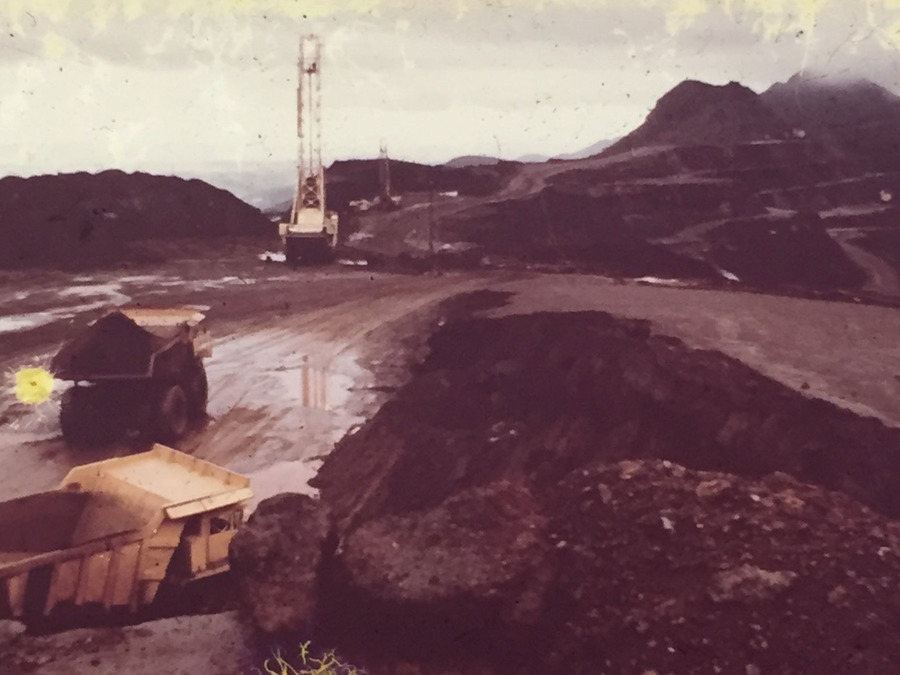
A still from Stone and Mountain by Tetsuya Maruyama and Luke Fowler, courtesy of Alchemy
For its sixteenth edition, Alchemy festival’s focus was on Labour – a befitting topic for a festival that takes place over May Day weekend – and questions of visible/invisible work, care and collective struggle resonated. The festival opened on Thursday 30 April with Josephine Ahnelt’s luminous docu-film Waves Turn, which was shot on Super 16mm and begins with the birth of a child; it made me think of Stan Brakhage’s Window Water Baby Moving.
“On screen, there is always the buildup to the pregnancy and then the birth, and then the film ends,” Ahnelt says of cinematic depictions of pregnancy when I corner her in the cafe bar afterwards to talk her ear off. The film diverges from this cliché and instead follows five new mothers through the unfamiliar terrain of the postpartum period. Ahnelt attends to this stage of motherhood with tenderness and unflinching honesty, capturing its fragile intimacies and quiet devastations: the struggle to reclaim an artistic identity, the isolation of days structured around feeding and soothing, and the shame that can accompany postpartum depression. One mother, spray-painting a canvas as her child naps nearby, describes the postpartum period with devastating, droll precision: “In some ways, it’s not as bad as I thought it would be. But in other ways, it’s a thousand times worse.” In that sentence lies the truth of motherhood, and perhaps of many forms of labour itself: a work of creation that is at once ecstatic, exhausting, and impossible to fully imagine until you are inside it.
On Friday afternoon, I watched films that experimented with form, from utilising Google Maps and the humming of drones to create a psychogeographical panopticon of memory, both personal and political (Raouf Moussa's As Far As We Imagine), a work of queer ecstasy and voyeurism that used holes in sequential analogue frames to create mini peep holes, or glory holes (Morgan Sears-Williams's through the bushes and the trees you’ll find me), and even a camera unforgettably shoved where the sun doesn’t shine – inside the filmmaker’s backside – (Angelo Madesen's My First Structuralist Film) to create a cavernous cacophony of light, shadows, colour.
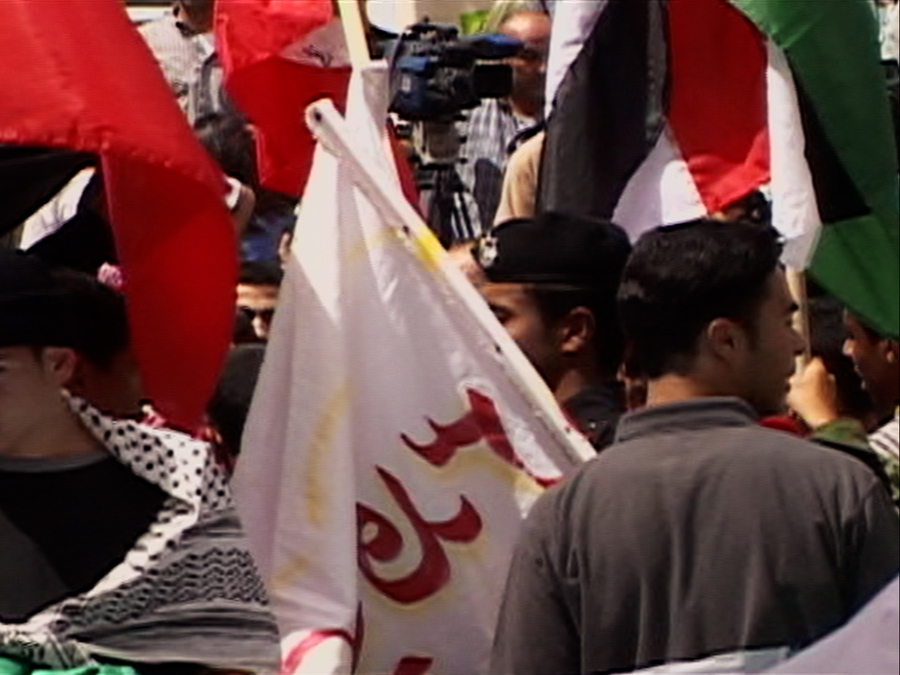
Nada El-Omari's Momentum. Image: Mathilde Fauteux
At Alchemy, I was reminded that politics are not temporary news cycles but issues with far-reaching consequences both past and present. In the short films of Nada El-Omari, a Montreal-based filmmaker of Palestinian and Egyptian origin, fragmented images from her family archive echo the aching nostalgia of displacement and its (dis)contents, through Yaffa, Land Day, men in keffiyehs, traditional oud music and conversations with her family, who dominate her films. There is a bittersweetness inevitable in a work that deals with war, displacement and exile juxtaposed with the joy of El-Omari’s familial community and the ways in which she keeps her culture alive.
I learned about topics I didn’t know about (mineral extraction in Brazilian mines; the revolutionary Los Macheteros militants; the folklore of villages in the Himalayas) and more about topics I did, from my own culture. In Moving Sound, shot on Super 8, filmmaker Sadia Pineda Hameed creatively uses sound to bridge together the past of 1980s Welsh coal miners to our present, a reminder that the past is not a foreign country but here with us, now.
Among films grappling with the issues of borders and belonging, other films reminded us that these heavier topics need not preclude play. In Audry Lornacle or 14 Days in DJ's House, Dagie Brundert – the “Queen of Super 8” – crafts a collage of wit, playfulness and joie de vivre about back pain, shrinking laundry and the sea, all while staying at Derek Jarman’s Prospect Cottage in the apocalyptic landscape of Dungeness.
Saturday afternoon’s programme of shorts, titled Angels Fill Me with Horror, was a revitalising segue into horror, myth and monsters. Two different yet wonderfully strange shorts in that programme, Damian Gong’s Beach Party and Vito Rowlands’ Leaf Peeper, were united in their approach of animation and stop motion to explore the body as a site of resistance and absurdity. Filmmaking partners – and romantic partners irl, which I discovered after mistaking them for siblings – Lily Ekimian Ragheb and Ahmed T Ragheb’s film Florence is for Lovers used a jarring, automated AI voiceover in Italian set against images of lovers walking around that eponymous city of art. Shot on a Hi8 tape camcorder, the film satirises our never-ending thirst for true crime narratives in a way that's unique and hilarious. As a woman who has spent a lot of time travelling alone, inventing make-believe boyfriends and warding off pestering men, I laughed in recognition.
In a year of increasing rent, food and fuel prices, and never-ending wars, sitting in a dark room watching films may seem like a frivolous thing to do. But not at Alchemy. Greco-Egyptian alchemists during the Hellenistic period wanted to try and find the elixir of life; here, for four days at least, the external rat race stops for a while, and experimental film and art appear to prolong life and stop time.
Alchemy Film and Moving Image Festival ran 30 Apr-3 May 2026
alchemyfilmandarts.org.uk