Alchemy Film and Moving Image Festival 2026: Preview
Alchemy Film and Moving Image Festival returns for its 16th edition. As usual, expect a programme of thought-provoking moving image screenings and exhibitions, but the festival's directors explain why the festival is much more than just a "bunch of films"
Each year, Alchemy Film and Moving Image Festival, the experimental film and artists' moving image celebration from Alchemy Film & Arts in Hawick in the Borders, takes place over the early May bank holiday weekend, coinciding with International Workers' Day. It’s proven the perfect time to host this event centred on community and solidarity, and it should feel particularly apposite this year. Proceedings kick off on 30 April to the sounds of a person's breath as they enter labour in Josephine Ahnelt's Waves Turn, an intimate observational documentary following a group of mothers across their first year postpartum. The curtain will come down on the festival four days later with an expanded cinema performance ruminating on contemporary mining activities in Brazil (Tetsuya Maruyama's Stone and Mountain screens with live support from former Alchemy artist in residence Luke Fowler).
Michael Pattison, Alchemy Film & Arts’ co-director, explains his team's holistic, deeply thoughtful curation. “The former is a tactile, intimately handheld Super 16mm portrait of five new parents,” he says, “and the latter encompasses multiple 35mm slide projectors, projected through a custom-built roving aperture device: both are formal encapsulations of labour, and bookend the 16th edition of a festival that now unfolds as a tradition across Labour Weekend.”
You’ll find other work concerned with collective struggle peppered across this year’s Alchemy programme, and this chimes with the festival's ethos as a whole. Alchemy has become as known for its supportive relationships with filmmakers, workers and audiences as it has for its considered programming. There is a warmth and camaraderie to the festival, grounded in a care for participants. Continuing their dedication to inclusion, this year Alchemy are trialling a festival crèche alongside their other recurring access initiatives like comprehensive venue information, descriptive subtitles for all films and BSL interpretation at all Q&As.
“It's important to us that the festival sustains its reputation not just for screening good films, but also for looking after its staff, audiences, volunteers and visiting artists in the way that it does,” says Pattison. “Anyone can put on a bunch of films, but to do it in a way that people feel genuinely valued for their work and participation requires a great deal of care and labour that the festival circuit more broadly works against.”
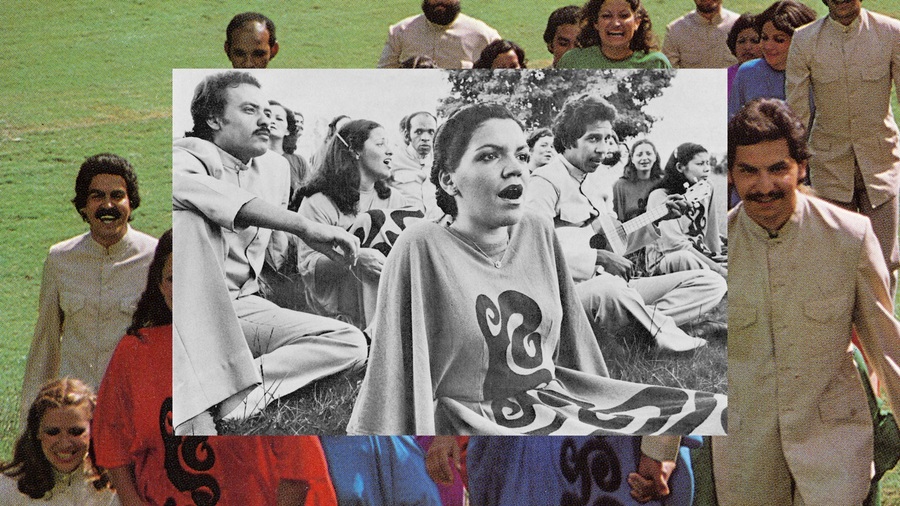
An Incomplete Calendar.
“It's not that festivals bring people together, or function as some kind of barrier to the outside world,” adds Alchemy co-director Rachael Disbury. “Those may be true, but they're also romantic and facile notions. There's so much to be angered and overwhelmed by right now, when more and more people are isolated and marginalised. In this context, we want our event to be one of lasting connections, a place where people feel good without the films themselves having to be 'feel-good'. Feeling good about the existence of certain films, the prevalence of certain voices, the solidarity that both of these things embody.”
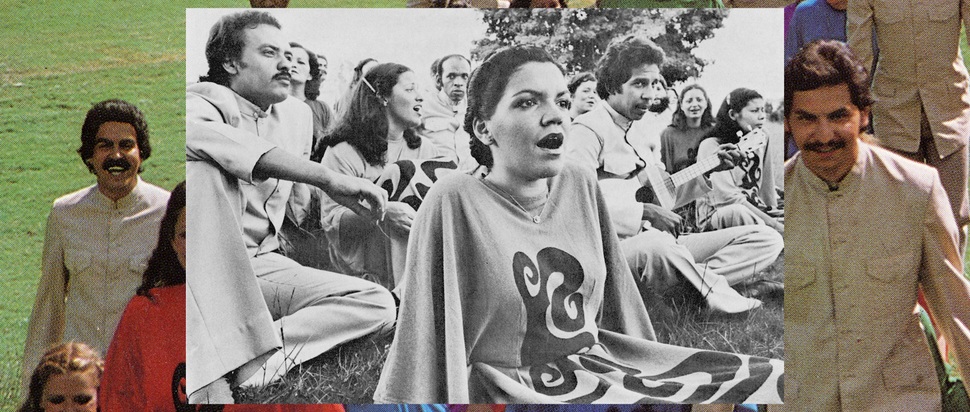
A film that certainly fits Disbury’s ambition for the festival is An Incomplete Calendar by Iranian artist-filmmaker Sanaz Sohrabi. The documentary, which could hardly be more timely, explores the relationship between an album of multi-national song covers and the “world-building potential of oil”. Sohrabi uses archival materials, interviews, historical and contemporary footage and looks at the implications of the 1980 vinyl release by a Venezuelan choir commemorating the Organisation of Petroleum Exporting Countries, the international cartel founded to manipulate global oil prices and maximise profits.
Elsewhere, the festival’s Focus programme highlights two extraordinary artists. The first is Nada El-Omari, a Montreal-based filmmaker of Egyptian and Palestinian origin, whose work engages with identity, memory and excavation through found texts and process filmmaking. The second is US filmmaker Malic Amalya, whose body of analogue film reflects an anticapitalist queercore politics and aesthetic.
Running parallel to Alchemy’s screenings is its free-to-attend exhibition strand, a highlight of which looks to be two recent works by Lebanese filmmaker Ghassan Salhab: Contretemps (2024), which chronicles protest footage from Beirut between 2019 to 2023, and No Title (2025), which looks at Beirut today, in the aftermath of Israeli aerial warfare. As Israeli attacks on Lebanon continue to intensify, these perspectives are ever more pertinent.
Other notable works in the festival programme include Out of Office by Kialy Tihngang, an 80s-flavoured satire of corporate exploitation and misogynoir; Jade Wong’s How to Cook a Wasp, an experimental documentary that maps out collective knowledge and identity among a community of diasporic Asian food workers; Stomach, Thighs, and Ass by experimental documentary filmmaker Matthew Lancit, a portrait of the artist as a diabetic; and Milk Report by Conway and Young, a comedic performance piece on the social economics of breastfeeding.
Alchemy Film and Moving Image Festival, Hawick, 30 Apr-3 May; full programme at alchemyfilmandarts.org.uk