KVIFF 2026: 3 Weeks After
Miroslav Terzić's formally dazzing bullying drama 3 Weeks After paints a brutal picture of the youth of today
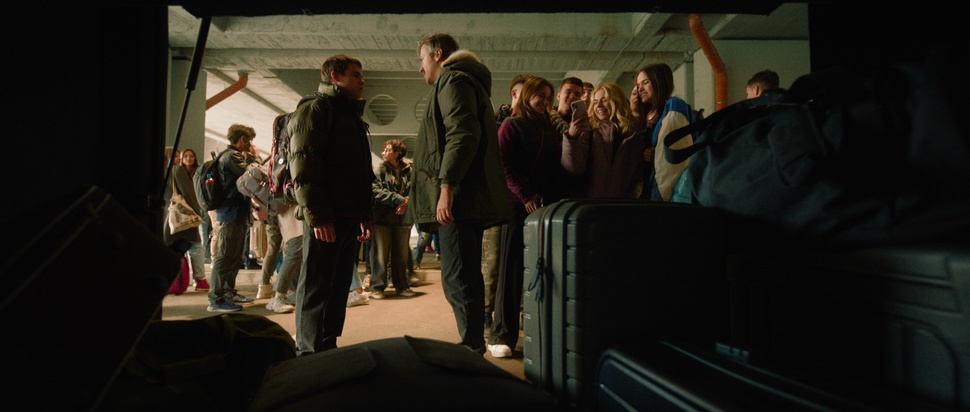
Anyone who’s under the impression that Gen Z might be a bit kinder than the kids who came before clearly hasn’t been to Serbia. The way director Miroslav Terzić and his co-writers, Vladimir Arsenijević and Bojan Vuletić, paint the high school teens in 3 Weeks After, their cruelty knows no bounds; compassion is a foreign language. Although, to be fair, their teachers are little better. The film opens on a wide shot of a Brutalist apartment complex in Belgrade, where one of its flats is engulfed in flames. At the bottom of the frame, an elderly woman is relaxing on a bench, staring up nonchalantly at the blaze. Throughout this chilly and superbly composed teen drama, other adults will ignore the inferno raging before their eyes.
3 Weeks After’s focal point is the stone-faced Tzotza (Jovan Ginić). He’s joining his school class on a coach trip into the Balkan mountain range, but he doesn’t exactly seem welcome. His classmates are surprised to see he’s joined them, and the teachers seem taken aback too. While the other kids party on the bus to a banger by Serbian artist Seka Aleksić, Tzotza sits there resigned, a fly in the ointment. His stoic demeanour clearly aggravates his fellow students, and snippets of cryptic conversation among the teens and between the two hands-off teachers who are ineffectually chaperoning the group slowly reveal why his presence is dampening the mood. Tzotza's best friend, Andrija, killed himself three weeks earlier, and his downbeat demeanour is reminding everyone that their merciless bullying of his friend is what pushed him over the edge.
Tensions are bubbling, and things look to only get worse when a landslide traps the bus on a mountain pass and the party has to schlep to a nearby resort that looks about as welcoming and understaffed as The Shining's Overlook Hotel. Terzić's startling compositions and Damjan Radovanoić’s haunting camerawork, all creeping zooms and menacing tracking shots, escalate the intensity. The queasily gorgeous visuals call to mind Michael Haneke at his most chilly, as well as Gus van Sant’s Elephant and Antonio Campos’ Afterschool, two other great formally rigorous examinations of teenage violence and trauma. While 3 Weeks After’s images can sometimes feel secondhand, the same can't be said of its ingenious sound design, which is characterised by sounds of carnage suddenly shifting to a calm, ambient soundscape and vice versa, perhaps reflecting how easily it is in modern life to tune out the ugliness of the world.
Despite its bravura visuals, the first half of 3 Weeks After plays as naturalism, giving a snapshot of the desensitised youth of today. Around the film's midsection, though – somewhere between a stomach-churning sequence that sees Tzotza being chased by his feral classmates into the bowels of an emerald-coloured cave and a Dionysian dance party drenched in red light scored to Rejv's Bombe Devedeseti, another popular Balkans banger – it approaches something closer to mythic.
This shift to the fanciful robs 3 Weeks After of some of its power when Tzotza finally takes a stand against his tormenters; it’s difficult to feel catharsis when it’s not clear if what we’re watching is a dream, a fantasy or a death rattle. Nevertheless, Terzić’s confident filmmaking is electric, and his bleak vision of the lives of children who’ve grown up in Europe’s most volatile regions is a startling one.
3 Weeks After had its world premiere at the Karlovy Vary International Film Festival, where it competed in the Crystal Globe competition