Gameplay @ Pleasance Dome
Carmen Collective's latest Fringe offering is an inventive and unsettling collision of history, sound and storytelling that asks us to imagine the unimaginable
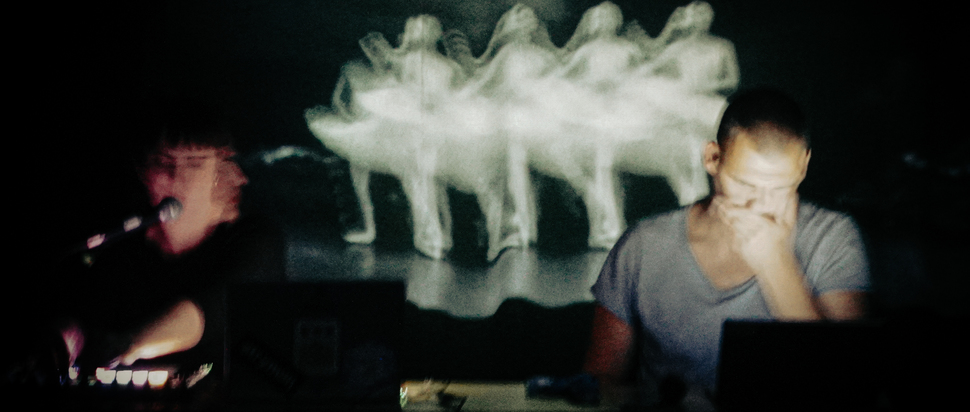
At a festival built on spectacle and sensory overload, Gameplay makes the bold decision to invite the audience to go on an auditory journey. Carmen Collective strips theatre back to its foundations: a voice, a soundscape and an audience willing to imagine.
The pre-show music loops the Dance of the Little Swans from Swan Lake, a choice that initially seems innocuous but soon reveals itself as central to the production. The ballet has a peculiar place in Soviet political history; most notably, it filled TV screens during the attempted coup of 1991, shortly before the collapse of the Soviet Union. What was ostensibly soothing cultural programming consequently became shorthand for political crisis and uncertainty, a symbolism later adopted and subverted by Russian activists. Gameplay takes this strange collision of beauty, censorship and impending catastrophe and weaves it throughout the production, establishing from the outset the much larger political questions it intends to explore.
Sam Rees leads us through an increasingly unsettling meditation – a mix of what feels like slam poetry and a hypnotic audio book – on nuclear annihilation, political anxiety and the strange fragility of being alive. Our attention is drawn in great detail to what is happening inside the room, and what could be happening outside. This throughline of information shared inside and outside is central to this piece, as is Vasily Arkhipov, the Soviet naval officer whose refusal to authorise a nuclear torpedo during the Cuban Missile Crisis may have prevented catastrophe. From there, Rees’ text slips between history, the present and imagined futures, which could easily become unbearably bleak – but flashes of dry humour cut through the darkness, including a wonderfully peculiar preoccupation with Daily Mail critic Quentin Letts.
The real triumph of this strangely interwoven act is the marriage of Rees’ precise delivery with AJ Turner’s exceptional live score. Electronic textures, violin and guitar gradually build beneath the narration, transforming an almost bare stage into something unexpectedly cinematic. Crucially, the show’s integrated audio description never feels like an accessibility feature bolted onto an existing production; it is fundamental to how Gameplay works, asking sighted and visually impaired audiences alike to construct the performance in their minds.
Not every philosophical detour lands with equal clarity, and its abstract style demands concentration, but surrender to its wavelength and Gameplay becomes a strange, intelligent and quietly frightening hour.
Gameplay, Pleasance Dome (10 Dome), until 31 Aug, 2.40pm, £13.50-£15.50